The Comparison of Peg 60 Hydrogenated Castor Oil vs Peg 40
Peg 60 hydrogenated castor oil and peg 40 hydrogenated castor oil all belong to the peg compounds. Therefore, if you want to explore a detailed comparison of peg 60 hydrogenated castor oil vs peg 40, it must be very necessary to understand what is peg compounds first. Now, Let's see it together.
What are peg compounds?
A result of reacting a chemical with different ethylene oxide is known as the PEG compound. For example, we know that hydrogenated castor oil is initially insoluble in water; however, when one part of hydrogenated castor oil is combined with forty percent of the ethylene oxide, it can be seen that the peg-40 hydrogenated castor oil will finally be formed, which is water soluble. So raw materials containing the word PEG can be hydrophilic and even soluble in water; the higher the number following PEG, the more ethylene oxide is added, and the more hydrophilic the result.
The main function of PEG compounds is to increase the solubility of substances in water, which is known as solubilizing materials. Materials such as emollients, fragrances, or preservatives are insoluble in water and will be layered in make-up water to affect the appearance of the product. Here, a solubilizer will play an important role in “similar solubility”. It can help these substances dissolve in water. PEG compounds are often used in lotions to improve the skin feel of the lotion. Previously, lotions could only be made with water-soluble small molecules such as glycerin and hyaluronic acid, which gave them a “light” feel. The solubilizer now can play a role. It is often made from oily compounds (emollients), retaining the moisturizing feel of emollients, feeling smooth and moist and improving the feel of the water.
A detailed comparison: peg 60 hydrogenated castor oil vs peg 40
The modified castor oil compounds, which decompose easily in nature and do not leave residues, have slightly different properties depending on the epoxy they are connected to.
PEG-40 Hydrogenated Castor Oil and PEG-60 Hydrogenated Castor Oil are popular solubilizers. They can be added to different lotions to smooth the skin. They are also used as solubilizers for vitamin E (tocopheryl acetate) and vitamin A (retinol). The notable difference between the two is the amount of ethylene oxide. The higher the amount of ethylene oxide, the more hydrophilic (but potentially irritating) the material will be.
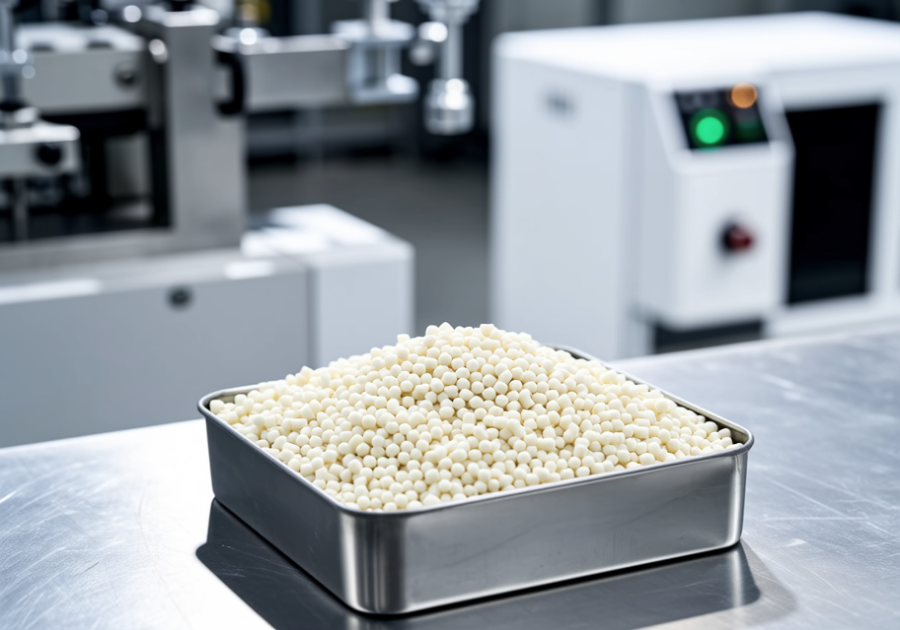
PEG-40 hydrogenated castor oil solubilizer is an opaque liquid or paste that has the function of non-ionic solubilizer and emulsifier. The study shows that this material with a wide PH stability, can produce little foam and compose a clarified mixture with acid and alcohol at high temperatures. It can be applied to dissolving essential oils and synthetic perfumes in water or alcohol solutions. When using it, you can mix it with the solubilizing chemicals in a 1:1 ratio and stir thoroughly until it becomes transparent.
PEG-60 Hydrogenated castor oil is commonly used as a highly efficient solubilizing agent. It can disperse fragrance, essential oils, and other oily substances evenly into the state of water, finally forming a stable and transparent solution.
Some people believe it has some bad effects on the skin. Whether or not it is harmful to our skin needs to be determined by the dosage used. If the dosage is appropriate and ideal, it is usually harmless, but if the dosage is relatively large, it will be harmful.
It can be found that this kind of compound is an excellent non-ionic solubilizer and emulsifier. As an extract of castor oil, it is generally widely used in skincare, cosmetics, and daily chemical products. If you can use it appropriately, it will be not only harmless to the skin, but also can play an effective role in lubrication and moisturizing, which will boost the smoothness and moisturizing of our skin, and also can promote normal metabolism. However, if you use it in large doses, it may cause some skin irritation, resulting in local pain symptoms. At this time, you need to use water to wash promptly, and use ice, cool towels, and other cold compresses on the local skin, to relieve the symptoms of discomfort. In addition. When the skin is injured, inflammation, rash, and thin keratin, the substance may cause stinging and itching.
Conclusion
This article mainly gives a detailed comparison of peg 60 hydrogenated castor oil vs peg 40 and explores some negative effects of the peg hydrogenated castor oil. Through a detailed introduction, we can get a clear understanding of peg compounds and how to choose between different peg compound products.
Looking for chemical products? Let suppliers reach out to you!
You May Interested In


Glow70/KLOW80 99% China Peptides Warehouse Direct Delivery Lyophilized Powder in Stock
$169/UNIT FOB


2026-10-25
Trade Alert
Delivering the latest product trends and industry news straight to your inbox.
(We'll never share your email address with a third-party.)

Related News
-
Tert Butylate: Properties and Applications
-
Potassium Hydroxide (KOH): Soap Making, Batteries, and Safety
-
Uses and Benefits of Sodium Selenite
-
Applications and Safety of Sodium Dichromate
-
Permanganate: Properties, Uses, and Safety
-
Iohexol: Properties, Uses, and Safety
-
Isobutyl: Properties, Uses, and Industrial Applications
-
What is Trametenolic Acid? (Structure, Sources & Research)
-
Sulfuric Acid (H2SO4): Properties, Battery Uses, and Extreme Safety Hazards
-
SiO2: Properties, Uses, and Applications
Recommend Reading
-
![Magnesium Chloride (MgCl₂): Properties, Uses, and Applications]()
Magnesium Chloride (MgCl₂): Properties, Uses, and Applications
-
![Flavin Adenine Dinucleotide (FAD): Functions and Applications]()
Flavin Adenine Dinucleotide (FAD): Functions and Applications
-
![Dicalcium Phosphate: Properties, Uses, and Applications]()
Dicalcium Phosphate: Properties, Uses, and Applications
-
![Applications of Diphenyl Cyanide]()
Applications of Diphenyl Cyanide
-
![Chemical Properties of Dibenzylideneacetone]()
Chemical Properties of Dibenzylideneacetone
-
![Cost Side Rebounds, Polyester Staple Fiber Prices Rise Slightly]()
Cost Side Rebounds, Polyester Staple Fiber Prices Rise Slightly
-
![High Supply Remains Firm, Weakness in ABS Market Persists at End of October in China]()
High Supply Remains Firm, Weakness in ABS Market Persists at End of October in China
-
![Supply and Demand Bearish, Toluene Market Declines]()
Supply and Demand Bearish, Toluene Market Declines
-
![Weak Demand Weighs on Butadiene Market]()
Weak Demand Weighs on Butadiene Market
-
![Weak demand leads to a fluctuating decline in phthalic anhydride prices this week in China]()
Weak demand leads to a fluctuating decline in phthalic anhydride prices this week in China