Is KCl an Acid or Base | Explaination with its Molecular Structure
Is KCl an acid or base? How can its chemical characteristics be explained through its molecular structure, and what are its industrial applications? All these questions are discussed in this article.
Introduction:
To explain whether potassium chloride or KCl has an acidic or basic nature, we first need to analyze its molecular structure and how the elements are bonded together. The question “Is KCl an acid or base” is trending because of KCl’s strong relevance in the current industry, and this article lays a solid background to answer all the queries.
Molecular Structure of KCl:
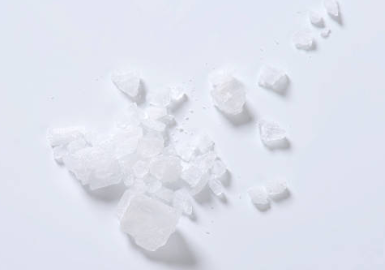
First, the molecular structure of KCl is a crystalline lattice in which each potassium ion is surrounded by six other chloride ions. Each of these chloride ions is further surrounded by six potassium ions. This molecular arrangement is termed a face-centered cubic or FCC lattice.
This arrangement results in a highly stable and ordered structure of atoms in the molecule. Atoms in this state are held in a maximized electrostatic attraction between the oppositely charged ions. This strong ionic lattice also directly contributes to the high melting and boiling points of KCl. In other words, significantly high energy is needed to break these bonds.
Now, how are these strongly interconnected salts made? Remember that when a strong acid and strong base react with each other, they undergo a neutralization reaction in which salt is produced. Such salts resemble just the KCl. Consider the reaction below to the same scenario:
HCl + KOH → K⁺ + Cl- + H₂O
In this reaction, the salt produced is KCl, which is a neutral salt and has no tendency to further become acidic or basic. So the short answer to the question, is KCl an acid or base is that it is neither, but a salt. The reasons why it is a salt are rather obvious, but below are more reasons to establish that it is not acidic or basic but shows a pH value of 7:
1. Potassium is categorized as an alkali metal, while chlorine is a halogen. When elements of such types combine, they transfer an electron to form a stable ionic bond. The same happens between these two and gives away potassium chloride molecules with strong bonds.
2. When this salt is exposed to a water solvent, it completely dissociates without hydrolysis in water. In layman’s words, they don’t produce H⁺ or OH⁻ to affect the pH levels. Hence, the solution remains neutral.
3. As mentioned after the reaction above, KCl is formed from a strong base and strong acid. Generally, salts formed between such participating parties are always neutral salts, which don’t affect pH levels.
Applications of KCl:
1. It is one of the most commonly used salts used in the agriculture industry as a primary source of potassium, which is an essential nutrient for normal plant growth. You will find it in potash fertilizers and products targeted towards soil treatment.
2. It is often used as a salt substitute in low-sodium foods and can effectively provide a salty taste while reducing sodium intake. This is great for those people who have health problems related to sodium.
3. It is also used in water softening systems and is regarded as a more environmentally friendly alternative to sodium chloride. Just like NaCl, it also helps reduce water hardness, and it does that by exchanging calcium and magnesium ions with its own potassium ions.
4. It is also used to create buffer solutions in chemical labs as it can maintain ionic strength in various chemical and biological experiments.
Due to its high relevance in the industry needs, KCl is another commonly imported salt all around the world, and its use is gradually increasing every year. If your business also involves the utilization of KCl, then we recommend checking out certified suppliers from the Echemi marketplace. It is a global and trusted platform for businesses all over the world where you will find KCl with high purity and smooth transportation services.
Conclusion:
To conclude our take on the query “Is KCl an acid or base?” We can easily state that it’s salt, as it is formed from a neutralization reaction between a strong acid and a base. It has a pH value of 7 when in water and has strong industry significance.
Looking for chemical products? Let suppliers reach out to you!
You May Interested In


Glow70/KLOW80 99% China Peptides Warehouse Direct Delivery Lyophilized Powder in Stock
$169/UNIT FOB


2026-10-25
Trade Alert
Delivering the latest product trends and industry news straight to your inbox.
(We'll never share your email address with a third-party.)

Related News
-
France’s Vineyards Find a New Shield: Eden’s Mevalone Enters the Frontline of a Changing Fungicide Era
-
India Unleashes a Triple-Action Defender: Parijat Introduces NILANIX SC into the Rice Battlefront
-
Key Reactions of Cobalt Chloride
-
Chemical Properties and Applications of Cyclopropen
-
Sodium Hydroxide Reactions: With Aluminum, Acids, and Metals
-
Gellan Gum (E418): Vegan Thickener vs. Xanthan Gum in Food
-
Lanolin: Benefits for Skin, Cosmetic Uses, and Allergy Risks
-
Paraffin Wax vs. Beeswax: Candles, Cosmetics, and Industrial Applications
-
Sodium Hydroxide (Caustic Soda): Soap Making, Cleaning, and pH Control Guide
-
Polystyrene (PS): Properties, Foam Applications, and Recycling Challenges
Recommend Reading
-
![Magnesium Stearate in Supplements: Is it Safe? (Vegan Status & Function)]()
Magnesium Stearate in Supplements: Is it Safe? (Vegan Status & Function)
-
![Sodium Chloride (NaCl): Food Grade vs Industrial Grade Uses & Safety Data]()
Sodium Chloride (NaCl): Food Grade vs Industrial Grade Uses & Safety Data
-
![Chemical Raw Materials: How to Source Quality Suppliers & Understand Grades]()
Chemical Raw Materials: How to Source Quality Suppliers & Understand Grades
-
![EDTA (Ethylenediaminetetraacetic acid): Chelation Therapy & Industrial Uses]()
EDTA (Ethylenediaminetetraacetic acid): Chelation Therapy & Industrial Uses
-
![Nature’s Blueprint, Science’s Edge: Corteva Unveils Twin Breakthroughs to Tackle the $70 Billion Insect Threat]()
Nature’s Blueprint, Science’s Edge: Corteva Unveils Twin Breakthroughs to Tackle the $70 Billion Insect Threat
-
![Dichloromethane Market Experiences Severe Fluctuations in China]()
Dichloromethane Market Experiences Severe Fluctuations in China
-
![DMF Market Mostly Stabilized, Downstream Demand Lacks]()
DMF Market Mostly Stabilized, Downstream Demand Lacks
-
![Business Society September 1, 2026 Acrylic Acid Market View: Trend Fluctuation]()
Business Society September 1, 2026 Acrylic Acid Market View: Trend Fluctuation
-
![Business Society’s Market Outlook for Ethanol on August 28, 2026: Volatile Consolidation]()
Business Society’s Market Outlook for Ethanol on August 28, 2026: Volatile Consolidation
-
![January 15 Isopropanol Market Trend Upward in China]()
January 15 Isopropanol Market Trend Upward in China