Sulfuric Acid and Nitric Acid Reaction & its Applications
You don't just mix sulfuric and nitric acid on a whim. I've seen junior techs try it without pre-cooling—ended up with brown fumes filling the hood and a batch scrapped before lunch. The mixture works, sure, but it bites back if you treat it like any other reagent.
What makes it valuable isn't the acids themselves—it's what they make together: nitronium ion (NO₂⁺). That's the real nitrating agent. Nitric acid alone can't generate enough of it; it gets diluted by its own water. Sulfuric acid fixes that. It grabs the water, pushes the equilibrium, and keeps NO₂⁺ concentration high. Simple in theory, tricky in practice.
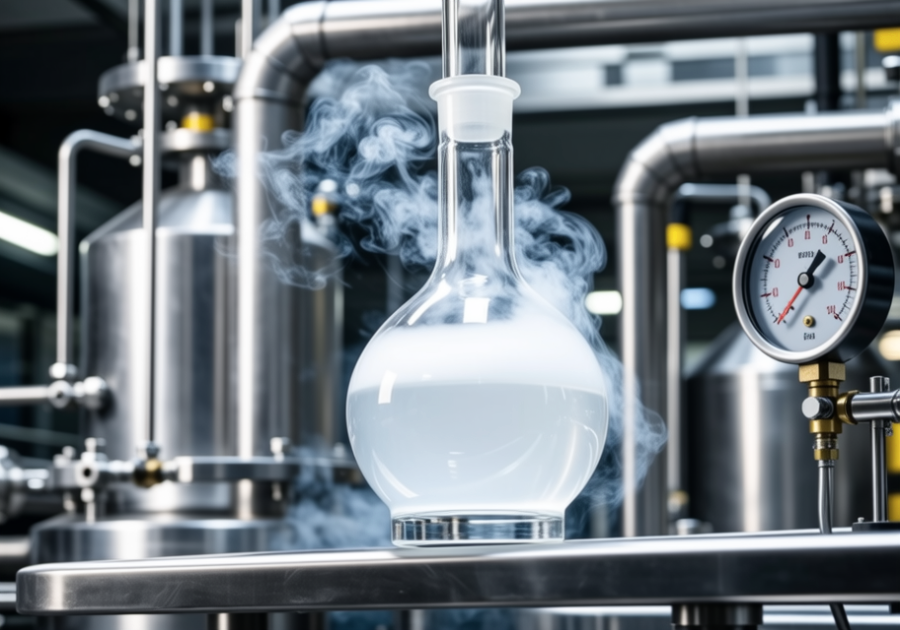
The standard prep? Add concentrated HNO₃ slowly to chilled (0–5°C) concentrated H₂SO₄—never the reverse. Why? Because dumping H₂SO₄ into HNO₃ creates instant hot spots. I've watched glass crack from thermal shock during a rushed addition. And once it heats past 60°C, HNO₃ starts breaking down into NO₂ gas—that sharp, choking smell means stop immediately.
We use this mix daily in our nitration train. For TNT production, we run toluene through three stages, each with adjusted acid ratios and temps. First mono-, then di-, finally tri-nitrotoluene. Get the timing wrong, and you get tar instead of crystals. Same for nitroglycerin—glycerol is viscous, so mixing must be perfect. One uneven zone, and you risk runaway reaction.
Pharma runs are smaller but no less demanding. A client needed 2-nitrophenol last year—precursor for a hypertension drug. We used a 2.5:1 H₂SO₄:HNO₃ ratio at 30°C, held for 90 minutes. Yield hit 92%. They tried doing it with nitric acid alone elsewhere—got 40% and a mess of oxidation byproducts. That's the difference mixed acid makes.
Dye houses still depend on it too. Aniline doesn't come from thin air—it starts as benzene, nitrated to nitrobenzene, then hydrogenated. No practical shortcut exists at scale. Some labs play with zeolites or ionic liquids, but ask a plant manager if they'd bet a 10-ton batch on it. They won't.
Safety-wise, OSHA doesn't mess around. You need acid-resistant aprons, face shields, and a scrubber on the vent line. Our waste goes to a neutralization tank with pH control—dumping raw spent acid is a regulatory nightmare. One spill in '19 contaminated a storm drain; cleanup cost six figures and shut us down for two weeks. Lesson learned.
A few things textbooks skip:
Spent mixed acid turns yellow even when cold—that's dissolved NO₂. Still usable, but monitor closely.
Never reuse acid from a failed run. Water content is unknown; next batch could overheat.
Stainless steel reactors? Only specific grades. 316L might hold up, but 304 pits fast. Most plants use glass-lined or Hastelloy.
People ask if "green nitration" will replace this. Maybe someday. But right now, when you need 50 tons of nitrobenzene per week, reliability beats elegance. Mixed acid delivers—if you respect it.
So yes, it's old. But in chemical manufacturing, "old" often means "proven." And proven beats clever every time when your reactor holds half a million dollars of material.
Looking for chemical products? Let suppliers reach out to you!
You May Interested In


Glow70/KLOW80 99% China Peptides Warehouse Direct Delivery Lyophilized Powder in Stock
$169/UNIT FOB


2026-10-22
Trade Alert
Delivering the latest product trends and industry news straight to your inbox.
(We'll never share your email address with a third-party.)

Related News
-
China Suspends Sulfuric Acid Exports, Global Copper and Fertilizer Supply Under Strain
-
Sulfuric Acid Reactions: With Sugar (Dehydration), Water, and Metals
-
In November, the market price of anhydrous hydrogen fluoride in China showed a downward trend
-
Röhm Launches New Sulfuric Acid Plant
-
BASF Invests in New Semiconductor-Grade Sulfuric Acid Plant in Ludwigshafen
-
Chemistry behind Sodium Hydroxide and Sulfuric Acid Reaction
-
What’s the Conjugate Acid of HSO₄⁻? Here's a Simple Breakdown
-
How to Make Nitric Acid: The Best Method
-
How Lead Chamber Process Sulfuric Acid Shape The Industrial Revolution
-
What is the Preparation of sulfuric acid
Recommend Reading
-
![Ammonia Chemical Formula: NH3 Structure & Properties]()
Ammonia Chemical Formula: NH3 Structure & Properties
-
![Benzyl Alcohol: Uses in Cosmetics, Preservative Efficacy, and Safety]()
Benzyl Alcohol: Uses in Cosmetics, Preservative Efficacy, and Safety
-
![What is Element Stibium? (Antimony Facts & Uses)]()
What is Element Stibium? (Antimony Facts & Uses)
-
![What is Amylum Starch? (Old Terminology & Modern Equivalent)]()
What is Amylum Starch? (Old Terminology & Modern Equivalent)
-
![EDTA (Ethylenediaminetetraacetic acid): Chelation Therapy & Industrial Uses]()
EDTA (Ethylenediaminetetraacetic acid): Chelation Therapy & Industrial Uses
-
![Business Society’s Acrylonitrile Trend Analysis for September 11, 2026: Weak Rebound]()
Business Society’s Acrylonitrile Trend Analysis for September 11, 2026: Weak Rebound
-
![Business Society October 14, 2026 PVC Trend Analysis: Market Bias Toward the Bearish Side]()
Business Society October 14, 2026 PVC Trend Analysis: Market Bias Toward the Bearish Side
-
![Business Society Hydrofluoric Acid Trend Analysis for October 9, 2026: Volatility]()
Business Society Hydrofluoric Acid Trend Analysis for October 9, 2026: Volatility
-
![Melamine Prices Surge Over 10% as Upstream and Downstream Competition Intensifies in China]()
Melamine Prices Surge Over 10% as Upstream and Downstream Competition Intensifies in China
-
![Business Society’s Market Outlook for Polyester Staple Fiber on September 10, 2026: Volatile]()
Business Society’s Market Outlook for Polyester Staple Fiber on September 10, 2026: Volatile