SK Chemicals Launches $50 Million Recycling Innovation Center to Revolutionize Plastic Waste Management
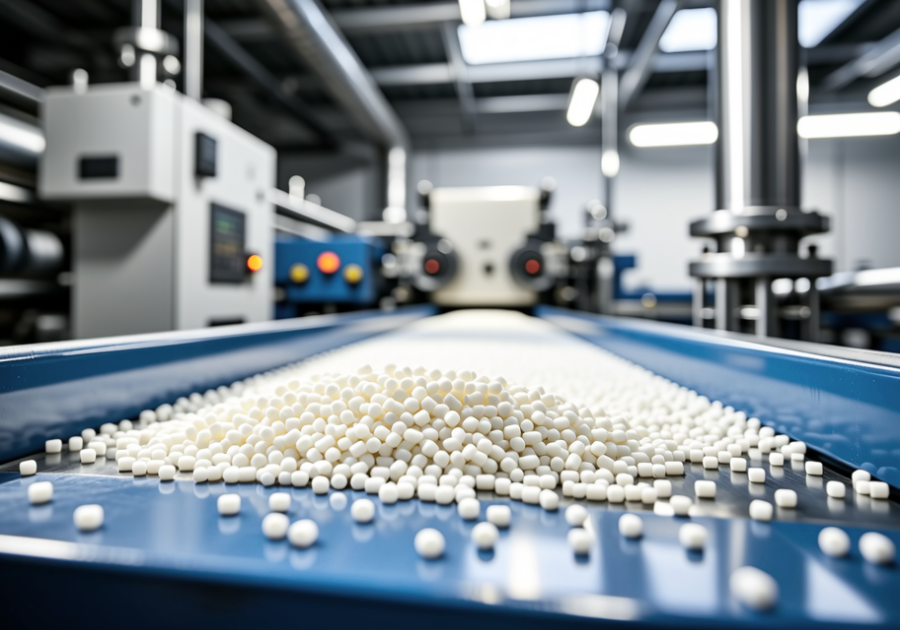
On February 18, SK Chemicals announced plans to establish a Recycle Innovation Center (RIC) at its Ulsan plant in South Korea. The company will invest in a pilot facility for chemical depolymerization of used plastics, aiming to produce recyclable r-BHET and connect it with existing commercial copolyester production facilities.
This marks SK Chemicals' first recycling center based on depolymerization technology in South Korea. The new facility will convert waste plastics into recyclable raw materials, specifically targeting low-quality plastics that are typically difficult to recycle using traditional methods. This includes materials like textiles, films, and automotive parts, not just clear bottles. The recycling of textiles presents particular challenges due to the mixed materials often found in single garments, such as polyester, cotton, and buttons.
The pilot facility is set to begin operations in 2026 with an annual capacity of 50 tons. r-BHET is a crucial intermediate material for polyester products like PET and copolyesters, making this initiative vital for SK Chemicals' chemical recycling technology.
With the establishment of the RIC, SK Chemicals aims to create an integrated development and production system at its Ulsan facility. This system will encompass the entire process from producing recyclable raw materials (r-BHET) to final recycled products. All steps, including depolymerization, demonstration research, polymerization, and mass production, will be seamlessly integrated at one location. It will also feature a pilot facility for polymerizing recycled PET and a commercial production facility for recycled copolyesters.
SK Chemicals emphasized the importance of quickly validating and commercializing depolymerization and material production processes tailored to various industries, such as automotive, electronics, and fashion. The RIC's establishment is expected to accelerate the implementation of SK Chemicals' closed-loop solutions.
A closed-loop system refers to a comprehensive recycling process where plastics that would typically end up in landfills or incinerators are collected, crushed, cleaned, depolymerized, and polymerized to create materials identical to petroleum-based plastics. This enables recycled products to be repurposed for manufacturing electronic devices and beverage containers.
While most recycled PET bottles are currently repurposed into fibers, many fiber products eventually end up being incinerated or landfilled after use. The depolymerization technology is seen as a breakthrough that allows for a fully circular structure, enabling plastics to be broken down on a molecular level, thus achieving performance and quality comparable to virgin materials.
Through the RIC, SK Chemicals aims to strengthen partnerships with sectors such as beverages, cosmetics, electronics, and automotive industries to ensure a robust infrastructure for plastic resource utilization and a stable supply chain of waste resources. The company is strategically developing optimized depolymerization technologies and expertise to lay the groundwork for large-scale production facilities.
Ahn Jae-hyun, CEO of SK Chemicals, stated that establishing an integrated research and production system from recycled raw materials to recycled plastics will be a pivotal moment for accelerating innovation in the plastic ecosystem. The company plans to work closely with the food and beverage, automotive, electronics, and fashion industries to develop comprehensive resource recycling systems tailored to each sector.
SK Chemicals has a strong track record in recycling innovation: in 2021, it became the first in the world to commercialize the production of recycled copolyesters using chemical recycling raw materials; in 2022, it was the first in Korea to supply recycled PET; and through acquisitions like Guangdong Shuyuan Environmental Technology Co., Ltd., it has established a solid foundation for waste plastic recycling operations.

You May Interested In


2026-09-18
Trade Alert
Delivering the latest product trends and industry news straight to your inbox.
(We'll never share your email address with a third-party.)

Related News
-
Wacker Under Global Cost Pressure: Dual-Track Restructuring Through Layoffs, Consolidation, and Strategic Repositioning
-
SIBUR’s Massive Siberian Petrochemical Complex Shuts After Drone Attack, LPG Supply Disrupted
-
Libya’s Largest Refinery Faces Full Shutdown After Five Rounds of Airstrikes
-
Uganda Sets Sugar Standards: East African Drafts Define Sweetness and Safety
-
Thailand Clears the Path for Vitamin Use: Streamlined Approval for Supplements
-
Korea Unlocks Additive Flexibility: New Rules Broaden Food Ingredient Horizons
-
Japan Tightens Tap: Pesticide Limits in Drinking Water Get a Safety Overhaul
-
Invista Reshuffles Global Nylon 66 Map: Shutting US and UK Plants, Betting Big on China—What Exactly Are They Aiming For?
-
Canada Caffeinates Candy—With Warnings Attached
-
Wheat Drowns in a Sea of Plenty: Global Glut Crushes Price Hopes
Recommend Reading
-
![Moldova Proposes Stricter Quality Standards for Edible Casein and Caseinates]()
Moldova Proposes Stricter Quality Standards for Edible Casein and Caseinates
-
![Hormuz Closure Raises Cold-Chain Risk]()
Hormuz Closure Raises Cold-Chain Risk
-
![Middle East Conflict Hits China Seafood Trade]()
Middle East Conflict Hits China Seafood Trade
-
![US Tariff Refunds Could Reshape Seafood Trade]()
US Tariff Refunds Could Reshape Seafood Trade
-
![Hormuz Closure Raises Cold-Chain Risk]()
Hormuz Closure Raises Cold-Chain Risk
-
![EFSA Reviews Clodinafop Risk]()
EFSA Reviews Clodinafop Risk
-
![In October, the Chinese marine fuel market trended downward with fluctuations]()
In October, the Chinese marine fuel market trended downward with fluctuations
-
![Consumption Fails to Match High Supply, October PP Refutes Peak Season Trend in China]()
Consumption Fails to Match High Supply, October PP Refutes Peak Season Trend in China
-
![July Palm Oil Market Oscillates and Rises in China]()
July Palm Oil Market Oscillates and Rises in China
-
![Cost Benefits Drive July Polyester Staple Fiber Prices to Fluctuate and Rise]()
Cost Benefits Drive July Polyester Staple Fiber Prices to Fluctuate and Rise