China's Titanium Dioxide Imports Drop 13 Percent Exports Fall 1.45 Percent Amid Global Challenges
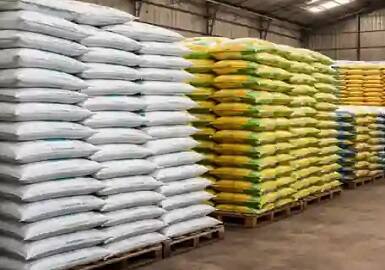
From January to May 2025, China imported 34,800 tons of titanium dioxide, reflecting a 13.21% year-on-year decline, while exports totaled 784,600 tons, down 1.45% compared to the same period last year, according to customs data. The import reduction equates to 5,300 fewer tons, and exports fell by 11,600 tons.
Export Challenges Intensify
Yan Tai, an analyst in the titanium industry, attributed the drop in exports to several factors:
- Global economic uncertainty, with fluctuating demand as economies adjust.
- Anti-dumping duties imposed by major markets such as the EU, Brazil, India, and Saudi Arabia, which have eroded price competitiveness.
- Rising sea freight costs, particularly in emerging regions like Africa, further burden export logistics.
Import Decline Reflects Domestic Production Growth
Qi Yu, a titanium market analyst, highlighted that declining imports stem from China’s improved domestic production capabilities, which reduce reliance on imported products. Additionally, advancements in production technology and rising international titanium ore costs have diminished the price advantage of imported goods. Currency fluctuations, particularly the weaker yuan, have also increased import costs.
Market Dynamics and Industry Outlook
Exports have faced significant headwinds due to increased tariffs, especially in India, where export volumes have halved in recent months. Weak global demand and sluggish domestic consumption have led to higher inventory levels in the second quarter. Consequently, many manufacturers have reduced production to manage stockpiles. While prices have stabilized due to cost pressures, market challenges in the second half of 2025 remain severe, with stiff competition and stagnant demand.
Yang Xun, an industry analyst, expressed cautious optimism about the future, stating that China’s titanium dioxide sector retains advantages in price, quality, and flexibility. Although anti-dumping tariffs have weakened price competitiveness, other strengths—such as supply capacity and customer service—remain robust. Over time, Chinese manufacturers are expected to regain stability by adapting to market dynamics.
Long-Term Trends
Sun Zheyu, Deputy Secretary-General of the Titanium Dioxide Sub-Center at the National Chemical Productivity Promotion Center, emphasized the importance of technological innovation and high-value product development. He noted that global competition and trade barriers necessitate a shift toward high-performance titanium dioxide. With emerging markets driving demand and domestic enterprises making strides in production, export volumes are expected to stabilize, albeit with limited growth potential in the near term.
For imports, Sun predicted that high-end titanium dioxide, used in automotive coatings and aerospace applications, will continue to rely on foreign suppliers in the short term. However, as domestic production technology advances, reliance on imports is expected to gradually diminish.

You May Interested In


2026-09-11
Trade Alert
Delivering the latest product trends and industry news straight to your inbox.
(We'll never share your email address with a third-party.)

Related News
-
Platinum Chemotherapy Shortages Expose the Fragility of Essential API Supply
-
Fertilizer Costs Rise as Middle East Tensions Pressure Global Food Production
-
Fertilizer Costs Rise as Middle East Tensions Pressure Global Food Production
-
Japan Begins Construction of the World’s Largest Commercial Liquid Hydrogen Receiving Terminal
-
Rhine Drought Disrupts German Chemical Logistics, Raising Supply Risks for BASF, Covestro and Evonik
-
China’s PE, PP and PVC Exports Rise as Stockpile Releases Reshape Global Supply
-
Chemicals Take the Hit as China's Markets Thin Out — Wanhua, Juhua Chemical Slide Over 2%
-
Global Oil Inventories Fall: Restocking Demand May Keep Petrochemical Costs Supported
-
India Swings the Tariff Axe at Made-in-China: Epoxy Resins Are Just the Beginning—The Road for Chinese Chemicals Abroad Is No Longer Smooth
-
End of an Era: KDC/One to Close 150-Year-Old Somerset Cosmetics Factory as Production Shifts to Scotland
Recommend Reading
-
![U.S. 10% Temporary Tariff Expires, New Section 301 Tariffs Not Yet Implemented]()
U.S. 10% Temporary Tariff Expires, New Section 301 Tariffs Not Yet Implemented
-
![Chemical Tanker Explodes Off Oman Coast, Maritime Security Risk Escalates Again]()
Chemical Tanker Explodes Off Oman Coast, Maritime Security Risk Escalates Again
-
![Urea Prices Surge as India Faces Critical Shortages: Will China’s Export Quotas Provide Relief?]()
Urea Prices Surge as India Faces Critical Shortages: Will China’s Export Quotas Provide Relief?
-
![SK Chemicals Partners with China’s Kelinle to Build Its Own Waste-Plastic Supply Network]()
SK Chemicals Partners with China’s Kelinle to Build Its Own Waste-Plastic Supply Network
-
![The “Counter-Wind Ledger” of CHF 11.2 Billion: Sika Barely Grew in 2025—Yet Kept Taking Market Share]()
The “Counter-Wind Ledger” of CHF 11.2 Billion: Sika Barely Grew in 2025—Yet Kept Taking Market Share
-
![Premium Global Chemical Sourcing Requests (20-22July, 2026)]()
Premium Global Chemical Sourcing Requests (20-22July, 2026)
-
![Premium Global Chemical Sourcing Requests (15-19 Dec 2025)]()
Premium Global Chemical Sourcing Requests (15-19 Dec 2025)
-
![Ethanol Market Prices Weakly Consolidating]()
Ethanol Market Prices Weakly Consolidating
-
![MTBE Market Trends Rise First, Then Fall]()
MTBE Market Trends Rise First, Then Fall
-
![This Week's Isopropyl Alcohol Market Prices Rise (7.13-7.17)]()
This Week's Isopropyl Alcohol Market Prices Rise (7.13-7.17)