The U.S. Chemical Safety and Hazard Investigation Board released its final report on September 16 into the June 4, 2025 explosion and fire at Shell Polymers Monaca in Pennsylvania, finding that two motor-operated isolation valves were inadvertently opened at the same time while Furnace 5 was being returned to service. The resulting flow path allowed flammable cracked gas to move backward from a downstream quench tower into the ethane cracking furnace, where it encountered lit pilots and ignited.
The blast severely damaged Furnace 5 and was followed by a fire.
Fifteen employees were evacuated, while Shell estimated approximately USD 95 million in property damage. The incident also released an estimated 5,100 pounds of ethylene and combustion products.
Furnace 5 was repaired and returned to service approximately seven months later.
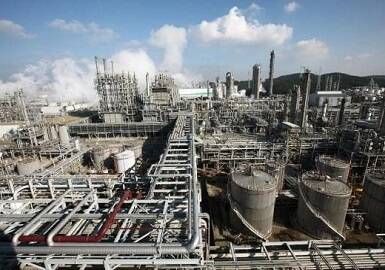
The Monaca complex converts ethane into ethylene using a high-temperature cracking unit containing seven furnaces.
Before the incident, Shell had begun cleaning coke traps used to stop solid carbon residue from moving farther downstream in the process. The company inspected the Furnace 1 coke trap in late March 2025 during an outage and subsequently decided that the coke traps on all seven furnaces needed cleaning.
The traps on Furnaces 1, 2, 4 and 7 were cleaned successfully. Work on Furnace 5 was completed on June 3.
During the process of returning Furnace 5 to service, a process-control engineer inadvertently opened both valves used to isolate the furnace from downstream equipment.
The CSB found that the engineer had never performed the task before and had limited process knowledge.
Opening both valves created an unintended connection with the downstream system. Flammable cracked gas then flowed backward from the quench tower into the furnace firebox.
Approximately six minutes later, the gas reached lit pilots and ignited. The resulting explosion ruptured the firebox wall and was followed by a fire.
The CSB identified several contributing factors.
Shell relied on 11 administrative controls intended to prevent cracked-gas backflow and an explosion. Those safeguards depended on workers and managers correctly following procedures rather than on physical systems automatically preventing the hazardous condition.
According to the investigation, Shell’s process-hazard analyses had already identified backflow as a potentially fatal scenario. The facility, however, did not use an engineered safeguard to prevent the flow when the furnace was in its double-isolation state.
The CSB also found that the furnace technology licensor had provided engineered controls capable of preventing backflow, but the system had not been configured for use while double isolation was being removed.
The control-room interface was another factor identified in the report.
Shell’s human-machine interface displayed three nearly identical valves on the same logic screen, with identification tags that differed mainly in their final digit. The CSB concluded that the design contributed to the engineer manipulating the wrong valve.
The agency issued two recommendations to Shell following the investigation. It called for the company to review potentially catastrophic scenarios that depend solely on administrative controls and install inherently safer designs or engineered safeguards where appropriate.
The CSB also recommended that Shell work with the technology licensor to implement and maintain an engineered control capable of preventing cracked-gas backflow into a furnace during all operating modes.