Wanhua stopped production for 40 days, BASF issued three price increase letters
Not long ago, the barometer on dual control of energy consumption in the first half of the year was released. Many provinces and cities failed to reach the target, and even the intensity of energy consumption rose instead of falling, and received a first-level warning.
In order to achieve the goal of dual control, some provinces have issued the "Notice on Emergency Measures for Dual Control of Energy Consumption in September", and energy and chemical companies may face large-scale "passive" shutdowns for maintenance. A new batch of environmental protection teams will be superimposed, and environmental protection production restrictions will be promoted at the same time. In the third quarter, all provinces and cities will also start production restrictions in autumn and winter, and environmental protection efforts will be further increased.
According to market rumors, due to the dual control of energy consumption, three sets of coal chemical plants in the Mainland began to undergo maintenance and load reduction in September. They are:
Shenhua Yulin: 1.8 million tons of methanol + 600,000 tons of polyolefins. After the restart on September 7, methanol can only be half-loaded and is expected to last until the end of the year.
E Nenghua: 1 million tons of methanol, reduced load by 50% operation.
Datang Duolun: 1.68 million tons of methanol + 460,000 tons of polyolefins, starting from September 1st, the whole line will be shut down for one month.
If Datang Duolun goes into overhaul, it will increase the percentage of PP device overhaul in September. Boosted by this news, PP futures rose for two consecutive days.
In addition to the announcement of emergency measures for dual energy consumption control in Inner Mongolia, Shandong, Guangxi and other places have also strengthened production restriction measures.
Recently, Shandong coke companies have gradually increased their production restrictions, and some coke companies have limited production by about 30%-50%. Previously, local coke companies have limited production slightly, and the scope of production after the deadline may be expanded.
Due to the strengthening of dual control of energy consumption in Guangxi, local steel companies have imposed production restrictions.
Major steel companies will reduce their output by 20% on the basis of the September production schedule. Some steel mills require that September output should not exceed 70% of the average monthly output in the first half of 2021. At the same time, they require electricity load in September. Must not exceed 70% of the average monthly electricity load in the first half of this year.
In addition to passive production restrictions, many large factories are also undergoing annual maintenance. On September 2, Wanhua Chemical issued an announcement, according to the characteristics of the production process of chemical enterprises, in order to ensure the safe and effective operation of production equipment, in accordance with the annual maintenance plan, the company’s Yantai Industrial Park TDI device (300,000 tons/year), PO device (240,000 (Tons/year) will be shut down for maintenance on September 3, 2021, and the maintenance is expected to be about 25 days; the PDH device (750,000 tons/year) will be shut down for maintenance on September 10, 2021, and the maintenance is expected to be about 40 days.
In addition, the State Council yesterday (September 1) mentioned bulk commodities again, stating that in response to high commodity prices leading to rising production and operating costs, increased accounts receivable, and the impact of the epidemic, further measures were taken to stabilize market players, Stabilize employment and keep the economy operating within a reasonable range.
It can be seen that recent policy adjustments have frequently occurred. On the one hand, large-scale production restrictions have been implemented to achieve the goal of carbon emissions. On the other hand, the price control of raw materials has been strengthened. The market outlook may stabilize.
With a surge of 2,000 overnight, the giants have to increase their prices?
Since July, there have been a large number of price increases in the market. September is coming, and the price increase letter is officially effective! With the increase in market demand and the increase in overhauls, there is still the possibility of issuing a price increase letter in September!
No, BASF took the lead in raising prices and issued 3 price increase notices in a row, announcing a price increase in October!
On August 31, BASF announced that it will increase the price of Lupranate MDI products by an increase of US$0.12 per pound from October 1, 2021 or subject to the contract. In addition, the listing price of aggregate MDI in BASF's distribution market will be 23,000 CNY/ton in September 2021, up by 2,000 CNY/ton from the previous month.
On August 31, BASF announced that starting from September 1, 2021, the price of acrylic dispersions will increase by USD 0.15/lb; the price of styrene acrylic dispersions will increase by USD 0.20/lb; the price of styrene acrylic resins will increase To 0.15 USD/lb.
On August 26, BASF announced that effective September 25, 2021, or subject to the contract’s permission, BASF’s floor covering business will increase the index and non-index prices of its Styrofan ® product line by $0.08 in North America. Dry pound.
As BASF, an aggregating MDI giant, raised the price of MDI in September, Shanghai Huntsman also followed the trend. According to the market, the listing price of Shanghai Huntsman Aggregate MDI to distributors was 22,000 CNY/ton in September, an increase of 1,000 CNY/ton from the previous month.
On August 31, the domestic rubber powder giant Wacker Chemical (China) notified that the price of the redispersible rubber powder series of products would be increased from September 1st, with an increase of up to 8%.
On September 1, Dalian Chemical (Jiangsu) also issued a letter stating that the VAEP rubber powder 6/11/12 series products will be increased by 300 CNY/ton from now on.
Uncharacteristically! This year's market or the current peak season is not booming?
Recently, China’s Manufacturing Purchasing Managers’ Index (PMI) was released in August. Non-manufacturing PMI fell below the prosperity and decline line for the first time in nearly a year and a half, and manufacturing PMI continued to decline.
All three PMI indices continued to decline in August, and the significant weakening of the demand side was the main reason. Insufficient demand may lead to increased downward pressure on the economy. Against the backdrop of the economic downturn, the market as a whole weakened.
From the perspective of the market supply side, the maintenance equipment of the petrochemical plant in the upstream of the plasticization industry chain gradually resumed production. At the same time, the new equipment started to start after September. Therefore, the supply pressure of polyolefins in September is increasing.
On the one hand, foreign countries, especially the US market, is the peak season for market demand around Christmas. This year, in order to avoid the impact of uncertainties caused by the epidemic by shipping, overseas orders have been advanced, and domestic exporters of related products will originally produce from September to October. Advance the time to July-August;
On the other hand, affected by the epidemic, many foreign plastic downstream factories closed last year, and orders for overseas products had to be transferred to the domestic market. As a result, domestic downstream manufacturers increased their raw material inventory last year in order to meet the increasing demand for orders.
Affected by the epidemic, the originally balanced rhythm of market supply and demand has been disrupted. Although the peak demand season for the "Golden Nine" is gradually coming, at present, various restrictions still cause no obvious driving force in the industry. At this stage, most downstream industries are not optimistic about the market this year. Many traders also reflect that downstream customer demand this year is not good. Downstream product orders have been poor. Therefore, on the whole, the peak season characteristics of this year may not be very obvious.

You May Interested In


SS-31 Cosmetic peptides, discounted price improving cognitive impairment factory supply
$78/UNIT FOB


2026-10-23
Trade Alert
Delivering the latest product trends and industry news straight to your inbox.
(We'll never share your email address with a third-party.)

Related News
-
BASF and Highsun Group Plan to Establish a Polyamide 6 Joint Venture
-
BASF and Evonik Rumored Potential Acquisition or Merger
-
BASF and Thailand’s NEO Corporate Enter Joint Development Partnership in Personal Care
-
BASF Raises North American Nylon Products by $0.08/lb, Fourth Price Increase in Six Months
-
Wanhua Chemical Secures Core TDI Patent, Dividing Wall Column Technology May Reshape High-End Polyurethane Landscape
-
First New UV Filter in Nearly 27 Years: BASF's Tinosorb® S Approved by FDA, Marking a Historic Shift for the U.S. Sunscreen Market
-
Multiple Chemical Industry Leaders Post Strong H1 Earnings Growth as Sector Profitability Revives
-
The Crop Protection Patent Cliff Is Here
-
BASF's Intensified Moves from May to June: Plant Closures, Divestitures, and Transformation in Sync
-
EU Clears Carlyle's Acquisition of BASF's Coatings Business, but Demands Divestment of Nouryon's Polysulfide Assets: What Are the Underlying Risks?
Recommend Reading
-
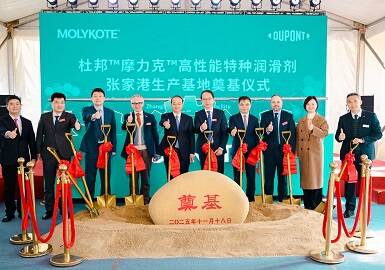
![Another Strategic Move! DuPont Launches a New Specialty Lubricants Project in Zhangjiagang]()
Another Strategic Move! DuPont Launches a New Specialty Lubricants Project in Zhangjiagang
-
![Eurofragance Opens New Creative Center in Jakarta to Expand Its Asian Footprint]()
Eurofragance Opens New Creative Center in Jakarta to Expand Its Asian Footprint
-
![Merck Establishes New Semiconductor Hub in Taiwan]()
Merck Establishes New Semiconductor Hub in Taiwan
-
![SABIC Europe Sale Enters EU Review as AEQUITA Builds a Larger Petrochemical Platform]()
SABIC Europe Sale Enters EU Review as AEQUITA Builds a Larger Petrochemical Platform
-
![Evonik Supervisory Board Approves Executive Changes, Extends Kullmann’s Term to 2030]()
Evonik Supervisory Board Approves Executive Changes, Extends Kullmann’s Term to 2030
-
![Ethanol Market Prices Remain Weak and Consolidate]()
Ethanol Market Prices Remain Weak and Consolidate
-
![Construction Starts Decline, Isocyanide Prices Surge After the Holiday]()
Construction Starts Decline, Isocyanide Prices Surge After the Holiday
-
![Phosphoric Acid: Uses in Cola, Rust Removal, and Fertilizers Explained]()
Phosphoric Acid: Uses in Cola, Rust Removal, and Fertilizers Explained
-
![This Week, the Domestic Polymeric MDI Market Showed a Weak Decline (5.6-5.9)]()
This Week, the Domestic Polymeric MDI Market Showed a Weak Decline (5.6-5.9)
-
![Silver Nitrate: Medical Uses, Photography History, and Staining Properties]()
Silver Nitrate: Medical Uses, Photography History, and Staining Properties