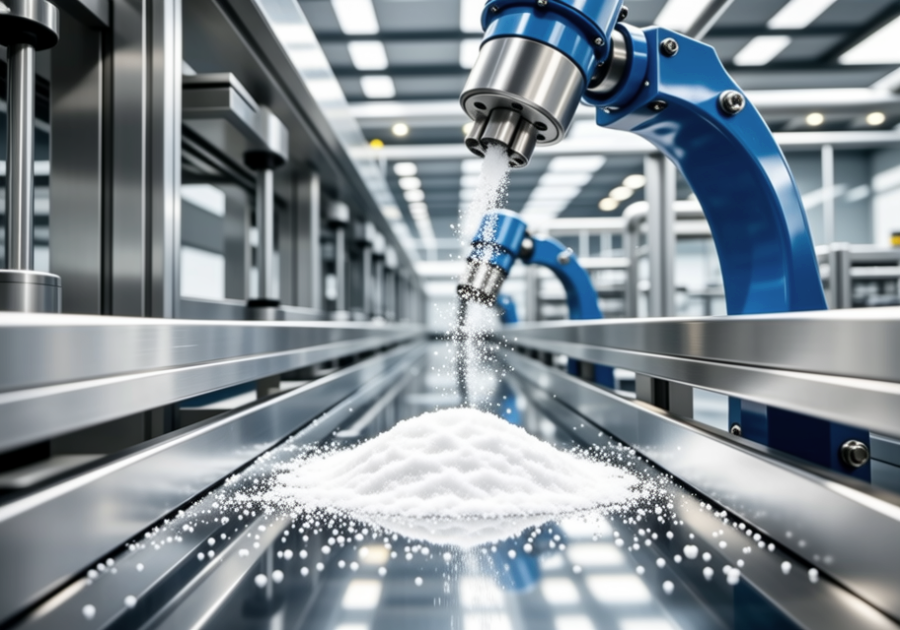
The global petrochemical market will continue to grow rapidly
Recently, ChemAnalyst released the "2015-2030 Petrochemical Market Analysis Report". The report shows that from 2015 to 2030, the global petrochemical market will grow rapidly at an average annual rate of 4.95%. Market participants said that the demand for petrochemical products in end markets such as plastics, cosmetics, pharmaceuticals, solar panels, and wind turbines is growing rapidly. This is likely to promote the growth of the global petrochemical market in the next few years. Last year, due to the outbreak of the new crown pneumonia epidemic, the global petrochemical industry trade was severely negatively affected, which further affected the industry's production. The demand for petrochemical products in downstream terminal industries such as clothing and automobiles has also been greatly affected. However, the surge in demand for personal hygiene products has driven the market for C₃-derived polymers used in the manufacture of masks, personal protective equipment, and disposable products. In the long run, as some economies expand investment in their innovative manufacturing capabilities, global petrochemical demand is expected to increase. This will further accelerate market growth during the forecast period.
The demand for petrochemical products for various end-uses including packaging, automobiles, textiles, fast-moving consumer goods and construction industries is increasing, and it is expected to drive the growth of the petrochemical market in the next five years. In terms of types, the petrochemical market is divided into C₁ derivatives, C₂ derivatives, C₃ derivatives, C₄ derivatives, aromatics, etc. Petrochemical products are universal and are increasingly used in daily life applications. For example, methanol is used in the manufacture of formaldehyde, dyes and intermediates, active pharmaceutical intermediate (API) formulations, agrochemicals and other industrial applications that continue to grow in demand. Its use as a clean fuel in transportation may stimulate global demand for petrochemical products in the next few years. The demand for petrochemicals (such as polyethylene and polypropylene) required for plastic packaging of food and other commercial products is also driving market growth.
In addition, emerging economies are making huge investments to support their passenger car and commercial vehicle manufacturing industries, and global demand for rubber tires is expected to improve during the forecast period. Rubber tires usually come from the petrochemical product butadiene. At the same time, the consumption of petrochemical product-based detergents and textile fibers and changing consumer preferences are also driving the global petrochemical market. Among them, C₂ and C₃ derivatives together account for more than 48% of global petrochemical demand. Due to the increasing consumption of engineering plastics, medical plastics, packaging films and many other end-use industries, industry demand has triggered tremendous growth in the global petrochemical industry.
From a regional perspective, the Asia-Pacific region accounts for the largest share of the global petrochemical market, followed by North America and Western Europe. Increasing mergers and acquisitions and large-scale capacity increases will drive the demand for petrochemical products in Asia. In addition, there are some investors who intend to invest in the Asian market, who are considering favorable policies and demographic factors in Asian countries. These investments will also further promote the growth of the Asian petrochemical market in the next five years. Market participants said that with the improvement of the macro economy and changes in consumer preferences, the global petrochemical industry related to downstream applications such as consumer electronics, detergents, pharmaceuticals, and thermal insulation has shown healthy growth. It is expected that in the next few years, India will become the fifth largest consumer market in the world.
In addition, as the per capita income of emerging countries increases, so does the demand for petrochemicals and related products. The restrictive measures introduced due to the new crown pneumonia epidemic have affected the global supply chain logistics, leading to shortages of raw materials and chemicals and rising prices of petrochemical products. With the emergence of new competitors in the Asian petrochemical market, it is particularly important to pay attention to which region will occupy the largest market share in the next few years.

You May Interested In


High Quality β-Nicotinamide adenine dinucleotide CAS 53-84-9 NADwith ready stock and best price
$3/UNIT FOB


2026-10-13
Trade Alert
Delivering the latest product trends and industry news straight to your inbox.
(We'll never share your email address with a third-party.)

Related News
-
ICIS: polyester bottle flakes tight balance will continue
-
The Global Petrochemical Market Will Reach $1 Trillion by 2030
-
Weak demand in Asia, petrochemical market is in slump
-
2020 chemical market trend: production capacity
-
High Crude Prices Are Passing Through the Coatings Chain as More Than 20 Companies Launch Price Increases
-
Behind the Three Consecutive Titanium Dioxide Price Hikes, Sulfur and Sulfuric Acid Costs Are Rewriting the Pricing Floor
-
Brazil Expands Chemical Tax Breaks as India’s Crop Protection Industry Warns of a 25% Cost Increase
-
25 Companies Raise Prices Three Times Within a Month: China’s Titanium Dioxide Industry Shifts from “Price Wars” to a “Pricing Alliance”
-
EU Plans Broader Quotas and Tariffs on China, With Chemicals Clearly Named
-
Trump’s Steel, Aluminum and Copper Tariff Changes Pull Chemical Manufacturing Into the Impact Zone
Recommend Reading
-
![API Supplier Audits Move to the Center of Pharma Supply Resilience]()
API Supplier Audits Move to the Center of Pharma Supply Resilience
-
![Supplement Recall Puts Nutrition Ingredient Safety Back Under Pressure]()
Supplement Recall Puts Nutrition Ingredient Safety Back Under Pressure
-
![When the Skin of Ships Gets More Expensive: A 30% Price Shock Is Quietly Rewriting the Cost Floor of Global Shipping]()
When the Skin of Ships Gets More Expensive: A 30% Price Shock Is Quietly Rewriting the Cost Floor of Global Shipping
-
![EU Finalizes Anti-Dumping Duties on Chinese Adipic Acid as Chemical Trade Enters a Rule-Intensive Phase]()
EU Finalizes Anti-Dumping Duties on Chinese Adipic Acid as Chemical Trade Enters a Rule-Intensive Phase
-
![EU Low-Value Parcel Rules Could Disrupt Chemical Sample Flows]()
EU Low-Value Parcel Rules Could Disrupt Chemical Sample Flows
-
![Both Costs and Supply-Demand Weaken, PTA Prices Edge Lower]()
Both Costs and Supply-Demand Weaken, PTA Prices Edge Lower
-
![In September, China's PET hit a high and fluctuated at a high level; in October, the market may show a weak fluctuation at a high level]()
In September, China's PET hit a high and fluctuated at a high level; in October, the market may show a weak fluctuation at a high level
-
![Business Society September 22, 2026 Palm Oil Trend Analysis: Volatility]()
Business Society September 22, 2026 Palm Oil Trend Analysis: Volatility
-
![September Ethyl Acetate Market Trend Fluctuates Upward in China]()
September Ethyl Acetate Market Trend Fluctuates Upward in China
-
![MIBK Market Rises Significantly in September, May See a Correction Afterwards]()
MIBK Market Rises Significantly in September, May See a Correction Afterwards