What determines the price of power coal?
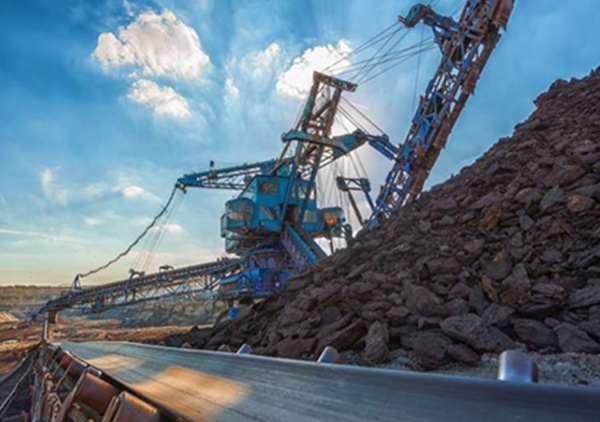
In the past two months, the power coal in the Bohai Sea harbor has oscillated, and the pit price fluctuates back and forth, but it is stronger than the coal price in the harbor. What determines the price of power coal? Today think tanks believe that pits are mainly affected by costs and supply and demand, while ports are mainly affected by costs, policies, supply and demand and expectations.
Before the structural reform of the supply side, when the coal price is lower than the mining cost, the cost support is weak, mainly because the supply and demand determine the coal price. With the reduction of coal production capacity and the improvement of the situation of oversupply of coal, pithead power coal not only quickly rises to more than cost, but also the gross profit of many power coal mines in the past two years is above 80%, and the fluctuation of price is mainly affected by supply and demand. And the way the owner of coal mine judges supply and demand is very simple. If there are more cars to pull coal, the price will rise, and if there are fewer cars to pull coal, the price will fall. Because of the coal shortage in the past two years, when the coal-pulling trucks are more often, there are even several price rises a day. The formation mechanism of port coal price is more complex, and it is mainly affected by cost, policy, supply and demand and expectation. The cost of port coal price mainly includes two aspects: coal cost and logistics cost. In recent two years, if pit price and logistics price are simply added together, the price is often inverted. The specific reason is affected by policy, supply and demand and market expectations.
Policy is mainly about the regulation of the price of power coal by the state. The direct reason for the regulation is that the state limits the price of power by region. If the price of coal is not regulated, it will affect the national economy and people's livelihood. Therefore, we can see the situation is that cement, chemical industry, building materials and other non-electric coal market-oriented degree is higher, while the market-oriented degree of electric coal is relatively low, when the coal price runs out of control, the state even directly limits the price of electric coal. The forming factors of supply and demand and market expectation are also complicated. In pithead, coal mine owners may only look at the number of coal-pulling vehicles, but the port can not only look at anchorage ships, but also related to port inventory, downstream inventory and imported coal and other factors. Market expectations are also very complex, influenced by seasonal factors, emergencies and national policies. In terms of the current market, think tanks today believe that due to macro-control and high inventory in the downstream, price differentiation between ports and pits will continue, and port coal prices will also show a weak oscillation situation, pit-mouth traders will be better than port traders, non-electricity traders will be better than electricity coal trade.

You May Interested In


High Quality β-Nicotinamide adenine dinucleotide CAS 53-84-9 NADwith ready stock and best price
$3/UNIT FOB


2026-10-20
Trade Alert
Delivering the latest product trends and industry news straight to your inbox.
(We'll never share your email address with a third-party.)

Related News
-
Coal Price Surge Coupled with El Niño Drives Urea Up by RMB 100/Ton in a Single Day
-
Price Increases Sweep Chemical Industry, Both Overseas and Domestic Markets Experience Upward Trend
-
Major Strike! Raw Material Prices Surge by 11%!
-
Dow rises!
-
In April, the first round of price increases hit!
-
Chemical market slightly back
-
Coal prices soared, South Africa's Thungela company doubled its annual profit
-
China's pesticide price index in October 2022
-
Today's US dollar market PTA price fell
-
Lanxess raises prices of inorganic pigments
Recommend Reading
-
![EFSA Eyes Higher Dodine Limits in Grapes—Safety Assured, Critics Wary]()
EFSA Eyes Higher Dodine Limits in Grapes—Safety Assured, Critics Wary
-
![Wheat Drowns in a Sea of Plenty: Global Glut Crushes Price Hopes]()
Wheat Drowns in a Sea of Plenty: Global Glut Crushes Price Hopes
-
![Canada’s Infant Formula Gets a Risk-Based Makeover]()
Canada’s Infant Formula Gets a Risk-Based Makeover
-
![Brazil Redefines “Milk”: New Rules Force Honesty on Dairy Labels]()
Brazil Redefines “Milk”: New Rules Force Honesty on Dairy Labels
-
![Corn’s Surprise Surge: Export Fireworks Ignite Bullish Sentiment]()
Corn’s Surprise Surge: Export Fireworks Ignite Bullish Sentiment
-
![Business Society September 30, 2026 Acrylonitrile Trend Analysis: Weak Rebound]()
Business Society September 30, 2026 Acrylonitrile Trend Analysis: Weak Rebound
-
![Business Society September 29, 2026 Polyester Staple Fiber Trend Analysis: Volatility]()
Business Society September 29, 2026 Polyester Staple Fiber Trend Analysis: Volatility
-
![Business Society September 24, 2026 PTA Trend Analysis: Clear Downtrend]()
Business Society September 24, 2026 PTA Trend Analysis: Clear Downtrend
-
![Polyethylene Prices Rise Then Fall in September, Rebound at the End of the Month in China]()
Polyethylene Prices Rise Then Fall in September, Rebound at the End of the Month in China
-
![Business Society September 30, 2026 LLDPE Trend Analysis: Strong Rebound]()
Business Society September 30, 2026 LLDPE Trend Analysis: Strong Rebound