




What Are The Reagents Used to Test for Starch in Everyday Food?
Starch is one type of carbohydrate found in plants that are mostly found in staple food and reagents used to test for starch make it easier for people to detect it. Most people rely on carbohydrates as their fuel to keep them going in the morning. However, there has been a rise of people who are into keto diets nowadays which restricts them from including starch in their diets. To make sure that the food they eat is keto-friendly, they can use chemicals for the starch test to screen groceries and choose which among them can be included in their diet.
Most common reagents used to test for starch
To get a person started with his little food experiment at home, he needs to be familiar with the different reagents used to test for starch. Depending on the type of food sample that he will use, he may need just one or two of these reagents. Liquid food samples may need only a drop of a chemical agent to show results while solid ones may need another chemical to help loosen the starch first before applying the reacting agent.
The most common Starch test chemicals used are ethanol and Iodine solution. A person needs to use 90% ethanol first when he wants to test out the starch content of leaves - a very important step when he wants to select what leafy greens he can include in his salads. This is a crucial step because the chlorophyll in leaves may make it difficult to detect the color change when doing the starch test. The alcohol will turn the green color into white. It's best that a person uses 90% ethanol. This can be created by using 7.07 ml of 99% ethanol (https://www.echemi.com/produce/pr2111151032-ethanol-99-transparent-colorless-liquid-64-17-5-kejiang.html) and mixing it with 2.93 ml of distilled water. This kind of ethanol already comes in liquid form and is transparent, making it perfect to use in this test.
Another chemical used in testing for starch is the Iodine solution. Whenever this is added to a solution that contains starch, it will make a color change. A positive result for starch will have a blue-black color. A negative result will produce other kinds of colors or the solution will remain unchanged.
How to create the chemical agents of the Starch test
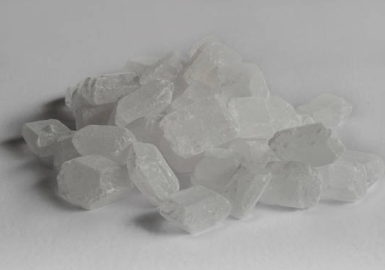
Finding the exact reactive agent of the Starch test online can be difficult because a ready-made one is only sold by a few companies. However, a person does not need to worry about it because he can make it from scratch. First, he needs to prepare potassium iodide, iodine crystals, and distilled water. This potassium iodide (https://www.echemi.com/produce/pr2201061504-high-quality-cas-7681-11-0-pharmaceutical-chemical-potassium-iodide.html) comes in odorless white crystals that make it easy to dissolve in water. On the other hand, these iodine crystals (https://www.echemi.com/produce/pr2007011015-factory-supply-lodine-iodine-crystals.html) are 100% iodine and has red-brown particles.
To make this color reactor for the Starch test, fill a container with 200ml of distilled water. Weigh 6 grams of potassium iodide and add it to the water. This chemical is essential to add because this will help stabilize the iodine. When they are mixed, measure 3 grams of iodine crystals, add them to the solution and stir for 30-60 seconds. A person needs to prepare it 24 hours before he will use it for his experiment to make sure that all the iodine crystals have dissolved.
How to use the reagents to detect Starch
The number of chemicals used to detect starch will differ depending on the physical state and the kind of food. To know if starch is present in solids, one needs to cut the food sample into very small pieces and put it in a bowl. He needs to add 2 to 3 drops of iodine solution and wait for a couple of minutes before reading the result. When the solids have starch, the iodine solution will become blue-black on the small slices. If the sample is in liquid form, he needs to get 10 ml of the sample and put it in a test tube. He can use 4 to 5 drops of iodine solution, wait for a few minutes, and note the color of the liquid. If it becomes blue, it contains starch. Lastly, when the sample is leaves, he needs to boil the leaves in the water first. After that, he needs to get a sample of the boiled leaf, place it in a test tube containing 90% ethanol and boil it again. When it is done, he needs to remove the leaf and put it on a clean surface. He can add a few drops of the iodine solution. If it will turn blue, the leaf contains a fair amount of starch.
Looking for chemical products? Let suppliers reach out to you!
You May Interested In


Glow70/KLOW80 99% China Peptides Warehouse Direct Delivery Lyophilized Powder in Stock
$169/UNIT FOB


2026-10-12
Trade Alert
Delivering the latest product trends and industry news straight to your inbox.
(We'll never share your email address with a third-party.)

Related News
-
Detect Sugar In Your Food: New Reagent To Test For Starch Is Here!
-
Why Is Starch a Reducing Sugar
-
Recently, Wanhua Chemical made one major transaction
-
What Reagent Is Used To Test For Starch
-
Corn starch spot prices rose recently
-
Ethylene Glycol: Production, Uses, and Safety
-
Fipronil: Uses, Safety, and Environmental Impact
-
Aluminum Oxide (Al2O3): Abrasive Uses, Ceramic Applications, and Safety
-
Sodium Nitrate: Fertilizer, Food Curing, and Explosive History
-
Reactions and Uses of Ammonium Dichromate
Recommend Reading
-
![Applications of Aluminium Orthophosphate]()
Applications of Aluminium Orthophosphate
-
![Sodium Hydroxide Reactions: With Aluminum, Acids, and Metals]()
Sodium Hydroxide Reactions: With Aluminum, Acids, and Metals
-
![Gellan Gum (E418): Vegan Thickener vs. Xanthan Gum in Food]()
Gellan Gum (E418): Vegan Thickener vs. Xanthan Gum in Food
-
![Sodium Benzoate (E211): Safety, Benzene Risk, and Preservative Uses]()
Sodium Benzoate (E211): Safety, Benzene Risk, and Preservative Uses
-
![Heptane: Properties, Uses, and Industrial Applications]()
Heptane: Properties, Uses, and Industrial Applications
-
![Business Society’s Market Outlook for Acetone on August 11, 2026: Steady Performance]()
Business Society’s Market Outlook for Acetone on August 11, 2026: Steady Performance
-
![Business Society’s Market Outlook for Fuel Oil 180CST on August 10, 2026: Volatile]()
Business Society’s Market Outlook for Fuel Oil 180CST on August 10, 2026: Volatile
-
![July MTBE market price increase in China is significant]()
July MTBE market price increase in China is significant
-
![Business Society’s Diesel Market Outlook on August 10, 2026: Volatile but Rising]()
Business Society’s Diesel Market Outlook on August 10, 2026: Volatile but Rising
-
![Business Society Petroleum Coke Daily Review: Overall Downward Trend on August 7, 2026]()
Business Society Petroleum Coke Daily Review: Overall Downward Trend on August 7, 2026





- Hot Searches
- 4 methoxystyrene
- 4 methoxybenzoyl
- sodium lauryl ether sulphate suppliers
- is miconazole nitrate the same as miconazole
- cost of phenol
- buying adrenochrome
- carboxy methyl cellulose price
- buy nandrolone decanoate
- buy oxymetholone
- msds glyphosate
- carbon tetrabromide
- tirzepatide peptide for sale