




Professor of Peking University Disagrees with Raising Personal Tax Levy Point to 10,000: Only 5% of People Will Pay Tax
It was learned that Dong Mingzhu, chairman and president of Gree Electric, a deputy to the National People's Congress, proposed to raise the personal income tax threshold and increase the tax collection and management of non-wage income at the 2022 national "two sessions", proposing to raise the personal income tax threshold from 5,000 yuan/month to 10,000 yuan/month for salaried workers to promote common prosperity.
Being in the post-epidemic era and needing to expand domestic demand, Dong proposed to improve the stepped tax rate to improve the happiness of the middle and low-income people; meanwhile, increase the personal tax levy and management of non-wage income to make the rich pay more taxes and do more to support on social public services to prevent polarization and eliminate distribution inequity.
In 2021, GDP and GDP per capita will exceed 100 trillion yuan and 10,000 USD respectively, and the middle-income group will exceed 400 million people.
Therefore, Dong believes that a basic institutional arrangement with coordinated and matching primary distribution, redistribution and three distributions should be constructed.
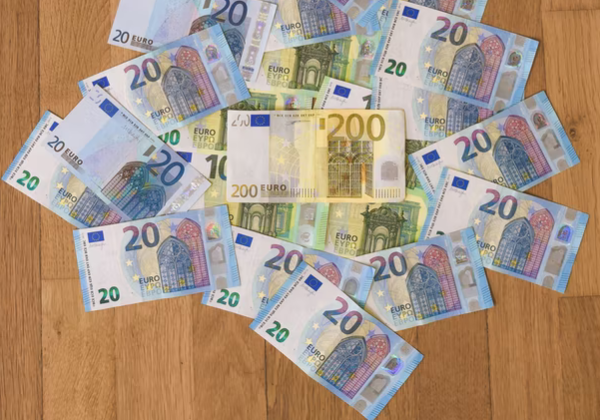
Taxation, social security and transfer payment regulation should be increased and made more accurate, the proportion of middle-income groups should be expanded, the income of low-income groups should be increased, high income should be reasonably regulated, illegal income should be outlawed, and an olive-shaped distribution structure with a large middle and small ends should be formed.
In addition, according to the National Bureau of Statistics, China's CPI rose 0.9% in 2021 compared with the previous year, China's PPI rose 8.1% in 2021 compared with the previous year, and the purchase price of industrial producers rose 11%, putting pressure on price growth.
Meanwhile, in 2021, the national per capita disposable income of 35,128 yuan, a nominal increase of 9.1% over the previous year, net of price factors, real growth of 8.1%; the national per capita consumer spending of 24,100 yuan, a nominal increase of 13.6% over the previous year, net of the impact of price factors, real growth of 12.6%, the increase in consumer spending is higher than the increase in income. "
In this context, the working class living pressure is increasing, and the starting point of personal tax has not been raised with it, the actual tax burden pressure on residents rose." Dong believes.
China has been collecting personal income tax since 1980, when the Personal Income Tax Law was enacted, and the starting point for personal income tax was 800 yuan per month in 1980, and the per capita disposable income of residents in that year was 20.57 yuan per month, which was 39 times the per capita income.
After four adjustments in 2005, 2007, 2011 and 2018, the starting point of personal tax in China was raised to RMB 5,000/month in 2018, and the per capita disposable income of the nation's residents in that year was RMB 2,352.33/month, and the starting point of personal tax was only twice the per capita income.
According to Article 6 of the Individual Income Tax Law of the People's Republic of China currently in force, the annual taxable income is the balance after deducting 60,000 yuan of expenses and special deductions, special additional deductions and other deductions determined by law from the amount of income of each tax year for the comprehensive income obtained by a resident individual, i.e. the starting point of individual income tax for the comprehensive income of citizens is still 5,000 yuan per month.
According to Dong, for residents, the pressure of living of the working class is increasing due to the rising prices, and the pressure of consumption in food, clothing and housing is increasing. The lower starting point of personal income tax leads to an increase in the actual tax burden, which weakens the "sense of benefit" of wage increase.
For enterprises, affected by the lower starting point of personal tax, more intensive tax brackets and higher progressive tax rates at lower levels, the part of profit for ordinary employees when enterprises raise salary is much less than the cost of enterprise expenditure. This, on the one hand, reduces the sense of access to employees, on the other hand, increases the cost of enterprises, enterprises to retain talent more difficult.
In addition, in the process of actual tax collection and administration, individual wages and salaries are withheld and paid by enterprises, which is easier to supervise and collect, while capital income is relatively loosely regulated, and there are some high-income and high-net-worth people who carry out tax planning or tax evasion through taxation between different income types and between personal tax and corporate income tax, which makes tax collection and administration more difficult.
In order to effectively raise the actual income level of residents, promote consumption and drive the "internal circulation" of the economy, Dong suggested raising the starting point of personal tax, improving the ladder tax rate, and increasing the personal tax collection and management of non-wage income from the legislative level, with two specific suggestions.
First, raise the starting point of personal tax and improve the ladder tax rate. The starting point of personal tax should be raised from RMB 5,000 yuan/month to RMB 10,000 yuan/month, and a new class of RMB 2 million yuan/year (corresponding to a tax rate of 50%-55%) should be added to the highest grade of annual taxable income of RMB 960,000 yuan/year, while the tiers and spacing of the over-regressive tax rate should be further optimized and adjusted, so that the tax reduction will be tilted to the middle and low income groups.
Second, improve the supervision mechanism of taxation, reduce the tax burden of low- and middle-income people, increase the tax collection and management of non-wage income, innovate the taxation supervision mechanism, rely on taxation big data to accurately classify and supervise, crack down on tax evasion and other incidents that violate the principle of tax fairness, and promote social justice and common prosperity.

You May Interested In


High Quality β-Nicotinamide adenine dinucleotide CAS 53-84-9 NADwith ready stock and best price
$3/UNIT FOB


2026-10-10
Trade Alert
Delivering the latest product trends and industry news straight to your inbox.
(We'll never share your email address with a third-party.)

Related News
-
Announcement on Imposing Import Consumption Tax on Certain Oil
-
Global Trade Data for Epoxy Resin in 2025 Released: Asia Accounted for $640 Million in Imports, Vietnam Emerges as Top Buyer
-
Wanhua Chemical’s 2025 Revenue Exceeds RMB 200 Billion While Net Profit Remains Under Pressure
-
US Imposes Heavy Duties on Chinese L-Lysine with Combined Rates up to 188%
-
DKSH Expands Partnership with Assessa to Distribute Botanical Ingredients Across China
-
SK Chemicals Partners with China’s Kelinle to Build Its Own Waste-Plastic Supply Network
-
Korea’s First Petrochemical Restructuring Approved, LDPE Market Concentration Surges to 82%
-
Hormuz Traffic Remains 90% Below Pre-Conflict Levels as Limited Tanker Access Offers Partial Relief
-
South Korea Tests Arctic Commercial Route as Asian Exporters Seek New Logistics Alternatives
-
Wanhua's BorsodChem Restarts 650,000 T/Y of MDI and TDI Capacity in Europe
Recommend Reading
-
![Major Fire Hits China-Russia Joint 2.7 Million T/Y Polyolefins Project, Killing 6 Chinese Nationals and Injuring 152 People]()
Major Fire Hits China-Russia Joint 2.7 Million T/Y Polyolefins Project, Killing 6 Chinese Nationals and Injuring 152 People
-
![Chinese Urea Producers Receive a Timely Boost as Second Round of 2026 Export Quotas Nears 2 Million Tons]()
Chinese Urea Producers Receive a Timely Boost as Second Round of 2026 Export Quotas Nears 2 Million Tons
-
![EU Low-Value Parcel Rules Could Disrupt Chemical Sample Flows]()
EU Low-Value Parcel Rules Could Disrupt Chemical Sample Flows
-
![EU May Build Industry-Level Trade Barriers Against Chinese Chemicals]()
EU May Build Industry-Level Trade Barriers Against Chinese Chemicals
-
![“Fake Fame” in a Forgotten Dock: Chinese Authorities Bust $100,000 Counterfeit Building Materials Ring]()
“Fake Fame” in a Forgotten Dock: Chinese Authorities Bust $100,000 Counterfeit Building Materials Ring
-
![Support Effective, January Normal Butanol Market Price Increase Exceeds 18% in China]()
Support Effective, January Normal Butanol Market Price Increase Exceeds 18% in China
-
![Insufficient Demand, Cyclohexane Market Maintains Stable Operation Overall in China]()
Insufficient Demand, Cyclohexane Market Maintains Stable Operation Overall in China
-
![Business Society September 21, 2026 Maleic Anhydride Trend Analysis: Volatility]()
Business Society September 21, 2026 Maleic Anhydride Trend Analysis: Volatility
-
![Cost Support Drives Slight Rise in Toluene Market in January]()
Cost Support Drives Slight Rise in Toluene Market in January
-
![Business Society DOP Trend Analysis, September 22, 2026: Clear Decline]()
Business Society DOP Trend Analysis, September 22, 2026: Clear Decline





- Hot Searches
- caustic soda price
- prednisolone vs prednisolone sodium phosphate
- cosmetic raw material suppliers
- hydroxypropyl cellulose price
- heavy water for sale
- amoxycillin and potassium clavulanate tablets
- 3-methoxy benzoic acid
- corundum white
- barite price
- potassium cyanide buy
- sodium acetate sds
- dioctyl phthalate prices