Davos: Take the first step in classification, what is the actual benefit?
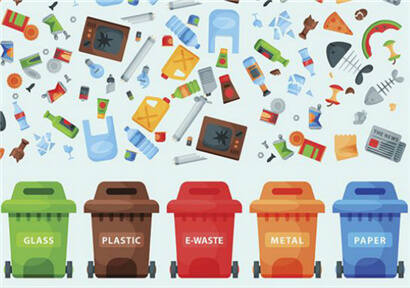
On July 2, the annual meeting of the new leaders of the World Economic Forum (hereinafter referred to as the Summer Davos Annual Meeting) is being held at the Dalian Donggang International Conference Center. Even with more than 2,000 participants, the free drinks offered at the venue were never discontinued. One empty bottle after another keeps filling the sorted trash cans placed around the venue --- a group of recyclable and non-recyclable ones. The material of khaki corrugated paper indicates that they will also be recycled after completing their mission. On the first day of the annual meeting (July 1), the so-called "Strictest Waste Classification Regulation in History" was formally implemented in Shanghai. By 2020, 46 key cities will have built domestic waste classification and treatment systems. The classification gives the story of garbage a tip of the iceberg, but after taking the first step, the actual benefits it will bring are still worth further discussion.
At the annual meeting of summer Davos, the industrial wind direction has pointed to the broad field after garbage classification. Waste cloth recycling has been developed into a new industry, and the recycling technology of beverage bottles is being tried first in many multinational enterprises, including new materials and technologies such as nano-materials and degradable materials, which make the sorted garbage have new value. How to reduce the cost of garbage sorting and improve the efficiency of garbage sorting? In an interview with Daily Economic News, Pan Jiaofeng, president of the Institute of Scientific and Technological Strategic Consultation of the Chinese Academy of Sciences and director of the China Development Strategic Research Association, put forward a new idea: through satellite monitoring and large data analysis technology, urban garbage will be a more efficient and cost-effective solution. How to calculate the cost ofclassification? Although the environmental benefits of waste classification are considerable, more and more people begin to consider the cost of waste classification under the premise of policy sustainability. A general view is that the level at which garbage can be sorted depends on how much cost residents can tolerate. How much is the impact ofcost? Zhu Fenfen, associate professor of environmental science and engineering, School of Environment, Renmin University of China, has analyzed and pointed out that the social costs involved in the process of domestic waste classification only include land cost, policy inclination, pollution control and health problems, and the time cost of individuals or families. The increase in social costs does not seem to have resulted in a decrease in economic costs. Dai Xingji, a professor of environmental science and engineering at Fudan University, believes that the cost of garbage disposal is increased when the work of garbage classification is allocated to everyone. Because "no classification only requires a collection and transportation system, classification will lead to a new start, and the extra collection and transportation and disposal system means more money".
For this fundamental issue concerning the sustainability of waste classification, Liu Shijin, vice-chairman of China Development Research Foundation and chief consultant of China International Cooperation Committee on Environment and Development, gives different answers: the key to calculating costs is how to understand the meaning of costs.
"In the past, there were many costs in the traditional way of industrialization development, but they were not actually calculated and internalized. Now, green development also has a lot of benefits, and it has not been calculated. He points out that if garbage is classified as part of a green economy, the benefits it brings are expected to exceed the costs. In his opinion, green economy not only does subtraction, but also adds, even multiplies, which will eventually provide new momentum for the whole economic growth. "In fact, the green development mode is more competitive in economic efficiency than the traditional industrialization development mode, and more in line with the requirements of sustainable development." He said.
But how can long-term benefits cover short-term costs? Liu Shijin believes that garbage can be classified as a way of life. "If it takes long enough for garbage classification to become a habit, a way of life, without compulsion or reward, then we can really enter a green society." He pointed out. Another more direct way is to reduce the cost of waste disposal and recycling by innovative means. Huang Xiaoyan, vice president of Coca-Cola's Asia-Pacific R&D department, was delighted when it came to the popularization of garbage classification. She recalled that at the annual meeting of Tianjin Summer Davos a year ago, Coca-Cola introduced a conceptual machine called "Left and Right Future". The machine sells drinks on the left and recycles bottles on the right. "Let the export of drinks be the return port of packaging, and improve the economy of forward and reverse logistics." It was Fukuoka City in Japan that embraced science and technology earlier. As early as the 1980s, the Fukuoka Municipal Government cooperated with Fukuoka University to explore a semi-oxygen-consuming landfill method. In an interview with Daily Economic News, Mayor of Fukuoka, Ichiro Takashima, said that compared with simple landfills, which may seriously pollute the surrounding environment, Fukuoka's landfills can not only turn garbage into energy, provide power for the city, but also save land resources and make landfills develop into landfills. Organic fields, growing crops. Land can be further developed and utilized in a very short period of time.
The Institute of Strategic Consultation for Science and Technology of the Chinese Academy of Sciences has issued a set of plans for the use of satellite monitoring combined with large data to propose specific treatment methods for the types and sources of garbage for cities. Pan Jiaofeng, president of the institute, said that the system could enhance the promotion of waste disposal, waste into treasure and other technologies, and solve them more pertinently.

You May Interested In


High Quality β-Nicotinamide adenine dinucleotide CAS 53-84-9 NADwith ready stock and best price
$3/UNIT FOB


2026-10-19
Trade Alert
Delivering the latest product trends and industry news straight to your inbox.
(We'll never share your email address with a third-party.)

Related News
-
Interpretation of fine chemical industry
-
Keschuang plan to promote the development of circular economy
-
Garbage Classification and Action in Rural Areas
-
Garbage Classification and Action in Rural Areas
-
Ministry of Agriculture and Rural Areas: Garbage Classification
-
China passes the Law on the Prevention and Control of Environmental Pollution
-
Profits Are Rising, but So Are the Risks—China’s Coatings Industry Is Living Through Its Most Awkward Year
-
China's National Narcotics Control Commission Issues Important Notice: Beware of These 8 Chemicals Being Diverted for Drug Production
-
Kemira Acquires AquaBlue
-
LG Chem Teams Up with Jianghua Microelectronics to Advance Semiconductor Ultra-High-Purity IPA
Recommend Reading
-
![Ammonia Leaks in Iraq and Jordan Put Fertilizer Production and Port Safety on Alert]()
Ammonia Leaks in Iraq and Jordan Put Fertilizer Production and Port Safety on Alert
-
![ExxonMobil’s 264,000-bpd Joliet Refinery Shuts After Site-Wide Power Failure]()
ExxonMobil’s 264,000-bpd Joliet Refinery Shuts After Site-Wide Power Failure
-
![French Cosmetics Exports Poised for First Drop in Over Two Decades in 2025]()
French Cosmetics Exports Poised for First Drop in Over Two Decades in 2025
-
![Lubei Chemical Expects First-Quarter Net Profit to Rise 57.29% as Cost Control Delivers Clear Results]()
Lubei Chemical Expects First-Quarter Net Profit to Rise 57.29% as Cost Control Delivers Clear Results
-
![DIC Raises Epoxy Resin and Curing Agent Prices by Up to 280 Yen/kg]()
DIC Raises Epoxy Resin and Curing Agent Prices by Up to 280 Yen/kg
-
![High Cost Levels Support PP Price Increase in First Half of September]()
High Cost Levels Support PP Price Increase in First Half of September
-
![Business Society’s Acrylonitrile Trend Analysis for September 15, 2026: Strong Rebound]()
Business Society’s Acrylonitrile Trend Analysis for September 15, 2026: Strong Rebound
-
![Business Society September 24, 2026 Acrylic Acid Trend Analysis: Weak Rebound]()
Business Society September 24, 2026 Acrylic Acid Trend Analysis: Weak Rebound
-
![Business Society’s Trend Analysis for Polyester Staple Fiber on September 15, 2026: Volatile]()
Business Society’s Trend Analysis for Polyester Staple Fiber on September 15, 2026: Volatile
-
![Strong upward trend in the Chinese soda ash market]()
Strong upward trend in the Chinese soda ash market