the connection between drugstores and convenience stores lead to diversification
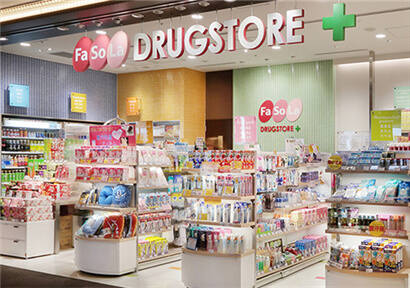
Diversification has always been a pain in drugstores' hearts. One is the frustration of "cosmetics stores" in water testing; the other is the increasing number of cities that prohibit the sale of non-drugs by designated drugstores of medical insurance. However, at present, there is a "marriage" between drugstores and convenience stores in Beijing, which provides a new path. In October last year, the Beijing Municipal Commerce Committee, in conjunction with the six departments of the Municipal Development and Reform Commission, the Finance Bureau, the Urban Management Commission and the Industry and Commerce Bureau, issued the "Measures for Further Promoting the Development of Convenience Stores" (hereinafter referred to as "Measures"), allowing chain stores to apply for retail operation of category B non-branches according to relevant standards. Prescriptions. "Measures" immediately attracted the attention of the industry, and even some people worried that chain convenience stores would grab the "bowl" of the pharmacy. As of mid-June, only 26 of the 6,000 convenience stores in Beijing had applied for the Drug License. There is a "marriage" between drugstores and convenience stores, from competitors to partners, bringing hope to win-win cooperation.
In December 2018, Beijing Kelong's Jingjie Fresh Workers'Sports East Road Shop won the first drug license issued by Beijing for chain convenience stores. It is known that at the beginning of its opening, the store had 62 kinds of medicines and 35 kinds of medical devices, such as Four Seasons Cold Tablets, Banlangen Granules, Vitamin C Effervescent Tablets, Thermometers and Blood Pressure Meters. In the first week, it sold an average of 5 boxes of medicines daily, with an average daily turnover of about 50 yuan in the first month. Such an increase is obviously not ideal.
Beijing launched this initiative to encourage the development of chain convenience stores, but also to facilitate the purchase of drugs for patients. Although the drugstores require 24-hour supply of drugs, many drugstores have a 24-hour supply of drugs because of the high cost. Convenience stores usually operate 24 hours, which can be used as a supplement to the "blank spots" of drugstores.
So far, most of the convenience stores in Beijing are still waiting to see whether the sale of drugs can bring about synergies is the main factor to consider. In addition to whether consumers can adapt to the convenience store to buy drugs, the increase of larger costs also deters them.
According to the relevant regulations, convenience stores dealing in drugs should not operate in less than 20 square meters, and at the same time meet the relevant standards: chain headquarters should be set up to uniformly distribute drugs; chain headquarters should have a licensed pharmacist, and each store should be equipped with trained pharmacy knowledge. Servers, the former increases the cost of rent, the latter increases the cost of labor. Statistics show that the operating prospects of convenience stores in the past two years are not optimistic. For example, in 2017, 54% of convenience stores have net interest rates ranging from 0% to 4%, and 24% of convenience stores have lost money.
In some places, after banning the displaying of non-drugs in designated pharmacies of medical insurance, the local pharmacies adopt the method of separating, or separate the non-drug areas from each other, dealing in cosmetics, daily necessities, health care products, etc., but due to the inability to the quantity, It is not supported by upstream manufacturers, and consumers do not accept this model. What is the effect of switching to a convenience store that is good at running non-drug stores?
Beijing has two representative pharmacies which adopt the model of "pharmacy + convenience store". One is Yongan Tang, the other is Pu'an.
This Yongan Tang store, which cooperates with 7-11 convenience store, is located on the Outer Street of Andingmen, Dongcheng District, Beijing, and is a designated medical insurance pharmacy. The store is separated from the 7-11 convenience store by a wall and rents part of the area to the 7-11 convenience store, which operates separately. Strictly speaking, this form is only a formal "drugstore + convenience store". In fact, it is not related to each other. It is only for mutual drainage. The shop where Pu'an cooperates with Rosen Convenience Store is located in Pu'an Pharmacy on the 1st floor of Huamao Tiandi, Beiyuan, Chaoyang District. The overall operation of Pu'an Rosen Pharmacy Convenience Store is dominated by Pu'an and the supply of convenience stores is in charge of Rosen. Pu'an, which originated in Wuhan, is good at diversification, so they are also well integrated. For example, the decoration style is similar, and the goods are divided into different categories, which makes people feel like the same shop. From this point of view, "drugstore + convenience store" model has taken a substantive step. Of course, the combination of the two requires more exploration and running-in. For example, they belong to different supply chain systems, how to improve synergy, and whether their respective drainage and net profit growth meet expectations, etc. The most critical point is whether it can be recognized by consumers as the same store. If not, the integration of the two is unsuccessful.
Clutch is unavoidable? At present, licensed pharmacists are being strictly checked everywhere. For example, Quanzhou City, Fujian Province, uses face recognition and GPS positioning to lock in the on-the-job situation of licensed pharmacists, and pharmacists'registration certificates will not be able to escape. Recently, 252 licensed pharmacists in Jiangsu voluntarily cancelled their licenses during the storm of "registration". As a result, the number of registered pharmacists in pharmacies

You May Interested In


High Quality β-Nicotinamide adenine dinucleotide CAS 53-84-9 NADwith ready stock and best price
$3E+1/UNIT FOB


2026-10-24
Trade Alert
Delivering the latest product trends and industry news straight to your inbox.
(We'll never share your email address with a third-party.)

Related News
-
Small Pharma Firms Under Threat as Regulator Tightens Quality Norms
-
High Crude Prices Are Passing Through the Coatings Chain as More Than 20 Companies Launch Price Increases
-
25 Companies Raise Prices Three Times Within a Month: China’s Titanium Dioxide Industry Shifts from “Price Wars” to a “Pricing Alliance”
-
Middle East Conflict Exposes Fragility of Global Fertilizer Supply Chains
-
Germany Passes Healthcare Reform, Multinational Drugmakers Face 15.5% Mandatory Discount
-
Brazil Expands Chemical Tax Breaks as India’s Crop Protection Industry Warns of a 25% Cost Increase
-
"Zipper-Like" Opening and Closing of Hormuz Coupled with Russian Export Ban Send Energy and Chemical Prices Soaring
-
Indorama Corporation Acquires 100% Stake in Anyang Zhongying Fertilizer
-
Chevron Opens Oilfield Chemical Technology to Rivals
-
“Anti-Overcapacity” Backfires: China’s Chemical Industry Trapped in a Hell of Its Own Making—and Global Pushback
Recommend Reading
-
![Saint-Gobain Expands Its Construction Chemicals Operations in Indonesia]()
Saint-Gobain Expands Its Construction Chemicals Operations in Indonesia
-
![EU Greenlights Four GM Crops—But Only at the Border]()
EU Greenlights Four GM Crops—But Only at the Border
-
![The $6 Billion Gold Rush: Generic Semaglutide Set to Reshape Global Pharma After Patent Cliff]()
The $6 Billion Gold Rush: Generic Semaglutide Set to Reshape Global Pharma After Patent Cliff
-
![EU Clears Carlyle's Acquisition of BASF's Coatings Business, but Demands Divestment of Nouryon's Polysulfide Assets: What Are the Underlying Risks?]()
EU Clears Carlyle's Acquisition of BASF's Coatings Business, but Demands Divestment of Nouryon's Polysulfide Assets: What Are the Underlying Risks?
-
![Domo Chemicals’ German Subsidiary Insolvencies: Energy Costs, Weak Demand and Chinese Nylon Competition]()
Domo Chemicals’ German Subsidiary Insolvencies: Energy Costs, Weak Demand and Chinese Nylon Competition
-
![China's Natural Rubber Market Weakly Consolidates]()
China's Natural Rubber Market Weakly Consolidates
-
![Both Cost and Demand Weaken, PTA Prices Remain Stagnant and Consolidate]()
Both Cost and Demand Weaken, PTA Prices Remain Stagnant and Consolidate
-
![Cost Support Loosens, Polyester Staple Fiber Prices Fluctuate and Consolidate]()
Cost Support Loosens, Polyester Staple Fiber Prices Fluctuate and Consolidate
-
![Insufficient cost support + weak demand: Melamine continues its weak consolidation]()
Insufficient cost support + weak demand: Melamine continues its weak consolidation
-
![关于全面排查下架易制毒及易制爆产品信息的公告 Announcement on the Comprehensive Review and Removal of Product Information Related to Precursor and Explosive Precursor Chemicals]()
关于全面排查下架易制毒及易制爆产品信息的公告 Announcement on the Comprehensive Review and Removal of Product Information Related to Precursor and Explosive Precursor Chemicals