Popular fragrance notes don't always make best perfumes: Study
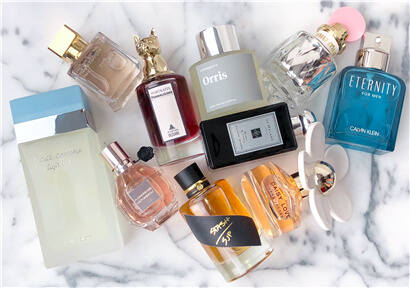
Chemical Weekly: Perfumes that use the most common scents do not always obtain the highest number of ratings, according to an analysis of 10,000 perfumes and their online ratings. The study, published in the journal PLOS ONE, reveals which odours are likely to bring success, with some surprising combinations providing a boost to ratings.
Perfumes are described in terms of ‘notes’, which can be single odour ingredients, such as vanilla, musk or jasmine, as well as more generic smells like ‘floral notes’. Perfume smell is then described in terms of a combination of these notes. Combinations of several notes that are commonly used in perfumes are called ‘accords’.
Researchers from Imperial College London in the UK used complex network analysis to determine the most popular notes and accords. The researchers analysed 1,000 notes in over 10,000 perfumes and their success in online shops. They found that some notes and accords are ‘over-represented’ in the dataset, meaning they appear more often than by chance, but that these are not necessarily the ones that are present in perfumes with the highest number of ratings.
While some common accords, like lavender and geranium, are often pre-sent in ‘successful’ perfumes, some less-common notes and accords have an even stronger link with perfume popularity, for example jasmine plus mint, or musk plus vetiver and vanilla.
Opportunities for perfumers
The researchers said this could be a new avenue for perfumers to discover scent combinations that are likely to be successful but are not yet widespread.
“Our work provides insights into factors that play a role in the success of perfumes. It also sets up a framework for a statistical analysis of fragrances based on simple properties and customer reviews,” said Ms. Vaiva Vasiliauskaite, from Imperial College London. “It could be a beneficial tool for systematic ingredient selection and act as an artificial ‘Nose’ – a traditional craft-master of perfumery,” she added.
The team acknowledged that brand influences perfume popularity but found no correlation between perfume price or time since release and success. The smell itself did have a large relation to perfume success.
Their mathematical analysis also allowed them to determine which notes had particularly high ‘enhancement’ effects – those that played a significant role in improving the rating of the accord they were added to. The best enhancers tended to be generic notes, such as ‘floral notes’, or were well represented in the database, such as musk or vanilla.

You May Interested In


2026-09-15
Trade Alert
Delivering the latest product trends and industry news straight to your inbox.
(We'll never share your email address with a third-party.)

Related News
-
Interparfums Acquires Goutal to Enter the High-End Perfume Sector
-
Perfume supply shortage, Coty's performance 'forced' to slow down
-
How Is Perfume A Compound, and What Are Its Ingredients?
-
What Is The Solvent Used In Perfume
-
How Perfume Is A Mixture Of Fragrant Compounds?
-
3 trends of European and American daily chemicals
-
These spices and vegetable notes will sweep the perfume industry
-
Nuggets in the perfume market! L'Oreal flagship store landing in Shanghai
-
Takasago perfumer: green chemistry will create transformative spices
-
Future growth points in the perfume market: digitalization and functionality
Recommend Reading
-
![“Amputation or Strategic Retreat?”: Shell’s Six-Year Chemical Losses and the Quiet Unwinding of an Empire]()
“Amputation or Strategic Retreat?”: Shell’s Six-Year Chemical Losses and the Quiet Unwinding of an Empire
-
![Solvay's]()
Solvay's "Slimming Action": Soda Ash Production Capacity in Spain Slashed by 180,000 Tons, 77 Jobs to Go
-
![“The 40-Year Ethylene Giant Collapses”: ExxonMobil’s Premature Shutdown Is Not Just Scotland’s Tragedy—It’s the Twilight Elegy of European Industrial Civilization]()
“The 40-Year Ethylene Giant Collapses”: ExxonMobil’s Premature Shutdown Is Not Just Scotland’s Tragedy—It’s the Twilight Elegy of European Industrial Civilization
-
![Amazon Turns Lilly’s Weight-Loss Pill Into a Retail Logistics Play]()
Amazon Turns Lilly’s Weight-Loss Pill Into a Retail Logistics Play
-
![Hormuz Is Reopening, But Chemical Logistics May Take Months to Recover]()
Hormuz Is Reopening, But Chemical Logistics May Take Months to Recover
-
![China's Propylene Oxide Market Prices Show a High-Level Correction (2.2-2.6)]()
China's Propylene Oxide Market Prices Show a High-Level Correction (2.2-2.6)
-
![Insufficient Support, n-Butanol Market Continues to Decline in China]()
Insufficient Support, n-Butanol Market Continues to Decline in China
-
![Supply-Demand Dynamics Dominate Market Landscape; Formic Acid Prices Remain Stable with a Slight Increase]()
Supply-Demand Dynamics Dominate Market Landscape; Formic Acid Prices Remain Stable with a Slight Increase
-
![Methanol Market Shows Narrow Fluctuations in China]()
Methanol Market Shows Narrow Fluctuations in China
-
![February 10 Isopropanol Market Remains Stable in China]()
February 10 Isopropanol Market Remains Stable in China