Sports nutrition trends for 2020 and beyond
According a report by Allied Market Research, the Asia-Pacific sports nutrition market is projected to have a compounded annual growth rate of the market of 9 percent between 2015 to 2020, to reach a total value of US$7.8 billion in 2020. The global sports nutrition market size is expected to reach US$44 billion by 2021, according to the report.
Presently, Japan has the largest market for sports nutrition in the Asia-Pacific. While China and India, currently in their initial growth phase, expect to experience phenomenal growth in the upcoming years. Yet there is an abundance of cheap counterfeit products in these countries, which is turning out to be a major challenge for the players operating in the industry.
An expert who will speak at the Vitafoods Asia 2019 Conference, Rebecca Lwin, is a dietician and founder of The Expat Dietitian, a nutrition consultancy based in Manila, the Philippines. Lwin says that as Asian cultures adopt more Western food habits, diseases of lifestyle, such as obesity, heart disease and diabetes are increasing.

What’s next for the industry
Lwin notes that in the past 15 years have paved the way for more personalised and niche type of services. An increase in gym memberships, the rise of superfoods, a growth in health food stores are some examples.
As corporations and individuals alike embrace work-life balance, Lwin expects gyms to enter the workplace. In Singapore this is already evident, with popular gyms being set up within office towers and corporations buying subscriptions for employees to attend the gym. Along addressing with the physical, nutrition is also becoming personalised, as busy executives have little time to make complete meals for their fitness journeys.
“Meal prep services are becoming more commonplace,” says Lwin. “There is also more reliance on meal replacements such as shakes and meal bars,” she adds. “There are only 24 hours in a day, and often when people add a fitness routine to their lifestyle, there is little time left for grocery shopping, cooking, and advance meal preparation.”
“This is where meal prep services are so valuable; sports-minded, but time-constrained. Consumers can fuel themselves with a nutritionally balanced meal that's been pre-measured and calculated for the desired nutrition content,” Lwin explains.
At the same time, the fitness nutrition industry is full of fad diets, so-called miracle foods and pseudoscience. This is further exacerbated by the rise of social media. “Many trends are either not backed (or are loosely backed) in research but become wildly popular on social media. “We need to combat misinformation among the general public,” she notes.

“These ‘experts’ are giving nutrition advice via social media… they are not experts in any sense of the word. They have no credentials or degree in nutrition, or even health sciences.
Companies in the industry can and should capitalise on misinformation, according to Lwin, by calling it out and replacing it with accurate information, particularly when their product is solidly grounded in evidence-based research.
In order to stay abreast of the market’s potential, companies need to make research and development a priority to stay on top of nutrition developments. They should set the latest trends, instead of creating products that react to trends.
“I recommend working with a research and development dietitian, who has an understanding of not only nutrition & human nutrient needs, but also food science, recipe development, and nutrient interactions,” she says.
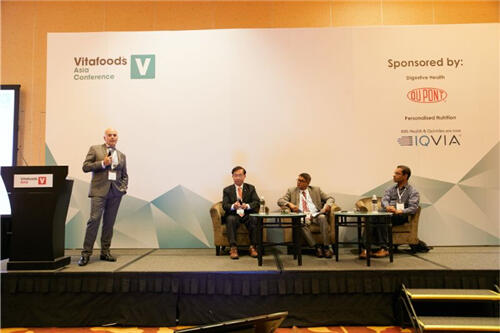
Rebecca Lwin will be speaking at the conference summit, “Sports and fitness nutrition: Tailoring diets for improved performance”, from 10:30 a.m. – 12:30 p.m. on Thursday, 26 September 2019.
Vitafoods Asia will be held between 25 to 26 September at Marina Bay Sands in Singapore. Over 350 international suppliers and 6,000 business leaders attend the conference and exhibition. Sports and fitness nutrition product manufacturers can expect opportunities for networking and collaboration at the event among like-minded individuals.

Titanium dioxide market is rising again
You May Interested In


High Quality β-Nicotinamide adenine dinucleotide CAS 53-84-9 NADwith ready stock and best price
$3/UNIT FOB


2026-10-16
Trade Alert
Delivering the latest product trends and industry news straight to your inbox.
(We'll never share your email address with a third-party.)

Related News
-
VIV Select India 2026: A Powerful First Edition Puts India at the Heart of the Global Animal Feed-to-Food Conversation
-
VIV Health & Nutrition Asia 2026 Brings Together Innovation and Business Across the Animal Feed and Health Industry
-
Laboratoire PYC showcases its collagen-driven nutricosmetic innovations
-
Gisela Pinheiro appointed as head of personal care Europe business unit at BASF
-
DSM released the results of the development of nutrition business
-
International Trade Business School Thailand & UK Food and Nutrition Market Summary
-
Don't forget this step before eating parsnips
-
What will save you, the sleep of the you who work everyday
-
Do You Know the Real Benefits of Eating Bird's Nest?
-
Soy Milk Industry Ushers in New Opportunities for Development
Recommend Reading
-
![German Chemical Industry Posts Q2 Rebound but Capacity Utilization Remains at 73.2%]()
German Chemical Industry Posts Q2 Rebound but Capacity Utilization Remains at 73.2%
-
![Tinci Materials Calls Off 2.65 Billion Yuan Project as Electrolyte Giant Shifts Strategy]()
Tinci Materials Calls Off 2.65 Billion Yuan Project as Electrolyte Giant Shifts Strategy
-
![Eastern Shenghong Projects First-Half Profit of 5 Billion Yuan – A Collective Turnaround for the Four Major Private Refiners? Is the Chemical Sector Rebounding?]()
Eastern Shenghong Projects First-Half Profit of 5 Billion Yuan – A Collective Turnaround for the Four Major Private Refiners? Is the Chemical Sector Rebounding?
-
![Crude Oil Tops $100, Asian Propylene Plants Undergo Concentrated Maintenance]()
Crude Oil Tops $100, Asian Propylene Plants Undergo Concentrated Maintenance
-
![Europe Faces 510,000-BPD Q4 Jet Fuel Deficit as ARA Stocks Hit Seven-Year Low]()
Europe Faces 510,000-BPD Q4 Jet Fuel Deficit as ARA Stocks Hit Seven-Year Low
-
![Supply and Demand Tug-of-War: Melamine Market Sees Slight Upswing]()
Supply and Demand Tug-of-War: Melamine Market Sees Slight Upswing
-
![Business Society’s September 24, 2026 Natural Rubber Market Outlook: Strong Market Rebound]()
Business Society’s September 24, 2026 Natural Rubber Market Outlook: Strong Market Rebound
-
![Benzoylecgonine: Detection and Testing Methods]()
Benzoylecgonine: Detection and Testing Methods
-
![Phosphoric Acid: Uses in Cola, Rust Removal, and Fertilizers Explained]()
Phosphoric Acid: Uses in Cola, Rust Removal, and Fertilizers Explained
-
![Suppliers Hold Firm on Prices, Slight Increase in Butadiene Market in China]()
Suppliers Hold Firm on Prices, Slight Increase in Butadiene Market in China