Coal demand will gradually pick up, annual long-term cooperation or downward
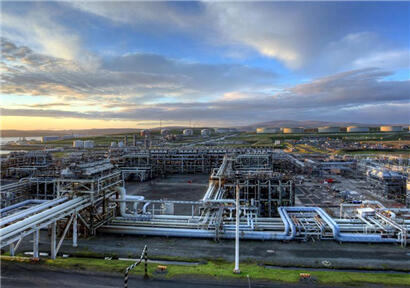
In November, the steel raw material end began to weaken significantly, the iron ore continued to fall sharply, and the pattern of coal and coke repeated bottom seeking continued, and the steel price also weakened. The reason is that, on the one hand, the low price of imported coal has a greater impact on the domestic market than expected, and the domestic high-quality main coke market is cold. On the other hand, due to the heavy pollution early warning in the north of China, the scope of production suspension of coke enterprises has been expanded, and the continuous compression of profits has given coke coal additional negative effects, and the futures price can hardly escape the downward trend. To be specific, there are still sporadic reductions in the national coking coal market today. Among them, Anhui Huainan coking coal launched a one household one discussion policy, with a preferential margin of 30-50 CNY/ton. In addition, after the sharp reduction of Shanxi high-quality coking coal, the demand change is limited. In terms of annual long-term cooperation, at present, the annual long-term cooperation prices of most mainstream coal enterprises are mostly stable, but the annual order meeting is about to be held, and it is expected that the annual long-term cooperation prices will decline in 2020.
At present, the supply of coking coal market is sufficient, the demand continues to be weak, and the later price will continue to bear pressure. The economy is showing signs of stabilization. Real estate investment remains resilient. Last week, the US dollar index rose sharply, crude oil oscillated stronger, Luntong copper rose all the way, and international gold prices fell. On the domestic side, the deviation between China mining and Caixin manufacturing PMI indicates that the economy is gradually recovering and the decline of industrial products is expected to stabilize. In terms of high-frequency data, the real estate sales data turned better in October, the automobile demand showed signs of improvement, the wholesale and retail data slightly improved, but not significantly improved, the production restriction policy continued to be implemented, the blast furnace operation rate rose after the saving, the coal consumption of large power generation group continued to grow on Saturday, and the industrial production showed signs of significant improvement in the short term. Since this year, the growth of real estate investment is still relatively resilient, and one of the major supporting factors is the steady growth of real estate funds. In the first half of 2019, the growth of real estate funds in place is mainly supported by the following factors: first, the growth of real estate pre-sale is stable, and in this round of regulation and control, the growth of individual housing loan interest rate is limited; second, the net financing volume of trust and overseas debt is significantly expanded. Since this year, the expansion of trust and overseas debt financing has been the main driving force for the growth of developers' non pre-sale capital sources. The stabilization of the real estate is conducive to the gradual recovery of the end steel consumption, and the black department is pessimistic or has been repaired. The latest data from the National Bureau of statistics shows that in September 2019, the national raw coal output was 324 million tons, an increase of 4.4% year-on-year. The growth rate was 0.6 percentage points lower than that of last month. The average daily output increased by 610000 tons on a month-on-month basis. From January to September, the national cumulative raw coal output was 2.7 billion tons, an increase of 4.5% year-on-year. September is approaching the 70th anniversary of Daqing. In order to ensure safe production, the output of some areas is affected, but the year-on-year output is still high. In terms of coking coal, the production task of large mines is coming to an end in the fourth quarter, and the production pressure is reduced. In addition, with the recent continuous decline of coal prices, coal mines in Linfen and other places may take the initiative to reduce production. In addition, many large state-owned mines in China stopped production on national day to ensure safe production, and the output is expected to decline month on month in October. The data show that the operating rate of 247 blast furnaces is 77%, with a month on month increase of 8.48%. The daily average output of molten iron is 2.516 million tons, an increase of 184900 tons on a month on month basis. Last week, 81 blast furnaces were resumed production. With the early warning of heavy pollution lifted in succession, blast furnaces in Hebei, Shandong, Henan and other places were resumed production. It is understood that 9 blast furnaces were newly overhauled last week, mainly in the southwest and North China, mostly due to routine maintenance, with maintenance periods ranging from 7 to 20 days. According to last week's statistics, it is expected that this week's blast furnace operation rate will be dominated by stable operation, and the molten iron production will continue to increase slightly. At present, the spot profit has gradually started to decline, the panel profit is still at a low level in recent years, and the enthusiasm of steel plants to start is limited, but it is mainly reflected in scrap addition, which has little impact on the long process. As of October 31, according to statistics, imported coking coal inventory of coastal ports: 408 of Jingtang Port, 95 of Qingdao port, 90 of Rizhao Port, 105 of Lianyungang port, 59 of Zhanjiang port, with a total inventory of 757 (unit: 10000 tons). Although the recent year-on-year increase of coking coal inventory is still at a high level, but in recent weeks, the inventory has seen a downward trend, showing that the margin of outbound inventory has turned better, which provides the possibility for the rise of coking coal price. Last week's statistical data showed that the inventory data of 110 coal washing plants across the country showed that the raw coal of 3.609 million tons increased by 31 tons on a month on month basis, and the clean coal of 2.5967 million tons increased by 304400 tons on a month on month basis. The continuous decline in the price of clean coal stimulated the downstream psychology of "buying up and not buying down". Under the weak operation of coking, the coke enterprises continued to seek profits from the upstream, and the short-term coal mines still had great sales pressure. This week, coke enterprises implemented the second round of increase and decrease, and the market turnover was in a low mood. Some orders were maintained in the early stage. Steel mills purchased on demand and controlled the volume of goods delivered. The demand side support was weak, and the decline of local representative coal was hard to stop, but the decline in spot price is expected to gradually narrow. < p > < p > with PPI deflation and the decline of corporate profits, the future easing policy is expected. The transaction data indicates that the decline of real estate growth is slow and resilient, and the decline of the raw material end is characterized by excessive pessimism. However, with the gradual recovery of coke production capacity, the order and shipment of coke enterprises will gradually return to normal, and the demand for coking coal will gradually pick up. At the same time, in view of the relatively normal production and sufficient supply of coal mines at present, the profit of the downstream coking industry continues to shrink, the enthusiasm for coking coal procurement is not high, most coking plants deliberately maintain low inventory, the contradiction between supply and demand of coking coal market is prominent, and the later coking coal market will still be under pressure, which will have an important impact on the annual long-term cooperative price in 2020.

You May Interested In


High Quality β-Nicotinamide adenine dinucleotide CAS 53-84-9 NADwith ready stock and best price
$3/UNIT FOB


2026-10-17
Trade Alert
Delivering the latest product trends and industry news straight to your inbox.
(We'll never share your email address with a third-party.)

Related News
-
Coal Price Surge Coupled with El Niño Drives Urea Up by RMB 100/Ton in a Single Day
-
Coal prices soared, South Africa's Thungela company doubled its annual profit
-
Chemical Enterprises Collectively Stop Production! Supply 'Urgent'
-
Power coal price in Zhejiang Province decreased by 4.0% YoY
-
Oil And Coal Fell, With Collapse And Plasticization Market! PE, PP Fell Over 300
-
The Output Of Major Energy Products Increased Year-on-year in November
-
Mitsubishi Chemical Announces: Withdrawal from Petrochemical And Coal Chemical Business
-
Pure benzene price rebound
-
[ethylene glycol] : Coal fell rapidly, ethylene glycol followed
-
The National Bureau of Statistics release China's energy production in July
Recommend Reading
-
![Venezuela’s Moron Petrochemical Complex Restarts as Regional Supply Risks Remain]()
Venezuela’s Moron Petrochemical Complex Restarts as Regional Supply Risks Remain
-
![Urea Market Lacks Direction as China, Iran Supply and India Tender Shape Outlook]()
Urea Market Lacks Direction as China, Iran Supply and India Tender Shape Outlook
-
![China’s TiO₂ Industry Launches Sixth Price Hike Wave as More Than 20 Producers Follow]()
China’s TiO₂ Industry Launches Sixth Price Hike Wave as More Than 20 Producers Follow
-
![EU Finalizes Anti-Dumping Duties on BDO from China, with Rates up to 113.7%]()
EU Finalizes Anti-Dumping Duties on BDO from China, with Rates up to 113.7%
-
![India Imposes Final Anti‑Dumping Duties on Ethylenediamine from China, EU, Saudi Arabia, and Taiwan, China, with Top Rate of $575/tonne]()
India Imposes Final Anti‑Dumping Duties on Ethylenediamine from China, EU, Saudi Arabia, and Taiwan, China, with Top Rate of $575/tonne
-
![Business Society’s MTBE Trend Analysis on September 16, 2026: Strong Consolidation]()
Business Society’s MTBE Trend Analysis on September 16, 2026: Strong Consolidation
-
![On October 29, the domestic anhydrous hydrogen fluoride market in China saw a slight downward adjustment]()
On October 29, the domestic anhydrous hydrogen fluoride market in China saw a slight downward adjustment
-
![Business Society September 23, 2026 Heavy-Grade Soda Ash Trend Analysis: A Short-Side Rally]()
Business Society September 23, 2026 Heavy-Grade Soda Ash Trend Analysis: A Short-Side Rally
-
![Post-holiday, China's propylene oxide market shows a strong upward trend]()
Post-holiday, China's propylene oxide market shows a strong upward trend
-
![Business Society’s Methanol Trend Analysis for September 15, 2026: Stagnant and Tending Bearish]()
Business Society’s Methanol Trend Analysis for September 15, 2026: Stagnant and Tending Bearish