




The third quarter performance of chemical giant dropped precipitously
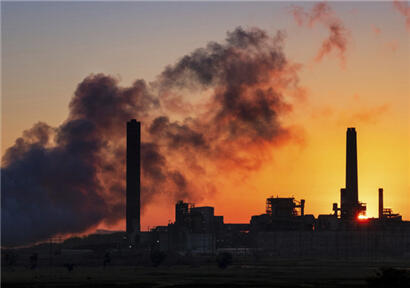
In the face of the increasingly severe external environment such as the slowdown of global economic growth, the aggravation of trade disputes and the fall of energy prices, many foreign chemical giants' performance in the third quarter declined significantly. However, we can also see the differences of these corporate strategies from the company's financial statements. Let's first look at the third quarter's performance.
Dow Chemical Q3 net income dropped 67% year on year
Dow Chemical announced the third quarter of 2019 results. Due to the increase of chemical inventory used to manufacture plastics and the squeeze of weak demand, the operating profit after quarterly adjustment decreased by 32%. In the three months ended September 30, the company's net income decreased by 67% year-on-year to $333 million, or 45 cents per share, compared with $1.01 billion or $1.36 per share in the same period last year. Excluding special items, the company's third quarter operating profit was $0.91 per share, compared with $1.34 a year earlier. According to the financial report, its operating EBIT in the third quarter fell 31% to US $1.1 billion year on year, reflecting the squeeze on profit margin and the impact of Argentina's production decline. But these factors are partly offset by savings from cost synergies and new capacity along the Gulf Coast. Operating EBIT increased by $58 million due to lower planned maintenance spending in the industrial solutions business and higher margins in the packaging and specialty plastics businesses. In addition, Dow Chemical's net sales in the third quarter reached US $10.8 billion, down 15% year-on-year, mainly driven by the fall in local prices caused by the fall in global energy prices. Sales fell 2% year-on-year, with demand growth for packaging materials, polyurethane and silicone applications offset by weak sales of hydrocarbon by-products. In the third quarter, the company's capex was $472 million and free cash flow was $1.3 billion. $600 million was returned to shareholders, including $500 million in dividends and $100 million in share repurchases. The loss on equity amounted to US $44 million, while the return on equity for the same period of last year was US $135 million. The main reason for the loss was the poor performance of the joint venture in Kuwait due to the compression of the profit margin of MEG and PE.
BASF's earnings before interest and tax in the third quarter, excluding special projects, decreased by 24% compared with the same period last year. EBIT excluding special items was EUR 1.1 billion, down 24% from the same period last year, mainly due to lower prices in the two business areas of materials and chemicals. As expected, the price of isocyanate fell sharply; in addition, the profit of cracking products decreased due to the planned maintenance of steam cracking unit. All of the above factors have a significant negative impact on the earnings of the two major business areas of materials and chemicals. Market uncertainties and customers' cautious buying behavior also partly contributed to the decline. Demand in key customer areas has not recovered. However, BASF strongly maintained sales at the same period last year, thanks to increased sales in the agricultural solutions and surface treatment business. Dr. Martin Bruder m ü ller, chairman of BASF Europe's executive board, said at the financial performance conference in the third quarter of 2019: "the downstream business unit of the company has successfully achieved a performance significantly higher than that of the same period last year in a difficult market environment." On the morning of October 27 local time, SABIC, a global chemical giant, released its third quarter operating results at its headquarters in Riyadh. In the third quarter, SABIC's sales revenue was 33.69 billion Riyals (about 63.378 billion yuan), a year-on-year decrease of 23%; its net profit was 830 million Riyals (about 1.561 billion yuan), a year-on-year decrease of 86%. Youself al benyan, chief executive of SABIC, said in a statement that in the third quarter, the global economic growth slowed down, new production capacity increased and oil prices continued to fall, making the business environment more challenging and increasing downward pressure on chemical product prices.
According to you self al benyan, from the current market situation, the data in the fourth quarter will be similar to that in the third quarter, and the market prospect in 2020 is still challenging. On October 25, Huntsman, an American chemical giant, said that the sales growth of MDI in the third quarter could not offset the lower sales price, while the sales and profit of Pu Department decreased year on year. The other two sectors - high performance products, advanced materials and textile effects - also saw year-on-year sales and revenue decline in the quarter. Huntsman's smallest sector textile effect has also been affected by the weak market and Sino US trade war. Its sales volume and selling price have also declined. Its sales volume in the third quarter rose by 34% compared with the same period of last year. However, the company's sales volume in the third quarter was 1.26 billion euros, an increase of 2% compared with the same period of last year EBITDA was EUR 270 million, up 13% from the same period last year. According to Wacker chemical, the main reason for the significant increase of EBITDA is a special benefit. In September this year, the company received insurance compensation of about 110 million euros due to an accident at the Charleston production base in 2017. If this income is not included, Wacker chemical's EBITDA is EUR 160 million, a decrease of 34% compared with the same period last year.
Wacker chemical has previously adjusted its full year performance forecast. Currently, the company expects its sales volume to remain at the level of the previous year, and its EBITDA will decrease by about 30% compared with the same period last year. Recently, Clariant announced that the sales of continuing operations in the first three quarters of 2019 totaled CHF 3.272 billion, while the sales in the first three quarters of 2018 totaled CHF 3.278 billion. Thanks to the double rise in volume and price, organic sales increased by 3% in local currency, and a steady increase in Swiss franc. In the first three quarters, most regions contributed to sales growth in local currency. Latin America, the Middle East and Africa each grew 11%. Despite a 9% decline in the Chinese market, sales in Asia continued to grow well, up 4%. Sales in Europe grew by 2%, while the North American market contracted by 4%. The improvement of sales performance in the first three quarters of 2019 is due to the growth of catalyst and natural resources business. Thanks to the positive contribution of petrochemicals and syngas, sales in the catalyst business increased by 10% in local currency terms. Thanks to the significant expansion of oil and mining services and a certain degree of growth in functional minerals, sales in the natural resources business increased by 4% in local currency terms. Affected by the weakness of the electronic and electrical industry, the sales volume of additive business decreased. On October 28, local time, covestro released its third quarter results, and then the stock fell, which wiped out the value of the accumulated one month. In the third quarter of 2019, covestro said that its core sales volume increased by 5.3% over the same period of last year "in a continuously challenging economic environment". But in the past three months, the group's sales have fallen by 14.6% to 3.2 billion euros, as expected by kostron. The EBITDA of the third quarter was EUR 425 million, due to the squeeze of price decline and profit, down 50.5% compared with the same period last year. Net income decreased to EUR 147 million, down - 70.4% year on year, and free operating cash flow (focf) was EUR 243 million, down - 58% year on year. This is mainly due to the decrease in cash flow from operating activities and scheduled investments.

You May Interested In


High Quality β-Nicotinamide adenine dinucleotide CAS 53-84-9 NADwith ready stock and best price
$3/UNIT FOB


2026-10-12
Trade Alert
Delivering the latest product trends and industry news straight to your inbox.
(We'll never share your email address with a third-party.)

Related News
-
Korea Representative Material·Component·Equipment Exhibition
-
Weekly Prices and Analyses for Chemicals (April 7, 2020)
-
The third quarter performance of chemical giant dropped precipitously
-
Acquisition of 39% of Luxi group's equity and expansion of Sinochem Group's chem
-
When SWIFT Goes On-Chain: A New 24/7 Order for Cross-Border Payments
-
Kraton Announces Strategic Plan to Streamline Polymer Operations in Berre, France
-
Wanhua's BorsodChem Restarts 650,000 T/Y of MDI and TDI Capacity in Europe
-
Major Fire Hits China-Russia Joint 2.7 Million T/Y Polyolefins Project, Killing 6 Chinese Nationals and Injuring 152 People
-
Sun-Kissed Insect Oil? EFSA Approves UV-Treated Mealworm Fat as Safe—and Vitamin D-Rich—Novel Food
-
From Fungus to Food: EFSA Greenlights Rhizomucor pusillus Biomass as Safe Novel Ingredient
Recommend Reading
-
![EU mulls expanding tariff scope on Chinese chemicals, sector-wide measures in the pipeline]()
EU mulls expanding tariff scope on Chinese chemicals, sector-wide measures in the pipeline
-
![Triple Shield, Zero Risk: EFSA Declares Stacked GM Cotton Safe for Food, Feed, and Environment]()
Triple Shield, Zero Risk: EFSA Declares Stacked GM Cotton Safe for Food, Feed, and Environment
-
![Red Algae, Golden Promise—With a Daily Dose Warning: EFSA Clears Astaxanthin-Rich Algal Meal for New Foods]()
Red Algae, Golden Promise—With a Daily Dose Warning: EFSA Clears Astaxanthin-Rich Algal Meal for New Foods
-
![Arkema Divests PVC Additives Business to Focus Resources on High-Performance Materials Market]()
Arkema Divests PVC Additives Business to Focus Resources on High-Performance Materials Market
-
![From Kitchen Herb to Feed Additive: EFSA Gives Green Light to Marjoram Oil—With a Caution for Handlers]()
From Kitchen Herb to Feed Additive: EFSA Gives Green Light to Marjoram Oil—With a Caution for Handlers
-
![Soda Ash Market Trends Remain Stable]()
Soda Ash Market Trends Remain Stable
-
![Polyester Bottle Chip Spot Price Rises on the 14th]()
Polyester Bottle Chip Spot Price Rises on the 14th
-
![A Fake Email Drains RMB 12 Million: Asia’s Waterproof Giant’s Overseas ‘Payment Heist’ Exposes the Fatal Blind Spot of Chinese Corporate Globalization]()
A Fake Email Drains RMB 12 Million: Asia’s Waterproof Giant’s Overseas ‘Payment Heist’ Exposes the Fatal Blind Spot of Chinese Corporate Globalization
-
![Supply remains generally loose, the acrylonitrile market fluctuates within a range]()
Supply remains generally loose, the acrylonitrile market fluctuates within a range
-
![Can Lithium Carbonate Continue to Rise in 2026?]()
Can Lithium Carbonate Continue to Rise in 2026?






- Hot Searches
- pva price
- ethylene price
- hexane 3 4 dione
- niclosamide buy
- n-isopropylbenzylamine for sale
- trimethylamine market
- retatrutide vendor
- retatrutide peptide buy usa price
- creatine monohydrate wikipedia
- lpg gas price
- sulphonated naphthalene formaldehyde price
- polypropylene price per ton in nigeria 2026