Technical market orientation of Waterborne Wood Coatings in China in the future
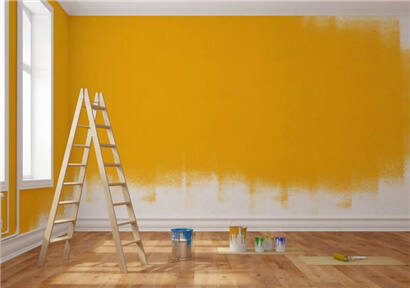
The official landing of modern waterborne wood coatings in the Chinese market originated in the 1990s. After about 10 years of development, the degree of hydration of the same waterborne paint for the interior wall of buildings has reached nearly 70%, and the degree of hydration of the waterborne exterior wall paint has also reached about 30%. The water-based wood coatings, less than 0.5% of the total amount of wood coatings, and less than 5% of the total amount of wood coatings in the furniture industry, leave people with silent expectation and deep thinking. Since the first day of Waterborne Wood Coatings entering the Chinese market, its broad market prospect has never been doubted. More and more furniture manufacturers try to achieve technological innovation and product upgrading through the introduction of waterborne coatings.
Waterborne wood coatings developed rapidly in the furniture manufacturing industry. The promotion of Waterborne Wood Coatings in the Chinese market took the lead in the interior decoration industry, and gradually expanded from first tier cities such as Beijing and Shanghai to second tier and third tier cities. The sales of Waterborne Wood Coatings in the interior decoration industry are mostly big brands or well-known brands. They promote high-end products and simple coating with the help of network advantages and are mostly used in the renovation market. The degree of competition is not fierce. When new or small brands promote waterborne wood coatings, due to the weak brand influence and the marketing network in the process of laying, they are usually only used as supporting businesses to drive the sales of other coating products. At present, the degree of Waterborne Wood Coatings in the field of home decoration is about 2%. The development speed of Waterborne Wood Coatings in furniture manufacturing industry is obviously faster than that of interior decoration industry, and its market share in corresponding field is far higher than that of the latter. A few years ago, the degree of Waterborne Wood Coatings in furniture manufacturing industry has exceeded 5%. In the field of furniture, many professional paint brands have made rapid development in one or two areas that they are good at. For example, huawang, burdink and other brands in water-based outdoor coatings, cabaret and other brands in IKEA water-based furniture coatings, green guest and local brands in water-based toy coatings, Chenyang in handicrafts and water-based willow rattan coatings, blue ocean in water-based mahogany furniture coatings and other aspects, all have their own strengths and leading styles.
How to meet the needs of furniture manufacturing industry in the future
(1) To tackle the problem of "scratch resistance, hardness and wear resistance". In the improvement of hardness and wear resistance, the two-component crosslinking curing film system can be used to improve the glass transition temperature of the film. In the process of resin synthesis, we should pay special attention to the control of the relative molecular weight distribution and the size of the relative molecular weight of the resin, pay attention to the collocation of the soft and hard chain segments in the molecule, the content of the reaction functional groups and their distribution in the molecular structure, and adjust the variety and dosage of the curing agent of the two-component reaction system to obtain the coating with high hardness and good elasticity. In addition, the wear resistance of the coating can be effectively improved by adding wear-resistant materials and scratch resistant additives.
(2) Research on drying speed of waterborne wood coatings. The drying rate of waterborne wood coatings is affected by many factors, including the temperature, humidity, air flow rate and film thickness of the external environment. It also depends on some characteristics of film-forming substances in the formula, such as glass transition temperature and self crosslinking. Other components in the formula, such as some thickeners, cosolvent and film-forming aids with water retention performance, and isocyanate used to react with the main paint, will also affect the drying speed of waterborne wood coatings. Therefore, when designing the formulation of waterborne wood coatings, from the perspective of drying speed, we should first select suitable film-forming materials, then design appropriate formulation, and make appropriate adjustments to the formulation in combination with specific construction technology and drying environment. If conditions permit, baking line can be set to cooperate with coating equipment, and infrared drying performance can also be increased for moisture flash drying.
(3) To tackle the cost of water-based wood coatings. At present, the retail price of Waterborne Wood Coatings in home decoration coatings market is more than twice of that of solvent based wood coatings, and the scale price of Waterborne Wood Coatings in former furniture coatings market is about twice of that of solvent based wood coatings. In order to realize the wide use of water-based Wood Coatings in the market of wood furniture and furniture, the material cost must be reduced to 1.2-1.5 times of that of solvent based wood coatings.
(4) The key to the coating process of waterborne wood coatings. As the coating effect of water-based wood coatings is closely related to environmental temperature, humidity, construction process, coating substrate and other factors, its construction breadth is far worse than that of solvent based wood coatings. Therefore, to obtain the same degree of coating effect as solvent based wood coatings, it is the water-based Wood Coatings workers who focus on and master the coating process of water-based wood coatings An unavoidable and imminent major issue.

You May Interested In


High Quality β-Nicotinamide adenine dinucleotide CAS 53-84-9 NADwith ready stock and best price
$3/UNIT FOB


2026-10-15
Trade Alert
Delivering the latest product trends and industry news straight to your inbox.
(We'll never share your email address with a third-party.)

Related News
-
Fluorine-Free Superhydrophobic Coating Made from Cellulose Nanofibrils
-
Klil Expands Its Business: Builds An Advanced And Innovative Coating Plant
-
Vietnam Successfully Researched Nano-Heat-Insulating Reflective Coatings
-
BASF Expands and Upgrades Coating Defoamer Unit at Turkish Plant
-
Middle East Coatings Show 2024——The Largest Gathering for the Coatings Community in the Mena Region
-
PPG’s new paint for a new start initiative to decorate schools worldwide with colorful makeovers
-
Pacific coating show 2023
-
The total investment is 320 million yuan! The paint project with an annual output of 100,000 tons was put into operation in Nanyang
-
Dow Coatings Products Win Ringier Technology Innovation Award
-
AkzoNobel Expands Production of Water-based Coatings in China
Recommend Reading
-
![Amazon Turns Lilly’s Weight-Loss Pill Into a Retail Logistics Play]()
Amazon Turns Lilly’s Weight-Loss Pill Into a Retail Logistics Play
-
![“Soaring Sulfuric Acid, Tightening Ore Supplies”: The High-Stakes Battle Behind the Titanium Dioxide Price Surge]()
“Soaring Sulfuric Acid, Tightening Ore Supplies”: The High-Stakes Battle Behind the Titanium Dioxide Price Surge
-
![What Can $3.4 Billion Buy? Shin-Etsu Chemical’s Answer: Upstream Control of PVC]()
What Can $3.4 Billion Buy? Shin-Etsu Chemical’s Answer: Upstream Control of PVC
-
![Iran Closes Strait of Hormuz to All Vessels: Global Chemical Trade Gets Choked]()
Iran Closes Strait of Hormuz to All Vessels: Global Chemical Trade Gets Choked
-
![European Petrochemical Weakness Leaves Naphtha Oversupplied as Cracker Demand Struggles]()
European Petrochemical Weakness Leaves Naphtha Oversupplied as Cracker Demand Struggles
-
![Premium Global Chemical Sourcing Requests (3-5July, 2026)]()
Premium Global Chemical Sourcing Requests (3-5July, 2026)
-
![Premium Global Chemical Sourcing Requests (24-28 Nov 2025)]()
Premium Global Chemical Sourcing Requests (24-28 Nov 2025)
-
![Cost Side Stops Falling and Rebounds; PC Prices Stabilize and Consolidate in November]()
Cost Side Stops Falling and Rebounds; PC Prices Stabilize and Consolidate in November
-
![Strong Supply and Weak Demand Continues, PP Fluctuates and Falls in November]()
Strong Supply and Weak Demand Continues, PP Fluctuates and Falls in November
-
![The domestic butadiene rubber market shows a slight weakening]()
The domestic butadiene rubber market shows a slight weakening