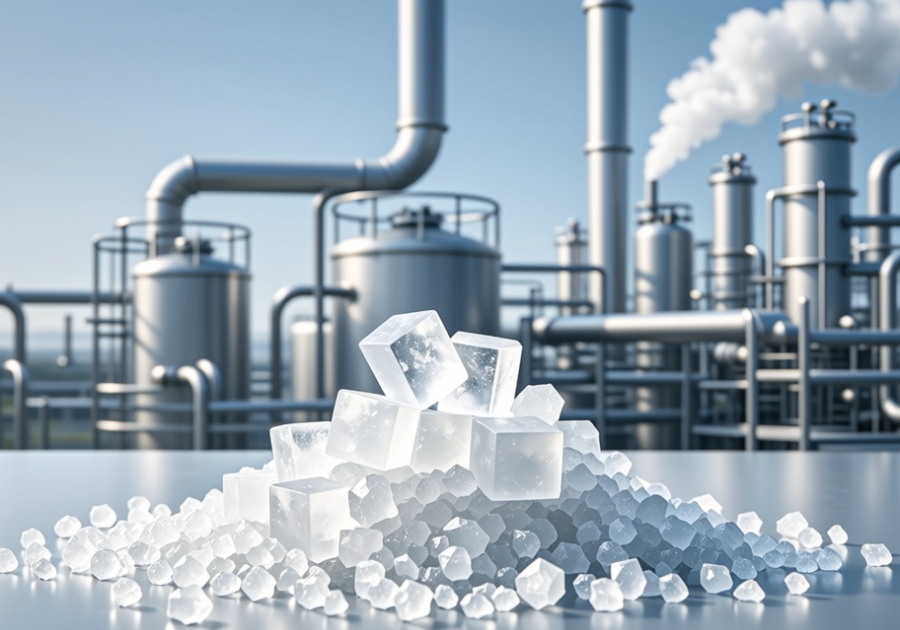
What Is solvay process of sodium carbonate
The production mechanism Solvay process of sodium carbonate for more than of an century has constituted the main way in order to obtain sodium carbonate, here we will study in detail the process, everything related at sodium carbonate, it qualities, formation, and all the details that surround it, and the way it generates.
Sodium carbonate
The substance with this name, belongs to the classification of salts, being the salts that come from carbonic acid, also from sodium, naturally present in soda lakes, form part of some minerals, and also of some marine plants.
Sodium carbonate, characteristics that make it stand out.
Before talking about the Solvay process of sodium carbonate, we emphasize that the types of carbonate are classified within the inorganic, belonging an group of alkali metals, the identification chemical is Na2CO3, formula that at interpreted is understood as follows, constituted with 1 atom of sodium, 1 of carbon, 3 of oxygen in each molecule.
Various forms of this carbonate can result, three hydrates, and anhydrous salt, one is decahydrate represented Na2CO3 ·10H2O, other heptahydrate, expressed Na2CO3·7H2O, other monohydrate expressed chemically Na2CO3·H2O, and anhydrous, this basic form, without water.
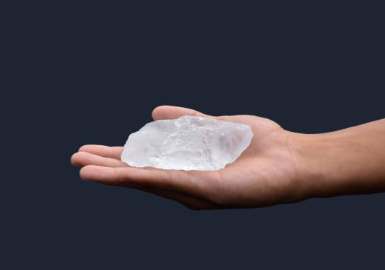
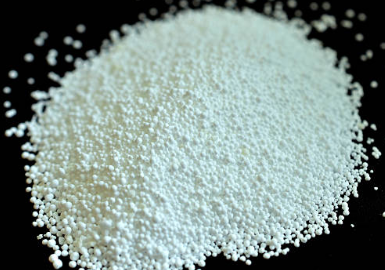
In either form, the appears of this carbonate has solid state, whitish, translucent powder, sometimes turning brownish in color, whose molar mass reaches 106 g/mol, and has melting and boiling equivalent respectively to 851, and 1600 degrees Celsius in this point.
It has excellent solubility in liquids, for water, per 100 ml of liquid, the solubility is 10.9 gr of sodium carbonate, the density reaches 2.5 × 10³kg/m3, or 2.5 gr/cm3, alkalinity is given by a pH of value of 11.5.
Other peculiarities that we highlight for further study, when in contact with humid environments, and with temperatures very high, it tends to caking, at dissolved in liquids, specifically wáter, it generates two substances, the first one sodium hydroxide, the second one carbonic acid.
Compounds such as this one are exempt from oxidation processes, reactive with acids, diferentes bases, with salts living organisms do not usually store it, nor do soils absorb it.
Knowing that the Solvay process of sodium carbonate, has long been the chemical process with the highest production efficiency, which offers economic advantages by minimizing costs and does not harm the environment, we clarify that companies like Echemi always offer possibility of acquiring products to meet the requirements of:
Sodium Carbonate, Dense 99%.
https://www.echemi.com/produce/pr2206041083-sodium-carbonate-soda-ash-light-soda-ash-dense-99-sodium-carbonate.html
Solvay process of sodium carbonate
The Solvay technique began to be used in chemical plants that had the purpose of producing sodium carbonate while saving on human resources and raw materials. The initial idea was to replace an old process known as Leblanc, which did not have the required performance, there was large consumption of energy in the melting phases, many people were needed for labor, the release of substances including hydrogen chloride caused disturbances fatal to many areas of nature.
With this way of generating this carbonate, the processes are much simpler than the old procedures, working by means of dissolutions presents great advantages, increases the quantities produced, and costs are significantly minimized.
In the Solvay process of sodium carbonate we work with very well configured industrial structures, formed by three columns, and the furnaces for calcining, in this way, we have columns for:
-Saturation
-Carbonation
-Ammonia recovery.
In the first column, ammonia-based brines are obtained, in this the sodium chloride, and diluted ammonia, are processed, basically, the objective of this column is to perform the saturation of sodium chloride..
The second phase or column, is intended to achieve as a product resulting from the sodium bicarbonate stage, another ammonium chloride, also bicarbonate, ammonium bicarbonate, although in smaller proportions, CO2 and other gases are separated.
In a third column there is a basic objective that consists of recovering the ammonia, leaving the bicarbonate alone, the ammonia is displaced through steam injection, obtaining in this phase non-precipitated sodium chloride and calcium chloride.
Finally, the last phase of this process consists of calcination furnaces, one for bicarbonate decomposition, the other for calcium carbonate.
The Solvay technique, which makes it possible to achieve sodium carbonate and calcium chloride, can be summarized by saying that this technique managed to arrive, and stay, thanks to the chemistry used in a way that generates greater benefits, and fewer risks and efforts to produce sodium carbonate.
Looking for chemical products? Let suppliers reach out to you!
You May Interested In


SS-31 Cosmetic peptides, discounted price improving cognitive impairment factory supply
$8E+1/UNIT FOB


2026-09-19
Trade Alert
Delivering the latest product trends and industry news straight to your inbox.
(We'll never share your email address with a third-party.)

Related News
-
Sodium Carbonate Complete Guide: Cleaning, Industrial Uses & Safety
-
What is the Nature of sodium carbonate and it uses
-
How To Preparation Of Sodium Carbonate By Solvay Process
-
Sodium Carbonate A Glance
-
What is Soda Ash And What Is It Used For
-
The Uses of Sodium Carbonate (Soda Ash) in Everyday Life
-
Statistics of Sodium Carbonate Industry in 2019
-
Limited Price Rise of Sodium Carbonate
-
L Phenyl Compounds: Properties, Benefits, and Uses
-
PEG (Polyethylene Glycol): Uses in Pharma, Cosmetics, and PEGylation
Recommend Reading
-
![What is HCO3? (Bicarbonate Ion Function & Normal Levels)]()
What is HCO3? (Bicarbonate Ion Function & Normal Levels)
-
![Heptane: Properties, Uses, and Industrial Applications]()
Heptane: Properties, Uses, and Industrial Applications
-
![HNO2 (Nitrous Acid): Properties, Uses, and Safety]()
HNO2 (Nitrous Acid): Properties, Uses, and Safety
-
![Aluminum Sulfate: Industrial and Water Treatment Applications]()
Aluminum Sulfate: Industrial and Water Treatment Applications
-
![Sodium Percarbonate: Uses, Benefits, and Safety]()
Sodium Percarbonate: Uses, Benefits, and Safety
-
![Positive Factors Waning, Butanol Prices Continue Their Slide Into November]()
Positive Factors Waning, Butanol Prices Continue Their Slide Into November
-
![Supply and Demand Lacking Vigor, PTA Prices Fluctuate Weakly in September]()
Supply and Demand Lacking Vigor, PTA Prices Fluctuate Weakly in September
-
![In October, the Chinese acetic acid market showed a weak downward trend]()
In October, the Chinese acetic acid market showed a weak downward trend
-
![Insufficient Cost Support, Coking Coal Market Prices Remain Stable for Now]()
Insufficient Cost Support, Coking Coal Market Prices Remain Stable for Now
-
![Sulfate of Ammonia Market Prices Continue to Fall (8.14-8.21)]()
Sulfate of Ammonia Market Prices Continue to Fall (8.14-8.21)