




What are the fun facts about copper?
This blog post is full of fascinating fun facts about copper. Copper is a chemical element and a metallic trace element. It is the third most-abundant metal in the Earth's crust with an estimated 25% abundance on Earth by mass, after tin and iron.
1. Good conduct of electricity.
This reddish-orange metal has good conductivity of electricity despite its high specific heat capacity, being the second best conductor after silver. It has a melting point of 1,932C (3,084F), boiling point of 4,167C (7,236F), and density of 8.9 g/cm3. It has other applications such as in electrical wiring, electroplating and piping systems.
2. Pure copper cannot be cast into wire or wires using other metals such as aluminum.
It will also flow like mercury through a casting die if not supported by an inert material during cooling. For this reason it was formerly used for the making of electric resistors and capacitors, but these are now made mostly of aluminum or silver-plated brass.
3. Copper wires will oxidize and corrode.
The resulting corrosion, called copper corrosion or verdigris, is a form of patina called green rust that may have commercial value for the artist who applies it on copper and bronze sculptures. Another verdigris is produced when finely ground cuprous chloride (cupric chloride) is mixed with water. In addition to the familiar green color, this compound forms highly fluorescent complexes as another example of an iridescent color not directly related to light absorption.
4. The word "copper" comes from the Greek "chalkos", meaning red or blue-green, which was derived from a Sanskrit word "sindhu" meaning river.
5. Copper was once used to make batteries.
Copper can hold as much as twice its own weight in electrical charge, which makes it an excellent conductor of electricity and magnetism.
6. Copper is one of the few elements that can be found on the Earth crust in almost pure form. The largest deposits are in Chile, Australia, the USA, and China - but more than half of all copper ever mined on Earth came from the huge copper-producing region at Great Orme in Wales.
7. Copper has been used as a building material since at least 4000 BC and there is evidence of a temple being built with this metal (at Knossos) which dates back to 3000 BC.
8. Copper was one of the first metals used by humans.
The ancient Egyptians discovered copper around 3000 BC, making copper a valuable and essential metal for their civilization. The use of copper in tools has been traced back to 2100 BC in the Middle East, and most likely early African cultures used this metal long before that time. The discovery of man-made copper ores dates back to 3300 BC in Mesopotamia or modern Iraq (Mesopotamia was called "Mesopota"). Ancient documents report native tribes found copper deposits in northern Africa. In Asia Minor (modern Turkey) copper mining reached its peak around 1000 BC during the time of King Minos and Crete. Copper was used extensively in bronze and early iron-making, and then became a major industrial metal.
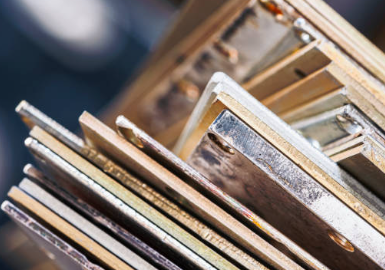
9. Copper plates must be rolled carefully toward the edge of a copper sheet to leave a small copper edge at the top or bottom that will not corrode away.
10. Due to its resistance to oxidizing and corrosion, copper is used for weather protection for overhead lines.
11. Coppers are often used in decorative ceilings because they are highly reflective and can be polished or brushed without leaving marks on the surface of the ceiling itself..
12. Copper has very low electrical resistivity nearly 0% of all metals except gold which has about 0%.
13. Another fun facts about copper is used in building houses because it conducts heat very well. Its ability to conduct enables hot water to pass through pipes without heating the interior of buildings; this permits the use of smaller plumbing pipes and no hot water tanks, thus making buildings more energy efficient.
14. The roofs of buildings made of copper are less likely to leak than those made from other materials.
15. Copper is also used in many cars including: brake pads, engine blocks, wiring and radiator tubing.
16. Copper has excellent thermal and electrical conductivity and can be used in a wide range of electrical applications, from power cables to electronics..
17. Copper is ductile which means it can be drawn into thin wires for use as electrical wiring. It is also malleable which means it can be beaten into sheets for conductive surfaces on buildings.
18. The first person to make a metallic electric wire was Thomas Edison in 1877. He coated a thread of iron with tin and wound that around a copper thread forming the world's first electric wire..
Conclusion
There you have it: 18 fascinating fun facts about copper. It is one of the most used metals in the world.
Looking for chemical products? Let suppliers reach out to you!
You May Interested In


Glow70/KLOW80 99% China Peptides Warehouse Direct Delivery Lyophilized Powder in Stock
$169/UNIT FOB


2026-10-22
Trade Alert
Delivering the latest product trends and industry news straight to your inbox.
(We'll never share your email address with a third-party.)

Related News
-
Albaugh's new product 46% Copper hydroxide WDG is launched in China
-
Comex copper review on 31 May
-
What is the science behind synthesis of copper ii sulfate pentahydrate
-
The Most Soluble Salt? Is Copper Sulfate Pentahydrate Soluble In Water
-
What is the copper 2 sulphate pentahydrate formula and its use?
-
What is the use for copper sulfate? Learn more
-
What is the formula for copper sulphate and its uses
-
How to Know if the Copper is Positive or Negative
-
Copper price hit a seven month high to hide new changes in the global economy
-
Understanding Titanium Oxide: Properties and Uses
Recommend Reading
-
![Fipronil: Uses, Safety, and Environmental Impact]()
Fipronil: Uses, Safety, and Environmental Impact
-
![Ethylene Glycol: Production, Uses, and Safety]()
Ethylene Glycol: Production, Uses, and Safety
-
![L-Alanine: Amino Acid Profile, Sports Nutrition, and Metabolic Role]()
L-Alanine: Amino Acid Profile, Sports Nutrition, and Metabolic Role
-
![Potassium Nitrate Reactions & Uses (KNO3)]()
Potassium Nitrate Reactions & Uses (KNO3)
-
![Sodium Hydroxide Reactions: With Aluminum, Acids, and Metals]()
Sodium Hydroxide Reactions: With Aluminum, Acids, and Metals
-
![Business Society: China’s Bisphenol A Market Downward in August]()
Business Society: China’s Bisphenol A Market Downward in August
-
![Business Society’s Market Outlook for Gasoline on September 4, 2026: Expected to Perform Strongly]()
Business Society’s Market Outlook for Gasoline on September 4, 2026: Expected to Perform Strongly
-
![What Color Should a Zinc-Copper Couple Be?]()
What Color Should a Zinc-Copper Couple Be?
-
![Business Society’s Trend Analysis of Epichlorohydrin on September 14, 2026: A Deep Correction Amidst Volatile Market Conditions]()
Business Society’s Trend Analysis of Epichlorohydrin on September 14, 2026: A Deep Correction Amidst Volatile Market Conditions
-
![This week, the market trend for maleic anhydride in China is mainly weak consolidation]()
This week, the market trend for maleic anhydride in China is mainly weak consolidation


- Hot Searches
- graphite price
- prednisolone vs prednisolone sodium phosphate
- n-isopropylbenzylamine for sale
- cosmetic raw material suppliers
- dicloxacillin vs amoxicillin
- where can i get retatrutide peptide
- request for order fl 300
- chromium chloride
- mgda powder
- white urea fertilizer
- potassium cyanide purchase
- ag chemi