View the reshaping of multinational chemical enterprises from Dow's return
From the perspective of Dow's development, whether it is the construction of barriers to entry in the field or the continuous widening and adjustment of new strategic boundaries in the process of related diversification, R&D has played a vital role in Dow's becoming a top chemical company. Even during the Great Depression of the United States in the 1920s, the company did not give up its investment in research and development, making breakthrough in a series of products such as ethylene, styrene, PVC, ion exchange resin, and polymer, And it is this period of great investment in research and development that has led Dow to become a world-class chemical company in the future. Styron, a vinyl resin, became Dow's core product within 50 years of its birth, opening the door to the company's future polymer era.
After the polymer/petrochemical revolution, Dow Chemical also encountered growth limits in the chemical industry. Facing the dilemma, the company sold a large number of low-value-added general polymer products and basic petrochemical product production lines to raise funds in order to expand into the pharmaceutical industry and specialty chemicals. In 1987, Dow Chemical's business revenues in basic petrochemicals and plastics dropped from 85% to 52%.
Failing to extend the boundaries of the pharmaceutical industry
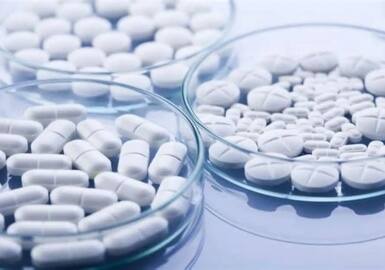
Compared to the successful experience in the field of basic chemicals and synthetic resins, the company's attempts in the niche market were not smooth. The company showed great interest in the pharmaceutical industry in the early 1980s and successively acquired Richard Mori-Vickers' Pharmaceuticals Division and Japan's Funai Pharmaceutical Co., Ltd., and a joint venture with Japan's Otsuka Pharmaceutical Co., set up a pharmaceutical company to seek opportunities in the US and Japanese markets. The establishment of Marion-Murrill-Dow Pharmaceuticals in 1986 marked the company's true entry into the pharmaceutical industry. However, due to the high technical barriers required to enter the pharmaceutical industry, Dow Pharmaceuticals has had little success in new product development, and its original drug patent rights were about to expire, coupled with the company's acquisition of the Marion experiment. And the Merrill Pharmaceuticals Division only have strong sales capabilities, but are not good at R&D capabilities. Dow's lack of learning ability in the pharmaceutical industry directly leads to difficulties for companies to break industry barriers and strategic boundaries established by other companies. In the end, Dow Chemical sold its pharmaceutical company to Hearst for $ 7.1 billion, ending its strategic attempt in the pharmaceutical industry. Fortunately, after the failure, Dow quickly adjusted its strategic boundaries and began to adhere to specialization in electric technology and new materials.
Large-scale mergers and acquisitions with the specialization in specialty chemicals
Compared to the failure to get involved in the pharmaceutical industry, Dow Chemical's success in the specialty chemicals business points to the right direction for specialty chemical companies when seeking new strategic boundaries. The company started a large-scale acquisition in 1985 to expand the company's specialty chemicals business. In the past 3 years, it has acquired 9 professional chemical companies and established a new company through joint ventures with 3 special plastic companies. The group is divided into three sectors: basic chemicals, industrial chemicals, and consumer chemicals. In 1986, the company has become the world's largest manufacturer of thermoplastics. In 2017, the special plastics remained the company's largest segment, contributing 42% of revenue and 39% of EBIT respectively. Dow Chemical leverages the influence of the R&D technology of the newly acquired professional chemical company in North America and overseas to establish a foothold in the specialty chemicals field and successfully transform itself into a diversified company of specialty chemicals. In the mid-1990s, the company had more than 80% of its revenues and profits from various specialty chemicals in the terminal.
After entering the 21st century, in the face of increasingly fierce global competition and more frequent industry integration, the company continued to expand its strategic boundary in the specialty chemicals field. In 2009, it acquired Rohm&Haar for $18.8 billion in cash, and transformed its headquarters in Philadelphia into a high-tech materials business segment, while rectifying the research and development department to focus on the launch of new products. In 2016, Dow Corning, a well-known silicon material company, was wholly-owned and merged. Dow Corning's organic silicon technology and Dow Chemical's new material technology were organically connected, which greatly enhanced Dow's new materials' long-term competitiveness in the electronics field. In 2016, the company began planning a merger with another top chemical company, DuPont, and split the integrated Dow DuPont into three independently listed companies.

You May Interested In


High Quality β-Nicotinamide adenine dinucleotide CAS 53-84-9 NADwith ready stock and best price
$3/UNIT FOB


2026-10-06
Trade Alert
Delivering the latest product trends and industry news straight to your inbox.
(We'll never share your email address with a third-party.)

Related News
-
Dow Europe Raises Polyurethane Prices in EMEA and India
-
European Petrochemicals Enter 'Era of Downsizing' as Dow, TotalEnergies, Shell Exit Older Cracker Assets
-
Dow Launches New Fast-Curing Photovoltaic-Grade POE Products to Address Reliability Challenges in High-Efficiency Module Encapsulation
-
Dow Swings from an $801 Million Loss to an $802 Million Profit as Hormuz Disruption Lifts Polyethylene Prices
-
Dow Chemical to Close Three European Plants, Cut 800 Jobs
-
Dow and Celanese Retreat: European and Korean Cutbacks as China Expands
-
Dow Sells 50% Ownership of Composites Joint Venture DowAksa for $125 Million
-
Dow's Thailand Map Ta Phut Propylene Glycol Plant Receives ISCC PLUS Certification
-
Dow, Brivaplast and TecnoGi Repurpose Surlyn Industrial Waste
-
Dow Chemical Announces Increase in North American Glycol Ether Prices Starting January 6, 2025
Recommend Reading
-
![Ammonia Leaks in Iraq and Jordan Put Fertilizer Production and Port Safety on Alert]()
Ammonia Leaks in Iraq and Jordan Put Fertilizer Production and Port Safety on Alert
-
![ExxonMobil’s 264,000-bpd Joliet Refinery Shuts After Site-Wide Power Failure]()
ExxonMobil’s 264,000-bpd Joliet Refinery Shuts After Site-Wide Power Failure
-
![LG Chem Teams Up with Jianghua Microelectronics to Advance Semiconductor Ultra-High-Purity IPA]()
LG Chem Teams Up with Jianghua Microelectronics to Advance Semiconductor Ultra-High-Purity IPA
-
![India Accuses Balaji Amines of Manufacturing Pharma-Grade Propylene Glycol Without Drug Manufacturing Licence]()
India Accuses Balaji Amines of Manufacturing Pharma-Grade Propylene Glycol Without Drug Manufacturing Licence
-
![Brazil Confirms 32 Methanol Poisoning Cases Linked to Contaminated Alcoholic Beverages]()
Brazil Confirms 32 Methanol Poisoning Cases Linked to Contaminated Alcoholic Beverages
-
![Focusing on the Risks of the Strait of Hormuz: Safety of Ethylene Glycol Imports to China and Price Trend Predictions]()
Focusing on the Risks of the Strait of Hormuz: Safety of Ethylene Glycol Imports to China and Price Trend Predictions
-
![Calcium Acetate: Medical and Industrial Applications]()
Calcium Acetate: Medical and Industrial Applications
-
![Business Society September 14, 2026 MTBE Trend Analysis: Strong Consolidation]()
Business Society September 14, 2026 MTBE Trend Analysis: Strong Consolidation
-
![Demand Release Fails to Meet Expectations, PP]()
Demand Release Fails to Meet Expectations, PP "Golden September" Goes Against the Market Trend
-
![Business Society’s Diesel Trend Analysis for September 15, 2026: Volatile Performance]()
Business Society’s Diesel Trend Analysis for September 15, 2026: Volatile Performance