Sodium Lauryl Ether Sulfate ( Natural )
CAS No. 68585-34-2 / 68891-38-3
RO(CH2CH2O)nSO3Na R: C12-14 alkyl
Performance and application:
SLES is a kind of anionic surfactant with excellent performance. It has good cleaning, emulsifying, wetting, densifying and foaming performance, with good solvency, wide compatibility, strong resistance to hard water, high biodegradation, and low irritation to skin and eye. It is widely used in liquid detergent, such as dishware, shampoo, bubble bath and hand cleaner, etc. SLES can also be used in washing powder and detergent for heavy dirty. Using SLES to replace LAS, phosphate can be saved or reduced, and general dosage of active matter is reduced. In textile, printing and dyeing, oil and leather industries, it is the lubricant, dyeing agent, cleaner, foaming agent and degreasing agent.
Specification:
ITEM | 70% | measuring method |
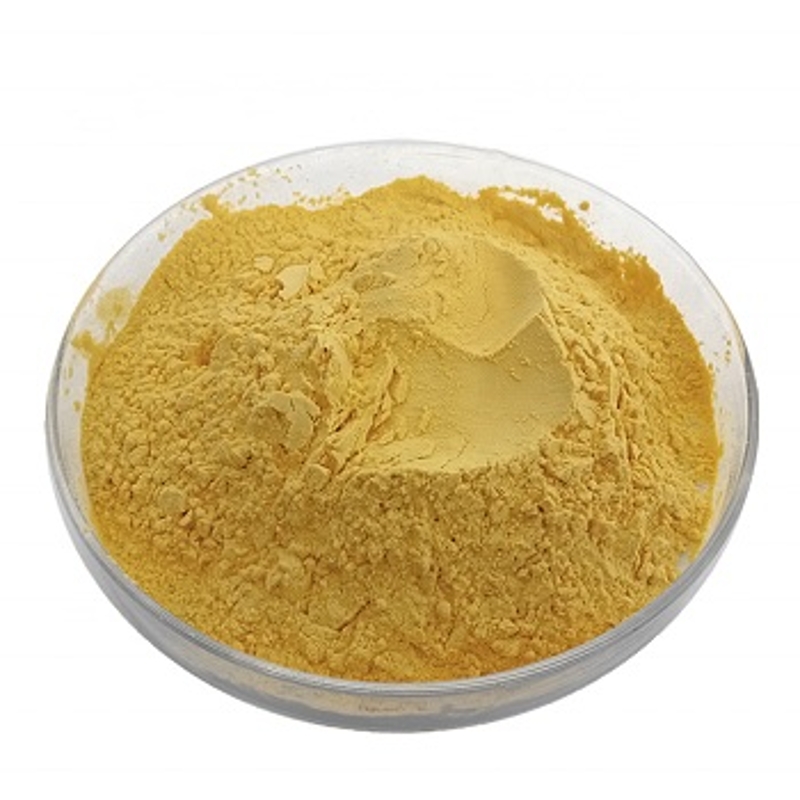
Appearance | White to yellowish paste | eye measurement |
Active matter, ā% | 70±2 | GB/T 5173-1995 |
Sodium sulfate, % | 1.5 Max | GB/T 6366-1992 |
Unsulfured matter,% | 2.0 Max | / |
pH value (1% a. m.) | 7.5~9.5 | GB/T 6368-1993 |
Color, Hazen (5% a. m.) | 20 Max | GB/T 3143-1982 |
1,4-Dioxane(ppm) | 50ppm Max | / |
Packaging: 170kgs*114drums=19.38mt per 20’FCL
Storage: Store in dry and cool place, kept away from sunshine and rain.
of the substance/mixture and of the company/undertaking
Product identifier |
Trade Name: | Sodium Laureth Sulfate |
CAS Number: | 68891-38-3 |
Use of the substance/preparation |
Ingredient in Personal and Home Care products |
Details of the supplier of the safety data sheet |
Manufacturer/Supplier: | EAST CHEMSOURCES LIMITED NO.666 HAIBIN 12TH ROAD, HUANGDAO,QINGDAO, CHINA Tel: +86/0532-81906761 Fax: +86/0532-81906761 Mail: JOSEN@EASTCHEM-CN.COM |
Emergency Telephone Number: | +86/0532-81906761 |
2. Hazards Identification
Classification of the substance or mixture |
Physical hazards | Not classified. |
Health hazards | Acute toxicity - oral | Category 4 |
Skin Irritation | Category 2; |
Serious Eye Damage | Category 1; |
Environmental hazards | Hazardous to the aquatic environment, acute hazard | Category 2 |
Hazardous to the aquatic environment, long-term hazard | Category 3 |
OSHA defined hazards | Not classified. |
Label elements |
Hazard label for supply/use required. |
![Shop Sodium Lauryl Ether Sulfate (SLES 70%)-Detailed Image 1]()
|
Signal word: | Warning |
Hazard statements | Causes skin irritation. Causes serious eye damage. Harmful to aquatic life with long lasting effects. |
Precautionary statements | Obtain special instructions before use. Do not handle until all safety precautions have been read and understood. Do not breathe mist or vapor. Wash thoroughly after handling. Avoid release to the environment. Wear protective gloves/protective clothing/eye protection/face protection. |
Response | If on skin: Wash with plenty of water. If in eyes: Rinse cautiously with water for several minutes. Remove contact lenses, if present and easy to do. Continue rinsing. If exposed or concerned: Get medical advice/attention. Specific treatment (see this label). If skin irritation occurs: Get medical advice/attention. If eye irritation persists: Get medical advice/attention. Take off contaminated clothing and wash before reuse. |
Storage | Stored in a cool ventilated dry place |
Disposal | Dispose of contents/container in accordance with local/regional/national/international regulations. |
Hazard(s) not otherwise classified (HNOC) | None known. |
Supplemental information | None. |
Other hazards | No risks worthy of mention. |
3. Composition/ Information on Ingredients
Mixtures
Name | CAS-No. | Percent [%] |
Sodium Lauryl Ether Sulphate | 68891-38-3 | ~70 |
Water | 7732-18-5 | 30 |
4. First Aid Measures
General information: Take off immediately all contaminated clothing. |
In case of inhalation | Move victim to fresh air. Consult physician. |
After skin contact: | Immediately flush with plenty of water. Remove contaminated clothing and wash clothing separately before reuse. If irritation persists get medical attention. |
After eye contact: | Immediately flush eyes with running water for at least 15 minutes. Get medical attention. |
After swallowing | If the material is swallowed, get immediate medical attention or advice-- Do not induce vomiting |
5. Firefighting Measures
Extinguishing media |
Suitable extinguishing media: | Water fog. Foam. Dry chemical powder. CO2. |
Extinguishing media which must not be used for safety reasons: | High power water jet |
Special hazards arising from the substance or mixture | In case of fire may be liberated: sulphur dioxide, carbon monoxide and carbon monoxide and carbon dioxide. |
Advice for firefighters | Special protective equipment for firefighters: Wear self-contained breathing apparatus. |
6. Accidental Release Measures
Personal precautions, protective equipment and emergency procedures | Provide adequate ventilation. Wear protective equipment. |
Environmental precaution | Do not allow to penetrate into soil, water bodies or drains. |
Methods for containment | Prevent entry into waterways, sewers, basements or confined areas. |
Methods for cleaning up | Wear appropriate protective equipment and clothing during clean-up. Eliminate ignition sources including sources including sources of electrical, static or frictional sparks. Small Spills: Use a non-combustible material like vermiculite, sand or earth to soak up the product and place into a container for later disposal. Large Spills: Dike far ahead of liquid spill for later disposal. |
Reference to other sections | Refer additionally to chapter 8 and 13. |
7. Handling and Storage
Precautions for safe handling | Advices on safe handing: Open and handle container with care. Precautions against fire and explosion: Take care of general rules for industrial preventive fire protection. |
Conditions for safe storage, including any incompatibilities | Requirements for storeroom and containers: Protect from frost. In case the product becomes cloudy, thicker or frozen by cooling, defrost it at room temperature and stir it. Hints on joint storage: No information is available. |
8. Exposure Controls/ Personal Protection
Engineering controls | Use general ventilation. Local exhaust is suggested for use, where possible, in enclosed or confined spaces. |
Personal protection |
|
General | Eye wash fountain and emergency shower are recommended |
Eye/face protection | Wear chemical goggles. Face-shield. |
Skin protection | Wear suitable protective clothing. Use impervious gloves. |
Respiratory protection | If ventilation is not sufficient to effective prevent buildup of aerosols or vapors, appropriate respiratory protection must be provided. |
9. Physical & Chemical Properties
Appearance | White to Yellowish Paste |
Odour | Characteristic odour |
Molecular Formula | RO(CH2CH2O)n-SO3Na R=C12~14,n=2 |
Molecular Weight | Ca.384 |
pH(25℃) | 7.0~9.5 (25℃)(1% Aqueous Solution) |
Freezing point | 8-12 ℃ |
Relative density | 1.03 g/ml (water=1g/ml) |
Boiling point | >100℃ |
Flash point | >93℃ |
Vapor density | Estimated lighter than air |
Solubility | Ca. 450h/l (25℃) |
Main application | Used in shampoo, detergent, soap etc. |
10. Stability& Reactivity
Chemical stability | Stable at normal conditions |
Incompatible materials | Strong acids and oxidizing agents |
Conditions to avoid | High temperature(>50℃), acidic(pH<5) |
Possibility of Polymerization | Will not occur |
Decomposition products | Upon decomposition, this product may yield sulfur dioxide and oxides of sulfur. Carbon oxides (COx). |
11. Toxicological Information
(No AES (1EO) toxicology information, the following quote from AES (2EO) data, for reference)
Acute Oral | Acute oral toxicity (LD50): 1700~5000 mg/kg [Rat.] Acute toxicity of the dust (LC50): 1.5~1.8mg/L [Pimephales promelas.] |
Sub-acute and Chronic Toxicity | Not list as toxicity according to the test of rat. |
Irritation | Moderately irritating to eyes, slight or no irritation to skin. |
Carcinogenicity | Not considered to be a carcinogen according the animal tests. |
Teratogenicity | Not available |
Mutagenicity | Testing has shown this product to be non-mutagenic when make the rats expose in 100mg/ml products for 24h. |
12. Ecological Information
Eco-toxicity:
| Harmful to aquatic, may cause long-term adverse effect in the aquatic environment. Algae toxicity: EC50 Desmodesmus subspicatus (green algae): 27mg/L/72h (OECD 201). NOEC Desmodesmus subspicatus (green algae): 0.93 mg/L/72h (OECD 201). Daphnia toxicity: EC50 Daphnia magna (Big water flea): 7.2mg/L/48h (OECD 202). NOEC Daphnia magna (Big water flea): 0.27mg/L/21d (OECD 211). Fish toxicity: LC50 Brachydanio rerio (zebra-fish): 7.1 mg/L/96h (OECD 203). NOEC Oncorhynchus mykiss: 0.1 mg/L/28d (OECD 204). |
Persistence / Degradability: | This product is readily biodegradable. |
Mobility: | The product will dissolve in water. |
13. Disposal Considerations
Disposal instructions | All wastes must be handled in accordance with local and national regulations. Burning method was suggested. Sulfur oxides from incinerators were removed by scrubber. Avoid contact with eyes and skin. Do not mix with other wastes. |
14. Transport Information
According to ADN/ADR/RID/IMDG/IATA not classified as dangerous goods. This classification is in principle not valid for carriage by tank vessel on inland waterways. Please refer to the manufacturer for further information. |
UN number | Not applicable |
UN proper shipping name | ADR/RID, IMDG, IATA: Not restricted |
Transport hazard class(es) | Not available |
Packing group | Not available |
Environment hazards | Marine pollutant No |
Special precautions for user | See sections 6 to 8 of this Safety Data Sheet. |
Transport in bulk according to Annex II of MARPOL 73/78 and the IBC-Code | No transport as bulk according IBC-Code |
15. Regulatory Information
Environmental Protection Law of The People's Republic of China |
|
Regulations on the Safety Administration of Dangerous Chemicals | The State Council issued, Jan.26,2002 |
Implementing Regulations on Safety Management of Hazardous Chemicals | NO.677, Department of Labor and Chemical Industry issued, 1992 |
Workplace Provision on Safety Use of Chemicals | NO.423, Department of Labor issued, 1996 |
Classification and Labels of Dangerous Chemical Substances Commonly used | GB 13690-2009 |
Rule for Storage of Chemical Dangers | GB15603-1995 |
Packing Symbol of Dangerous Goods | GB 190-2009 |
General Specifications for Transport Packages of Dangerous Goods | GB 12463-2009 |
16. Other Information
Guidance Department | R&D department |
Created | 06-30-2010 |
Last Updated | 12-02-2015 |









 Nigeria
 Malaysia
 Germany
 South Africa
 Turkey
 India
India
 United States
 United Kingdom
 Uganda
 Kenya
Kenya
 Argentina
 Indonesia
 United Arab Emirates
 Canada
 Pakistan
 Russia
 Colombia