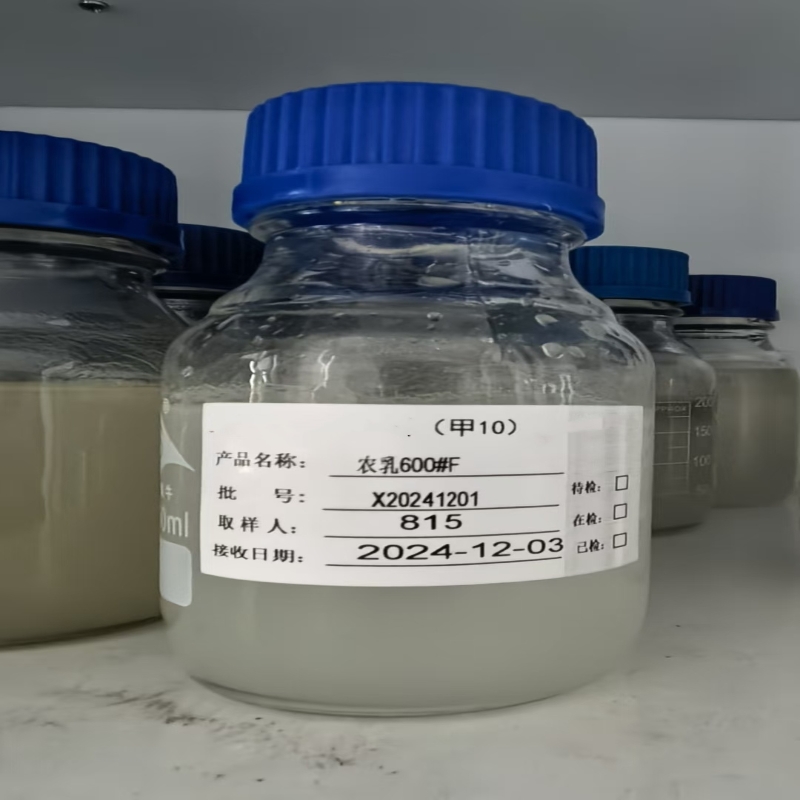
Agricultural Emulsifier 600: Comprehensive Overview of Uses, Characteristics, Specification Parameters, and Quality Standards
Introduction
Agricultural emulsifier 600, also known as styrene phenyl ether polyoxyethylene, is a non-ionic surfactant widely used in the agricultural, textile, and other industrial sectors. Its unique chemical structure and properties make it an ideal choice for a variety of applications, including emulsification, dispersion, wetting, and penetration.
Uses and Characteristics
Agricultural Applications
Pesticide Emulsification: Agricultural emulsifier 600 is primarily used as an emulsifier for pesticides. It effectively disperses oil-based pesticides in water, creating stable emulsions that enhance the attachment and penetration of pesticides on plant surfaces. This improves the utilization rate and pest control effectiveness of pesticides.
Nutrient Fertilizer Emulsification: It can also be used to emulsify nutrient fertilizers, making them more easily absorbed by plants.
Textile Industry
Dyeing Auxiliary: In the textile industry, agricultural emulsifier 600 serves as a dyeing auxiliary, helping to evenly distribute dyes on fabrics and improving dyeing quality.
Leveling Agent: It can also act as a leveling agent to reduce dye bath sulfuric acid usage and minimize fabric strength damage during dyeing processes.
Other Industrial Applications
Emulsification and Dispersion: Agricultural emulsifier 600 is also used in the petroleum, paint, and coating industries for emulsification and dispersion purposes.
Antistatic Agent and Softener: In the textile industry, it can be used as an antistatic agent and softener to improve the handling and comfort of fabrics.
Specification Parameters
The specification parameters of agricultural emulsifier 600 may vary depending on the manufacturer and specific application. However, some common parameters include:
Appearance: Typically, agricultural emulsifier 600 appears as a clear, colorless to slightly yellow liquid.
Active Ingredient Content: The active ingredient content, which is the percentage of styrene phenyl ether polyoxyethylene, usually ranges between 90% and 99%.
pH Value: The pH value of the product is typically neutral or slightly alkaline.
Viscosity: The viscosity of agricultural emulsifier 600 may vary depending on the specific formulation, but it is generally within an acceptable range for use in various applications.
Quality Standards
To ensure the quality and consistency of agricultural emulsifier 600, manufacturers adhere to strict quality standards. These standards cover various aspects of the production process, including raw material selection, production control, and final product testing.
Raw Material Selection: Manufacturers use high-quality raw materials to produce agricultural emulsifier 600. These raw materials are carefully selected to ensure that they meet the required specifications and purity levels.
Production Control: Manufacturers implement advanced production processes and control systems to ensure the consistency and quality of the final product. This includes monitoring production parameters such as temperature, pressure, and reaction time to ensure optimal product performance.
Final Product Testing: Manufacturers conduct rigorous testing on the final product to verify its quality and performance. This includes testing for chemical properties such as pH value, active ingredient content, and viscosity. Additionally, they may also test for physical properties such as appearance, odor, and stability.
Environmental and Safety Standards: Manufacturers prioritize environmental protection and safety during production. They use eco-friendly raw materials and production processes, and implement measures to reduce waste and emissions. Additionally, they ensure that the final product meets all relevant safety standards and regulations.
In conclusion, agricultural emulsifier 600 is a versatile compound with a wide range of applications in various industries. Its unique chemical properties and stability make it an excellent choice for use as an emulsifier, dyeing auxiliary, and more. By adhering to strict quality standards and using advanced production techniques, manufacturers can ensure that their products meet the highest standards of quality and performance.