




Pharmaceutical Intermediates
- • Analgesics (57)
- • Anesthetics (52)
- • Anti-Addiction Agents (8)
- • Antibacterials (117)
- • Anticonvulsants (20)
- • Antidementia Agents (23)
- • Antidepressants (35)
- • Antiemetics (24)
- • Antifungals (24)
- • Antigout Agents (9)
- • Anti-inflammatory Agents (28)
- • Antimigraine Agents (21)
- • Antineoplastics (427)
- • Antiparasitics (11)
- • Antiparkinson Agents (28)
- • Antipsychotics (54)
- • Antispasticity Agents (12)
- • Antivirals (146)
- • Anxiolytics (16)
- • Blood Glucose Regulators (105)
- • Blood Products (61)
- • Cardiovascular Agents (179)
- • CNS Agents (22)
- • Dental and Oral Agents (8)
- • Dermatological Agents (19)
- • Electrolytes (15)
- • Gastrointestinal Agents (62)
- • Genetic/Enzyme Disorder (12)
- • Genitourinary Agents (47)
- • Immunological Agents (36)
- • Metabolic Bone Disease (6)
- • Ophthalmic Agents (398)
- • Respiratory Tract (51)
- • Skeletal Muscle Relaxants (5)
- • Sleep Disorder Agents (28)
- • Oled Material Intermediate (333)
- • Heterocyclic Compound (9764)
- • Bulk Drug Intermediates (17746)
Related News
-
Dow Chemical to Close Three European Plants, Cut 800 Jobs
2026-07-10 -
Semcorp's Hungarian Factory Ordered to Shut Down Over Pollution
2026-07-08 -
Unable to Buy Entire AkzoNobel, Nippon Paint Begins a "Disassembled Approach"
2026-07-13 -
INEOS Warns Chinese Chemical “Dumping” Is Hitting Europe’s Industry
2026-07-07 -
Haldia Petrochemicals Pipeline Fire in India Adds Uncertainty to Asia's Naphtha Market
2026-07-03 -
Sinochem International Acquires Nantong Xingchen for 2.11 Billion Yuan, Rike Chemical Plans Genyuan New Materials Acquisition – The Changing Landscape of Chemical M&A
2026-07-03


Antiemetics Intermediates
Antiemetics
-

Pharmaceutical Grade / 99%
-

Industrial Grade / pharmaceutical grade / 99%
$1/MT EXW
-

- / 99.00%
-

- / 99%


Request for quotation , get quotes from more suppliers.
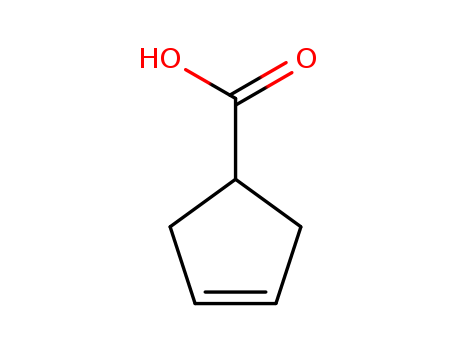
3-Cyclopentene-1-carboxylic acid
(7686-77-3)-

Pharmaceutical Grade / 99%
-

- / 99.00%
-

industrial Grade / 98%
-

Analytical Reagent / 99%



Request for quotation , get quotes from more suppliers.
5,6,7,8-Tetrahydro-1-naphthalenecarboxylic acid
(4242-18-6)-

- / 99.00%
-

-

-

Industrial Grade / 99%


Request for quotation , get quotes from more suppliers.
Methyl (diethylphosphono)acetate
(1067-74-9)-

Industrial Grade / pharmaceutical grade / 99%
-

- / 99.00%
-

industrial Grade / 98%
-

Industrial Grade / 99.0%


Request for quotation , get quotes from more suppliers.
4-BENZYL-2-HYDROXY-MORPHOLIN-3-ONE
(287930-73-8)-

Pharmaceutical grade / 99%
$50/MT EXW
-

Pharmaceutical grade / 99%
-

- / 99%
-


Request for quotation , get quotes from more suppliers.
2,6-Di-tert-butyl-4-methylpyridine
(38222-83-2)-

- / 99.00%
-

Industrial Grade / 99.21%
-

Industrial Grade / 99.00%
-


Request for quotation , get quotes from more suppliers.
-
IMIDAZOL-2-YLIDENE CAS NO 244187-81-3")
Industrial Grade, Feed Grade, Food Grade, Pharma Grade / 99%
-
IMIDAZOL-2-YLIDENE")
- / 99.00%
-
imidazol-2-ylidene")
-
-1,3-dihydro-2H-imidazol-2-ylidene")


Request for quotation , get quotes from more suppliers.
-
-2-(1R)-1-(3,5-BIS(TRIFLUROMETHYL)PHENYL) ETHOXY)-3-( 4-FLUOROPHENYL) MORPHOLINE 4-METHYLBENZENESULFONATE")
Pharmaceutical grade / 99%
-
![buy Hot Sale (2R,3S)-2-[(1R)-1-[3,5-Bis(trifluoromethyl)phenyl]ethoxy]-3-(4-fluorophenyl)morpholine 4-methylbenzenesulfonate]( "Hot Sale (2R,3S)-2-[(1R)-1-[3,5-Bis(trifluoromethyl)phenyl]ethoxy]-3-(4-fluorophenyl)morpholine 4-methylbenzenesulfonate")
Pharmaceutical Grade / 99%
-
-2-(1R)-1-(3,5-BIS(TRIFLUROMETHYL)PHENYL) ETHOXY)-3-( 4-FLUOROPHENYL) MORPHOLINE 4-METHYLBENZENESULFONATE")
Pharmaceutical grade / 99%
$50/MT EXW
-
-2-((1r)-1-(3,5-bis(trifluoromethyl)phenyl)ethoxy)-3-(4-fluorophenyl)morpholine 4-methylbenzenesulfonate")

![buy Hot Sale (2R,3S)-2-[(1R)-1-[3,5-Bis(trifluoromethyl)phenyl]ethoxy]-3-(4-fluorophenyl)morpholine 4-methylbenzenesulfonate](https://file.echemi.com/fileManage/upload/goodpicture/20240925/white-powder-l-carnosine-305-84-0_b20240925161528229.jpg "Hot Sale (2R,3S)-2-[(1R)-1-[3,5-Bis(trifluoromethyl)phenyl]ethoxy]-3-(4-fluorophenyl)morpholine 4-methylbenzenesulfonate")
Request for quotation , get quotes from more suppliers.
-
![buy (3R,7aR)-3-(tert-butyl)-1-hydroxy-7a-vinyltetrahydro-3H,5H-pyrrolo[1,2-c]oxazol-5-one]( "(3R,7aR)-3-(tert-butyl)-1-hydroxy-7a-vinyltetrahydro-3H,5H-pyrrolo[1,2-c]oxazol-5-one")
Pharmaceutical Grade / 99%
-
![buy 3-(1,1-diMethylethyl)-7a-ethenyltetrahydro-1-hydroxy-(3R,7aR)-3H,5H-Pyrrolo[1,2-c]oxazol-5-one]( "3-(1,1-diMethylethyl)-7a-ethenyltetrahydro-1-hydroxy-(3R,7aR)-3H,5H-Pyrrolo[1,2-c]oxazol-5-one")
Pharmaceutical Grade / 99%
-
![buy 3-(1,1-diMethylethyl)-7a-ethenyltetrahydro-1-hydroxy-(3R,7aR)-3H,5H-Pyrrolo[1,2-c]oxazol-5-one]( "3-(1,1-diMethylethyl)-7a-ethenyltetrahydro-1-hydroxy-(3R,7aR)-3H,5H-Pyrrolo[1,2-c]oxazol-5-one")
Industrial Grade / 99%
-
![buy (3R,7aR)-3-(tert-butyl)-1-hydroxy-7a-vinyltetrahydro-3H,5H-pyrrolo[1,2-c]oxazol-5-one]( "(3R,7aR)-3-(tert-butyl)-1-hydroxy-7a-vinyltetrahydro-3H,5H-pyrrolo[1,2-c]oxazol-5-one")
![buy (3R,7aR)-3-(tert-butyl)-1-hydroxy-7a-vinyltetrahydro-3H,5H-pyrrolo[1,2-c]oxazol-5-one](https://file.echemi.com/fileManage/upload/canonicalSmiles/20220812/abf74c773c6346c08a2d910e0ac89bd6.png "(3R,7aR)-3-(tert-butyl)-1-hydroxy-7a-vinyltetrahydro-3H,5H-pyrrolo[1,2-c]oxazol-5-one")
![buy 3-(1,1-diMethylethyl)-7a-ethenyltetrahydro-1-hydroxy-(3R,7aR)-3H,5H-Pyrrolo[1,2-c]oxazol-5-one](https://file.echemi.com/fileManage/upload/cas/821/ec74e97e-dd45-11eb-89d6-0255ac100033.png "3-(1,1-diMethylethyl)-7a-ethenyltetrahydro-1-hydroxy-(3R,7aR)-3H,5H-Pyrrolo[1,2-c]oxazol-5-one")
Request for quotation , get quotes from more suppliers.
-

Pharmaceutical Grade / 99%
$100/KG EXW
-
acetic acid methyl ester")
Industrial Grade / 99%
-
acetate")
-


Request for quotation , get quotes from more suppliers.
More Information
Key Types of Antiemetics
• Serotonin (5-HT3) receptor antagonists – Block serotonin signals in the gut and brain to prevent the vomiting reflex.
• Dopamine (D2) receptor antagonists – Inhibit dopamine pathways in the central nervous system to reduce nausea.
• Antihistamines and anticholinergics – Modulate histamine and acetylcholine pathways to alleviate motion sickness.
• Neurokinin-1 (NK1) receptor antagonists – Block substance P activity, especially effective for chemotherapy-induced nausea.
Clinical Importance
Antiemetics are essential for managing nausea and vomiting across various medical scenarios. Their timely administration improves patient comfort, prevents complications like dehydration or electrolyte imbalance, and enhances the effectiveness of treatments such as chemotherapy.
Applications in Healthcare
• Management of chemotherapy-induced nausea and vomiting
• Postoperative nausea control
• Relief from motion sickness and vertigo
• Support in gastrointestinal disorders and clinical research
Common Antiemetic Raw Materials
Ondansetron, metoclopramide, dimenhydrinate, promethazine, and aprepitant are commonly used. These materials are supplied in powder or crystalline forms suitable for oral, injectable, or capsule formulations. They are crucial for both therapeutic use and pharmaceutical development.
Frequently Asked Questions
Antiemetics are medications used to prevent or treat nausea and vomiting. They work by blocking specific receptors in the brain and gastrointestinal tract—such as dopamine, serotonin (5-HT3), histamine, or acetylcholine receptors—that trigger the vomiting reflex. Different classes of antiemetics target different pathways, making them suitable for various causes of nausea, including chemotherapy, motion sickness, pregnancy, or postoperative conditions.
Common types of antiemetic drugs include:1. **Serotonin (5-HT3) receptor antagonists** like ondansetron, used primarily for chemotherapy-induced nausea.2. **Dopamine antagonists** such as metoclopramide and prochlorperazine.3. **Antihistamines** like dimenhydrinate and meclizine, often used for motion sickness.4. **Corticosteroids** (e.g., dexamethasone), frequently combined with other antiemetics in cancer treatment.5. **NK1 receptor antagonists** like aprepitant, used for highly emetogenic chemotherapy regimens.Each class has distinct indications, efficacy profiles, and side effects.
Certain antiemetics are considered safe during pregnancy, particularly for managing morning sickness or hyperemesis gravidarum. For example, doxylamine combined with pyridoxine (vitamin B6) is FDA-approved for this purpose. Other options like ondansetron may be used off-label under medical supervision, though their safety profile is still under ongoing evaluation. Pregnant individuals should always consult a healthcare provider before using any antiemetic to weigh benefits against potential risks.
Selecting the right antiemetic for chemotherapy-induced nausea depends on the emetogenic potential of the chemotherapy regimen (high, moderate, low, or minimal risk). Guidelines from organizations like ASCO or NCCN recommend combination therapy—for instance, a 5-HT3 antagonist plus dexamethasone and an NK1 receptor antagonist—for high-risk regimens. Patient-specific factors such as age, comorbidities, previous response to antiemetics, and drug interactions also influence the choice. Always follow evidence-based protocols and consult an oncology pharmacist or specialist.
Side effects of antiemetics vary by drug class:• **5-HT3 antagonists** (e.g., ondansetron) may cause headache, constipation, or QT prolongation.• **Dopamine antagonists** like metoclopramide can lead to drowsiness, restlessness, or rarely, tardive dyskinesia with long-term use.• **Antihistamines** often cause sedation and dry mouth.• **Corticosteroids** may result in insomnia, increased blood sugar, or mood changes.Patients should be monitored for adverse effects, especially when used chronically or in combination therapies.