




Cosmetic Ingredient
- • Abrasive (124)
- • Absorbent (84)
- • Anticaking (66)
- • Anticorrosive (25)
- • Antifoaming (19)
- • Antimicrobials (291)
- • Antioxidant Ingredient (395)
- • Antiperspirant (20)
- • Antiplaque (48)
- • Anti-seborrheic (38)
- • Anti-sebum (39)
- • Antistatic (458)
- • Astringent (162)
- • Binding Agent (172)
- • Bleaching Agent (53)
- • Buffering (191)
- • Bulking (109)
- • Chelating (122)
- • Cleansing (680)
- • Cosmetic Colorant (212)
- • Cosmetic Preservative (158)
- • Denaturant (45)
- • Deodorant (98)
- • Depilatory (27)
- • Dissolving Agent (298)
- • Emollient (796)
- • Emulsifying Agent (482)
- • Emulsion Stabilising (154)
- • Exfoliating (19)
- • Film Forming (299)
- • Flavouring (72)
- • Foam Boosting (161)
- • Foaming (101)
- • Fragrance Ingredient (733)
- • Gel Forming (19)
- • Hair Conditioning (672)
- • Hair Dyeing (363)
- • Hair Fixing (36)
- • Hair Waving or Straightening (45)
- • Humectant (282)
- • Hydrotrope (92)
- • Keratolytic (20)
- • Light Stabilizer (80)
- • Moisturising Agent (50)
- • Nail Conditioning (42)
- • Occlusive (20)
- • Opacifying (119)
- • Oral Care (123)
- • Oxidising (19)
- • Perfuming (2106)
- • Plasticiser (98)
- • Propellant (19)
- • Reducing (52)
- • Refatting (12)
- • Refreshing (27)
- • Skin Cleansing (388)
- • Skin Conditioning (1753)
- • Skin Humectant (21)
- • Skin Protecting (282)
- • Smoothing (32)
- • Soothing (72)
- • Tonics (155)
- • UV Filter (34)
- • Viscosity Controlling (532)
Chemicals as Skincare Ingredients
Related News
-
Iran's Only MDI/TDI Plant Attacked, Middle East Supply Nearly Zero, Global Gap Widens
2026-06-10 -
ICIS Global No.58: ECHEMI Again Ranks Among the World’s Chemical Distributors
2026-06-16 -
Iran Closes Strait of Hormuz to All Vessels: Global Chemical Trade Gets Choked
2026-06-11 -
Hormuz Reopening Signal: 155 Tankers Still Waiting
2026-06-16 -
Hormuz Is Reopening, But Chemical Logistics May Take Months to Recover
2026-06-22 -
Wanhua Resumes PO Production: How Much Can Polyether Producers Save on Costs?
2026-06-12


Smoothing
Smoothing
Sesame oil
(8008-74-0)-

Food Grade / 99%
-

- / 99.00%
-

-

Pharmaceutical Grade / 0%




Request for quotation , get quotes from more suppliers.
Silk powder
(9009-99-8)-

Cosmetics Grade / 0.00%
-

Cosmetics Grade / 99.00%
-

Chemical Grade / 95%
-

- / 99.00%


Request for quotation , get quotes from more suppliers.
Salai, ext.
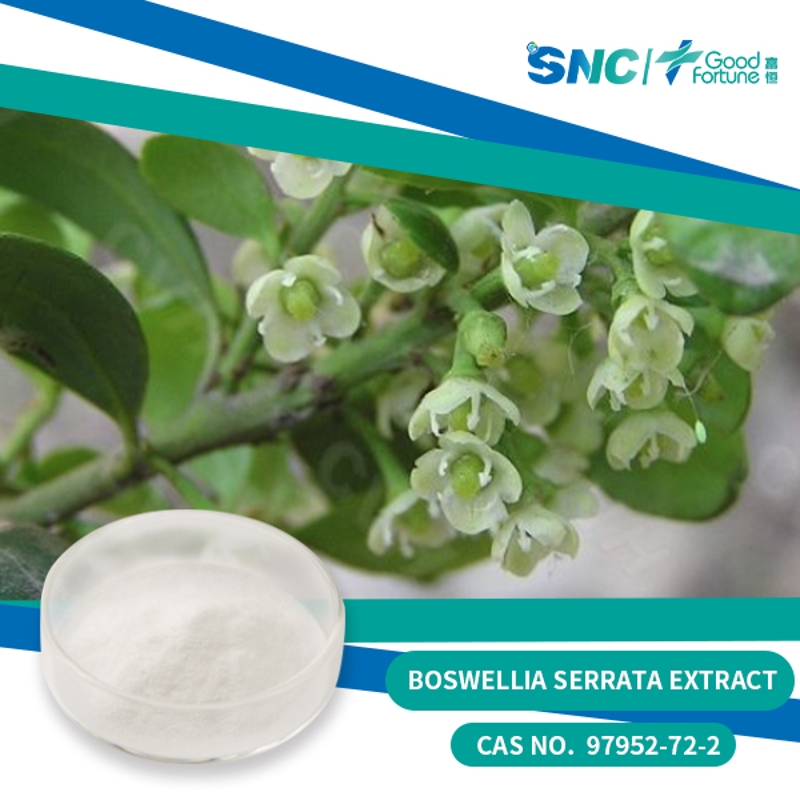
(97952-72-2)-

pharmaceutical grade/food grade / 95%
-

Top Product / 80%
-

Food Grade / 65%
$14-16/KG FOB
-

USP / EP / BP / JP Grade / 99.9%
$1/KG FOB


Request for quotation , get quotes from more suppliers.
Silk, ext.
(91079-16-2)-

Industrial Grade / 99%
-


Request for quotation , get quotes from more suppliers.
More Information
Smoothing creams are designed to enhance and revitalize hair and skin texture. Whether it's a hair-smoothing cream for sleek locks or a skin-smoothing variant for a radiant complexion, these creams work to impart a silky and refined finish.
Smoothing creams often incorporate moisturizers, exfoliants, and collagen-promoting compounds to create a smoother skin surface, diminishing the appearance of fine lines and wrinkles.
Causes of texture-related concerns:
● Exposure to harsh environmental
● Natural aging processes
● Daily wear and tear leading to loss of luster
Frequently Asked Questions
Smoothing in data analysis refers to techniques used to reduce noise or random variation in a dataset, making underlying patterns or trends more visible. Common smoothing methods include moving averages, exponential smoothing, and kernel smoothing. These approaches are widely applied in time series forecasting, signal processing, and financial modeling to improve data interpretability and prediction accuracy.
Exponential smoothing is a time series forecasting method that assigns exponentially decreasing weights to past observations. The most recent data points receive higher weights, while older observations have progressively less influence. This technique is particularly effective for data with no clear trend or seasonality and is commonly used in inventory management, demand forecasting, and economic modeling due to its simplicity and computational efficiency.
While both moving average and smoothing aim to reduce data volatility, a moving average calculates the mean of a fixed number of recent data points, updating as new data arrives. Smoothing, on the other hand, encompasses a broader set of techniques—including moving averages—that filter out noise using weighted averages or statistical models. Smoothing methods like exponential or LOESS smoothing often provide more adaptive and responsive results compared to simple moving averages.
Smoothing is useful in machine learning when dealing with noisy input features or target variables that could mislead model training. It’s commonly applied during preprocessing for time-series data, sensor readings, or any sequential data where short-term fluctuations obscure long-term trends. Additionally, label smoothing—a related technique—is used in classification tasks to prevent overconfidence in model predictions by softening hard labels into probability distributions.
Smoothing algorithms are widely used across industries: in finance for stock price trend analysis, in meteorology for temperature or rainfall pattern recognition, in engineering for signal denoising from sensors, and in retail for sales forecasting. They also play a key role in computer vision (e.g., image blurring) and natural language processing (e.g., n-gram probability smoothing). Choosing the right smoothing technique depends on data characteristics and the specific analytical goal.