What is the molecular weight of ferrous ammonium sulphate
Molecular weight of ferrous ammonium sulphate is 2.541. Molecular weight is the average weight at which a molecular compound is found in a gas, liquid, or solid state. Often times molecular weight and formula weight are used interchangeably. We use molecular weight to define how much one molecule of the compound weighs, while we use formula weight to determine how many atoms compose a substance's formula (e.g., C12H22O11 ). The formula you need to calculate molecular weight is usually just the chemical name of your compound followed by "molecular mass", like water (H2O) has an atomic mass of 1 g/mol.
Properties of ferrous ammonium sulphate
1.Density
Ferrous ammonium sulphate has a density of 2.49 g/cm3 (1.634 oz/in3) and a melting point of 105℃ (221℉). It is a white solid. It has a melting point of 105℃ (221℉) and has a density of 2.49 g/cm3 (1.634 oz/in3) at 20℃ (68℉).
2.Molar Mass
It has a molar mass of 543.7 g/mol, a density of 2.49 g/cm3, and a melting point of 105℃ (221℉). It is a white solid. Ferrous ammonium sulphate has a molar mass of 543.7 g/mol, a density of 2.49 g/cm3, and a melting point of 105℃ (221℉). It is a white solid. This shows the molecular weight of ferrous ammonium sulphate.
3.Melting Point
It has a melting point of 105℃ (221℉). It is used as an additive in some kinds of glass and ceramics to improve their color characteristics, in medicine to color x-ray images, and in some chemical tests that involve the use of indicator tubes containing ferric hydroxide solution or ferric ammonium citrate solution.
4.Boiling Point
The boiling point of Ferrous ammonium sulphate is not known. This additive, also known as Iron Ammonium Citrate Solution, is an inorganic salt that has been used for centuries to color glass and ceramics, as a mordant in dyeing textiles, and as an ingredient in some kinds of ink. It is also used as a mordant or dye fixer when making certain kinds of paper. To prepare this compound for shipping purposes, it is diluted with water (preferably purified water) to its final concentration of 1% by weight. It does not have a boiling point because it is already dissolved in the water at room temperature.
5.Appearance
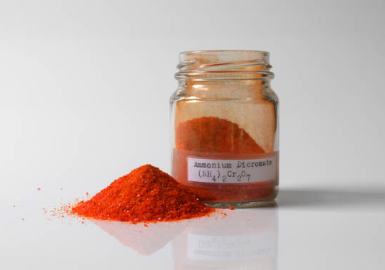
Ferrous ammonium sulphate is a white crystalline solid. It is safe to handle, store, and transport. It is stable in air and in water stored in its original container. It does not react with chemicals that it may encounter on its way to the consumer. There is no toxicity associated with this product. The human body can easily handle small amounts at one time, like if you accidentally got some on your hand while handling it or while working with it at your job. You can wash it off just like you do with soap and water when doing the dishes.
6.Storage
This has a shelf-life of 24 months past its use by date. It does not have an expiration date. The product should be discarded after its use by date. It is stable in air and in water stored in its original container. This has a shelf-life of 24 months past its use by date. It does not have an expiration date. The product should be discarded after its use by date. It is stable in air and in water stored in its original container.
7.History
Ferrous ammonium sulphate has been used for many years as a mordant in dyeing textiles; as an ingredient in some kinds of ink; as a fixative for film, some types of paper, and plastic; and to color glass. It has also been used in certain chemical tests that involve the use of indicator tubes containing ferric hydroxide solution or ferric ammonium citrate solution. This is not new. The material dates back to at least the 17th century when Ferrous ammonium chloride was discovered by Oswald Friedrich Wiedemann while working with iron ore particles and red haematite (Fe2O3).
In conclusion, molecular weight of ferrous ammonium sulphate is 2.541. The properties of ferrous ammonium sulphate include its density, melting point, molar mass, boiling point and appearance. The storage of ferrous ammonium sulphate is not an issue; in fact it can be stored for up to 24 months past its use by date or its expiration date. Ferrous ammonium sulphate has been used for many years as a mordant in dyeing textiles; as an ingredient in some kinds of ink; as a fixative for film, some types of paper, and plastic; and to color glass. It has also been used in certain chemical tests that involve the use of indicator tubes containing ferric hydroxide solution or ferric ammonium citrate solution.
Looking for chemical products? Let suppliers reach out to you!
You May Interested In


SS-31 Cosmetic peptides, discounted price improving cognitive impairment factory supply
$8E+1/UNIT FOB


2026-09-14
Trade Alert
Delivering the latest product trends and industry news straight to your inbox.
(We'll never share your email address with a third-party.)

Related News
-
Market Analysis - Monthly Report - August 2022- Hot Products
-
Why is Ammonium Sulphate a salt and its use?
-
Increased Demand and Stronger Ammonium Sulfate Market
-
Market Analysis - Weekly Report - July 4th to July 8th, 2022- Hot Products
-
What is salt analysis of ammonium sulphate
-
How to prepare ammonium sulphate solution
-
Molar Mass Of Ferrous Ammonium Sulfate Hexahydrate
-
Ammonium sulphate has a small rise in 2020 and will continue to rise in 2021?
-
Permanganate: Properties, Uses, and Safety
-
Calcium Hypochlorite: Properties, Uses, and Safety
Recommend Reading
-
![Bivalirudin: Medical Uses, Properties, and Safety]()
Bivalirudin: Medical Uses, Properties, and Safety
-
![Iohexol: Properties, Uses, and Safety]()
Iohexol: Properties, Uses, and Safety
-
![Sodium Nitrate: Fertilizer, Food Curing, and Explosive History]()
Sodium Nitrate: Fertilizer, Food Curing, and Explosive History
-
![Aluminum Oxide (Al2O3): Abrasive Uses, Ceramic Applications, and Safety]()
Aluminum Oxide (Al2O3): Abrasive Uses, Ceramic Applications, and Safety
-
![Reactions and Uses of Ammonium Dichromate]()
Reactions and Uses of Ammonium Dichromate
-
![Premium Global Chemical Sourcing Requests (07-10May, 2026)]()
Premium Global Chemical Sourcing Requests (07-10May, 2026)
-
![Supply Contraction Meets Weak Consumption—PCs Consolidate in Early May]()
Supply Contraction Meets Weak Consumption—PCs Consolidate in Early May
-
![Supply Increases in Stages, China’s Acrylonitrile Market Slips Narrowly]()
Supply Increases in Stages, China’s Acrylonitrile Market Slips Narrowly
-
![Under a Triple Game, Polyethylene Operates with a Weak and Fluctuating Trend]()
Under a Triple Game, Polyethylene Operates with a Weak and Fluctuating Trend
-
![Since May, the natural rubber market has shown a pattern of initial strength followed by weakness, with prices fluctuating at high levels.]()
Since May, the natural rubber market has shown a pattern of initial strength followed by weakness, with prices fluctuating at high levels.