From 2016 to 2040, 1.3 billion tons of plastic pollution will be generated
About 100 years ago, mankind invented plastic, which is cheap and convenient. It integrates into every aspect of public life and brings great convenience. However, most plastic wastes are not easily degraded naturally or cannot be recycled.
According to a report in "Science" magazine on July 24, a team of 17 international experts led by Dr. Costas Willis from the University of Leeds in the United Kingdom used a computer model called "Into the Ocean Plastics" Computer simulations of the production, use and generation of garbage were conducted, and the following conclusions were finally drawn: If effective measures are not taken, between 2016 and 2040, there will be 1.3 billion tons of plastic garbage dumped into the earth and ocean. This is the first comprehensive assessment of plastic waste pollution 20 years later.
The study pointed out that the current global annual output of plastic products is about 300 million tons, of which only 10% is recycled, and a large amount of plastic waste is incinerated, poured into the ground and dumped into the ocean. Some experts point out that world plastic production doubles every 11 years.
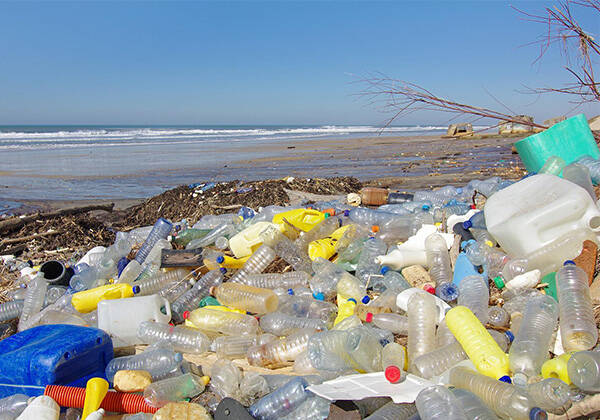
Millions of tons of plastic enter the ocean every year, polluting the ocean, dirtying the beach, and endangering the lives of wildlife. Plastic particles can be found in the soil, in the atmosphere, and even in areas such as Antarctica, the most distant place on the earth. Plastic particles are swallowed by fish and other marine organisms, thus entering the food chain.
Research author Ed Cook from the University of Leeds said that burning can reduce the dumping of the land or the ocean, but it also pollutes the air, causing environmental problems and exacerbating global warming.
Calculation simulations show that in 2040, 29 million tons of plastic waste will be dumped into the ocean, which is equivalent to 50 kilograms of plastic waste per meter of coastline in the world, compared with 11 million tons in 2016.
Dr. Willis pointed out that it is conservatively estimated that there are currently about 11 million plastic waste scavengers in low- and middle-income countries around the world who lack basic job safety. Computer simulation estimates that they complete 58% of the global plastic waste recycling, contributing to reducing plastic waste pollution.
The study finally emphasized that if the world quickly adopts consistent and effective measures, by 2040, plastic waste may be reduced to 710 million tons.

You May Interested In


2026-08-25
Trade Alert
Delivering the latest product trends and industry news straight to your inbox.
(We'll never share your email address with a third-party.)

Related News
-
Can Lotte Chemical's Four Growth Pillars Support Its New Valuation After Spinning Off Basic Chemicals?
-
U.S. 10% Temporary Tariff Expires, New Section 301 Tariffs Not Yet Implemented
-
Retinol in Cosmetics: Regulatory Tightening and Market Changes
-
DKSH Opens Newly Enhanced Innovation Center in South Korea
-
Rare Earth and Power: Strategic Probing Beneath the New U.S.–China Trade Framework
-
This Is Not a Price Increase Wave but a Full-Blown Cost Squeeze Across China’s Coatings Chain
-
“Clearing the Floor”: DKSH’s Privatization of Its Malaysian Subsidiary Signals a Silent Power Shift in Asia’s Supply Chain
-
Laboratoire PYC showcases its collagen-driven nutricosmetic innovations
-
Kemira to Acquire SIDRA Wasserchemie, Expanding European Water Treatment Footprint
-
Polyvantis Opens Shanghai Technical Center
Recommend Reading
-
![COIM Group Expands Alkyd and Acrylic Resin Production Capacity in the Netherlands]()
COIM Group Expands Alkyd and Acrylic Resin Production Capacity in the Netherlands
-
![Redwall Raises Prices by as Much as 80%, Songwon Launches Global Increases, and Chemical Companies Are Collectively Passing On Costs]()
Redwall Raises Prices by as Much as 80%, Songwon Launches Global Increases, and Chemical Companies Are Collectively Passing On Costs
-
![Middle East Conflict Pushes Up Oil Prices as More Than 100 Chemical Raw Materials Rise in Concentration]()
Middle East Conflict Pushes Up Oil Prices as More Than 100 Chemical Raw Materials Rise in Concentration
-
![Profits Are Rising, but So Are the Risks—China’s Coatings Industry Is Living Through Its Most Awkward Year]()
Profits Are Rising, but So Are the Risks—China’s Coatings Industry Is Living Through Its Most Awkward Year
-
![Global Chemical Giants Light the Fuse: A TDI/MDI Price Storm Sweeps Asia and Europe—Who’s Fueling This “Cost Carnival”?]()
Global Chemical Giants Light the Fuse: A TDI/MDI Price Storm Sweeps Asia and Europe—Who’s Fueling This “Cost Carnival”?
-
![What is Trametenolic Acid? (Structure, Sources & Research)]()
What is Trametenolic Acid? (Structure, Sources & Research)
-
![Saudi Oil Tanker Attack Sparks Geopolitical Risks, Brent Crude Returns to $100 Mark]()
Saudi Oil Tanker Attack Sparks Geopolitical Risks, Brent Crude Returns to $100 Mark
-
![Sulfuric Acid (H2SO4): Properties, Battery Uses, and Extreme Safety Hazards]()
Sulfuric Acid (H2SO4): Properties, Battery Uses, and Extreme Safety Hazards
-
![South Korea’s Largest Petrochemical Hub Moves to Cut Cracker Capacity by 40%]()
South Korea’s Largest Petrochemical Hub Moves to Cut Cracker Capacity by 40%
-
![Sulfur Hexafluoride (SF6): Applications and Safety]()
Sulfur Hexafluoride (SF6): Applications and Safety