Are Nanoparticles Present in Silicon Dioxide Food Additives?
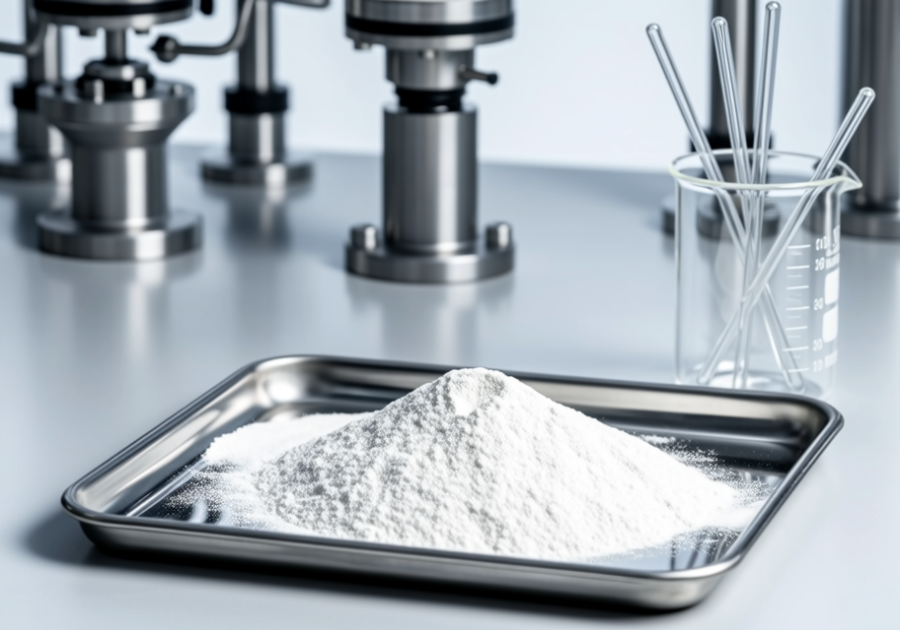
Silicon dioxide (SiO2) is a commonly used food additive in the United States, approved for direct consumption. It serves as an anticaking agent in powdered food products and contributes to the stability of beer production. However, there is limited information available regarding the particle size and size distribution of SiO2 used in food additives. In recent years, concerns have been raised about the potential presence of nanoparticles in SiO2 food additives. Therefore, it is crucial to characterize these additives and understand their physicochemical properties using advanced analytical techniques to ensure their safety.
In this study, SiO2 food additives directly obtained from manufacturers and distributors were subjected to thorough characterization using multiple analytical tools. Dynamic light scattering (DLS), transmission electron microscopy (TEM), field emission scanning electron microscopy (FE-SEM), and single-particle inductively coupled plasma mass spectrometry (spICP-MS) were employed to analyze the additives under different experimental conditions.
The data obtained from these analytical techniques revealed the presence of nanosized primary particles ranging from 1 to 100 nm, as well as aggregates and agglomerates exceeding 100 nm in size. The SEM images demonstrated similar morphology among SiO2 food additives obtained from different distributors. These findings lay the foundation for evaluating the nanomaterial content in regulated food additives and enable the FDA to address knowledge gaps in the analysis of nanosized particles present in commercial food additives.
The authors dedicate this work to the memory of Timothy R. Croley and Savelas A. Rabb. They acknowledge the FDA White Oak Advanced Characterization Facility (ACF) for their assistance and the use of instruments. The authors also express gratitude to Jiwen Zheng for scientific discussions and support with the ACF.
The authors disclose no conflicts of interest related to this research. The mention of specific commercial equipment, instruments, and materials in this article is solely intended to describe the experimental procedure and does not imply any endorsement or recommendation by the National Institute of Standards and Technology. It is important to note that the identified materials, instruments, or equipment may not necessarily be the best available for the intended purpose.

You May Interested In


High Quality β-Nicotinamide adenine dinucleotide CAS 53-84-9 NADwith ready stock and best price
$3/UNIT FOB


2026-10-06
Trade Alert
Delivering the latest product trends and industry news straight to your inbox.
(We'll never share your email address with a third-party.)

Related News
-
SiO2: Properties, Uses, and Applications
-
Silicon Dioxide In Supplements: Are They Safe
-
All You Concerned about Silicon Dioxide in Food: Is It Harmful to Us?
-
The Last 10% Tariff Trap: A New Chapter in U.S.–China Negotiations on “Fentanyl Tariffs”
-
U.S. Health Chief Says No Evidence Linking Tylenol to Autism
-
Lilly Eyes Fast-Track Approval for Oral Weight-Loss Drug in U.S.
-
Strides Pharma Reports Strong Q2 as Net Profit Surges 82%
-
EU Authorises Propionic Acid and Its Salts as Feed Additives Until 2035
-
U.S. Strikes Three Iranian Tankers as “Tanker-for-Tanker” Escalation Raises Chemical Shipping Risk
-
India Strengthens Drug Approval Oversight with Expanded CDSCO Powers
Recommend Reading
-
![Panama Canal Delays Deeper Draft Cut, but Transit Capacity Is Still Tightening]()
Panama Canal Delays Deeper Draft Cut, but Transit Capacity Is Still Tightening
-
![EFSA Reports Avian Influenza Situation in Europe and Human Cases in Asia]()
EFSA Reports Avian Influenza Situation in Europe and Human Cases in Asia
-
![EFSA Renews Authorisation of Inositol for Use in Fish and Crustacean Feed]()
EFSA Renews Authorisation of Inositol for Use in Fish and Crustacean Feed
-
![EFSA Approves Cellulase from GM Aspergillus Niger with Low Allergy Risk]()
EFSA Approves Cellulase from GM Aspergillus Niger with Low Allergy Risk
-
![Canada Launches Re-Evaluation of Herbicide Iodosulfuron-Methyl-Sodium]()
Canada Launches Re-Evaluation of Herbicide Iodosulfuron-Methyl-Sodium
-
![This week, the mainstream price of propylene oxide in the Chinese market has exceeded the 10,000 yuan mark (3.9-3.10)]()
This week, the mainstream price of propylene oxide in the Chinese market has exceeded the 10,000 yuan mark (3.9-3.10)
-
![Costs Rise, Hydrogen Peroxide Market Prices See an Increase]()
Costs Rise, Hydrogen Peroxide Market Prices See an Increase
-
![October Petrocoke Prices Continue to Rise]()
October Petrocoke Prices Continue to Rise
-
![October China Soda Ash Market Trend Consolidates]()
October China Soda Ash Market Trend Consolidates
-
![Premium Global Chemical Sourcing Requests (9-12Apr, 2026)]()
Premium Global Chemical Sourcing Requests (9-12Apr, 2026)