




Simbiose introduces Frontier Control (Bacillus subtilis), a bio-fungicide against soybean and corn diseases
Simbiose(Brazil) has announced the launch of Frontier Control, a microbiocide in SC recommended for ground application. According to Simbiose, the biologics are recommended for all crops where Pantoea ananatis and Septoria glycines are present.
The product was developed in collaboration with UEL and is the result of a collaboration between the Labim, CCB and Aintec. The collaboration agreement began in 2017, and testing results since then have shown that Frontier Control is effective in controlling diseases that primarily affect soybeans and corn.
Edson Antonio Miura, Aintec’s Director, said that, on average, research takes at least two years, plus a period of preparation to start production. Given their experience with the pandemic, they are happy that this phase is over.
The collaboration agreement between UEL and Simbiose stipulates that royalty income from intellectual property rights will begin in the second half of 2024, one year after the first products are commercialized.
Artur Soares, Director of Research and Development at Simbiose, said: "Good partnerships are the secret to success. We combine all the knowledge of our researchers with our expertise in the industry and the market. The partnership with UEL is a milestone for the company and the outcome will be very positive for both parties."
Professor Admilton Goncalves de Oliveira, Director of Labim, said that the collaboration with Simbiose dates back to the establishment of the Microbial Biotechnology Laboratory, which was created to enhance applied research. Focusing on microorganisms used in agriculture, the lab research team published proposals that integrated different techniques to obtain highly promising isolates. The Bacillus subtilis strain LABIM40 was selected from these isolates to be used as a biocide for the collaboration between UEL and Simbiose. The abbreviation LABIM40 corresponds to the 40th position in the Labim Laboratory Microbiome Library. The name Bacillus velezensis derives from the fact that it was originally isolated from the Velez River in Malaga, Spain.

You May Interested In


Glow70/KLOW80 99% China Peptides Warehouse Direct Delivery Lyophilized Powder in Stock
$169/UNIT FOB


2026-10-17
Trade Alert
Delivering the latest product trends and industry news straight to your inbox.
(We'll never share your email address with a third-party.)

Related News
-
Jadesheen's patented microorganism inoculantwon the 'Anhui Provincial Patent Excellence Award.
-
Superbac (Brazil) enters the plant protection market with the launch of two biological nematocides/fungicides
-
Superbac (Brazil) enters the plant protection market with the launch of two biological nematocides/fungicides
-
Brazil's agrochemical market surged 43% in 2022/2023
-
Brazil's agrochemical market surged 43% in 2022/2023
-
FMC launches Ataplan to combat soil-borne fungal diseases in Brazil
-
FMC launches Ataplan to combat soil-borne fungal diseases in Brazil
-
Basf launches Poncho Votivo Precise, a seed treatment agent
-
IHARA launched Trunemco, the first biological nematocide, in Brazil
-
AgBiome's fungicide Theia® is available in California, USA
Recommend Reading
-
![Saudi Aramco Considers Selling Arlanxeo]()
Saudi Aramco Considers Selling Arlanxeo
-
![Lier Chemical Gains Momentum as Chlorantraniliprole Supply Stabilizes]()
Lier Chemical Gains Momentum as Chlorantraniliprole Supply Stabilizes
-
![Wanhua Chemical Is Fighting Counterfeits While Raising Prices]()
Wanhua Chemical Is Fighting Counterfeits While Raising Prices
-
![Kuraray Exits China’s PMMA Market, with Jiangsu Shuangxiang Group Taking Over]()
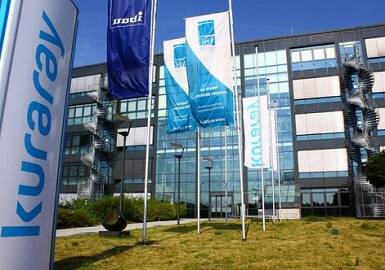
Kuraray Exits China’s PMMA Market, with Jiangsu Shuangxiang Group Taking Over
-
![DyStar Becomes a Wholly-Owned Subsidiary of Zhejiang Longsheng Group, Ending Longstanding Shareholder Disputes with a $5 Billion Deal]()
DyStar Becomes a Wholly-Owned Subsidiary of Zhejiang Longsheng Group, Ending Longstanding Shareholder Disputes with a $5 Billion Deal
-
![FDA Tightens the Solvent Side of Natural Color Production]()
FDA Tightens the Solvent Side of Natural Color Production
-
![On December 22, the caustic soda price in China remained stable]()
On December 22, the caustic soda price in China remained stable
-
![Cost Reduction, Weak Demand: December Phthalic Anhydride Prices Fluctuate and Decline]()
Cost Reduction, Weak Demand: December Phthalic Anhydride Prices Fluctuate and Decline
-
![Inventory Increase, Acrylonitrile Market Fluctuates and Probes Downward]()
Inventory Increase, Acrylonitrile Market Fluctuates and Probes Downward
-
![Crude oil prices decline, leading to a reduction in this round of retail fuel prices in China]()
Crude oil prices decline, leading to a reduction in this round of retail fuel prices in China








- Hot Searches
- fluorescent whitening
- gl biochem ltd
- dapagliflozin 10mg tab
- is miconazole nitrate the same as miconazole
- where can i buy red phosphorus
- sr 17018 buy online usa cheap
- dichloromethane sds
- sulfuric acid price per litre
- magnesium oxide nanopowder market
- perindopril
- retatrutide supplier china
- gallium iii fluoride