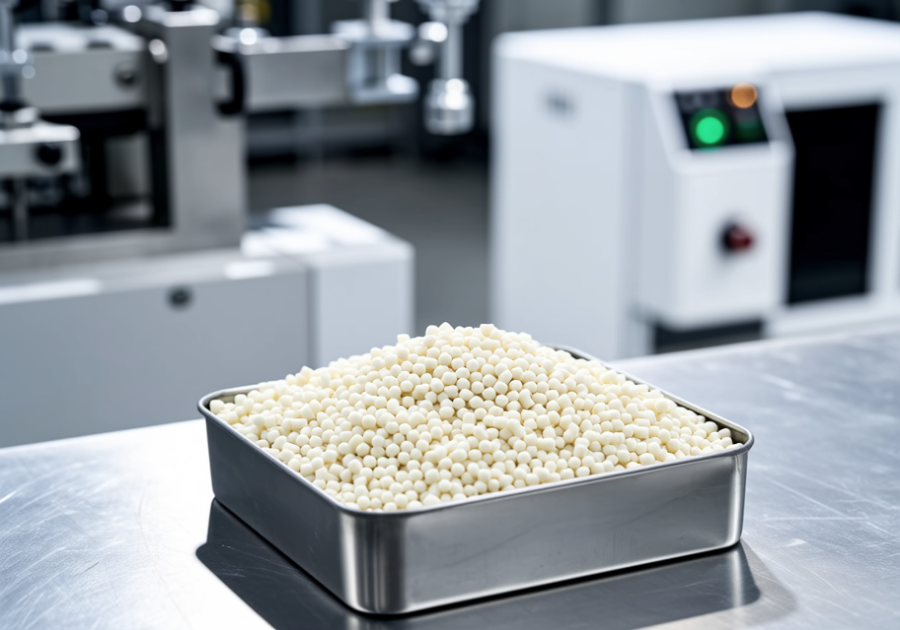
Performance Comparison: Calcium Chloride Desiccant vs Silica Gel
Moisture can seriously affect products such as electronics, food, and pharmaceuticals. High humidity can cause items to degrade or become damaged, resulting in costly damage. Therefore, it is crucial to have effective packaging solutions to protect products from moisture. This article will show that calcium chloride desiccant vs silica gel in many aspects of performance.
1. Calcium chloride desiccant vs silica gel in terms of materials
The main component of calcium chloride desiccant is calcium chloride, which is an inorganic compound synthesized through reduction method. The main component of silica gel desiccant is silica, which is a chemically synthesized inorganic material.
2. Calcium chloride desiccant vs silica gel in terms of moisture absorption capacity
Calcium chloride desiccant has strong moisture absorption capacity, and its general moisture absorption capacity can reach about 50%. It is suitable for use in environments with high relative humidity. Silica gel desiccant has relatively weak moisture absorption capacity, generally around 30%, and is suitable for use in environments with low relative humidity.
3. Calcium chloride desiccant vs silica gel in terms of service life
Calcium chloride desiccant has a short service life, generally between 1-2 months, and needs to be replaced in time. Silica gel desiccant has a long service life, which can be used for 3-6 months, and its service life can be extended by heating and regeneration.
4. Calcium chloride desiccant vs silica gel in terms of usage environment
Both silica gel and calcium chloride desiccants are generally safe to use, but come with some risks. Calcium chloride desiccant is not recommended for use in sensitive areas such as food and medicine because calcium chloride is toxic. Calcium chloride can irritate skin and eyes and release toxic fumes if exposed to high temperatures. If not handled properly, it can negatively impact soil and water quality.
Silica gel desiccant is considered more environmentally friendly than calcium chloride because it is non-toxic and can be recycled, does not produce any pollution, and can be used on different occasions. But accidental ingestion or inhalation of silica gel desiccant can be harmful to the body. Therefore, follow proper safety precautions when handling both substances, such as wearing gloves and a mask, and keep them out of the reach of children and pets.
5. Calcium chloride desiccant vs silica gel in terms of cost
Silica gel desiccants are generally more expensive than calcium chloride desiccants but can be more effective in some applications. For example, silica gel desiccant is used in moisture-sensitive electronic devices, where small amounts of moisture can cause severe damage. Calcium chloride desiccants are commonly used in large-scale moisture control applications, such as industrial environments or construction sites. The lower cost of calcium chloride makes it a more cost-effective option in these applications, especially when large amounts of moisture must be removed quickly.
Both silica gel and calcium chloride desiccants can be reused multiple times, which helps reduce their overall cost. Silica gel can be regenerated by heating to a specific temperature, which drives away moisture and restores its adsorption capacity. Calcium chloride can be reused by dissolving it in water and then boiling the water to recover the salt.
6. Calcium chloride desiccant vs silica gel in terms of application places
The application scenarios of silica gel desiccant include but are not limited to humidity control of products such as electronic products, leather products, clothing, shoes, and food packaging; protecting documents and cultural relics in archives, museums, and libraries from moisture damage; drying and purification of gases and liquids in industrial uses, as well as the production of plastics, resins and coatings; absorbs excess moisture and prevents product damage during transportation and storage; used in dehumidifiers to reduce humidity in indoor spaces; as a hygroscopic ingredient in cat litter and other pet products.
Application scenarios for calcium chloride drying include but are not limited to de-icing roads, sidewalks and airport runways; produce concrete, helping it set and harden faster; absorb moisture from fruits and vegetables, improve the texture of cheese, and act as a coagulant in tofu production; increase drilling fluid density and control dust at oil and gas drilling sites; paper and pulp manufacturing, wastewater treatment and leather tanning; treat hypocalcemia as a component of intravenous fluids; remove impurities and improve drinking water quality.
In summary, calcium chloride desiccant and silica gel desiccant each have their own advantages and disadvantages. Which desiccant to choose needs to be determined based on the use environment and the amount of moisture absorption required. If it is an occasion that is sensitive to environmental impact, it is recommended to choose silica gel desiccant. If a large amount of moisture is required to be absorbed, it is recommended to choose calcium chloride desiccant.

You May Interested In


2026-09-20
Trade Alert
Delivering the latest product trends and industry news straight to your inbox.
(We'll never share your email address with a third-party.)

Related News
-
“Amputation or Strategic Retreat?”: Shell’s Six-Year Chemical Losses and the Quiet Unwinding of an Empire
-
The $6 Billion Gold Rush: Generic Semaglutide Set to Reshape Global Pharma After Patent Cliff
-
EU Greenlights Four GM Crops—But Only at the Border
-
“The 40-Year Ethylene Giant Collapses”: ExxonMobil’s Premature Shutdown Is Not Just Scotland’s Tragedy—It’s the Twilight Elegy of European Industrial Civilization
-
Carbon Fiber’s Price Surge Signals a New Era of Strategic Value—and Supply Tension
-
The Carbon Tollbooth Is Open: EU’s CBAM Ushers in a New Era of Climate-Linked Trade
-
Sherwin-Williams Surpasses $100 Billion in Market Cap: Is This the ‘Apple Moment’ for Paint, or America’s Industrial ‘One Hundred Years of Solitude’?
-
Domo Chemicals’ German Subsidiary Insolvencies: Energy Costs, Weak Demand and Chinese Nylon Competition
-
Amazon Turns Lilly’s Weight-Loss Pill Into a Retail Logistics Play
-
Chevron Opens Oilfield Chemical Technology to Rivals
Recommend Reading
-
![Selling the Family Silver for a New Suit? Why Bohai Chemical’s Transformation Drama Got Canceled After Just Two Acts]()
Selling the Family Silver for a New Suit? Why Bohai Chemical’s Transformation Drama Got Canceled After Just Two Acts
-
![Saint-Gobain Expands Its Construction Chemicals Operations in Indonesia]()
Saint-Gobain Expands Its Construction Chemicals Operations in Indonesia
-
![“Anti-Overcapacity” Backfires: China’s Chemical Industry Trapped in a Hell of Its Own Making—and Global Pushback]()
“Anti-Overcapacity” Backfires: China’s Chemical Industry Trapped in a Hell of Its Own Making—and Global Pushback
-
![Indorama Corporation Acquires 100% Stake in Anyang Zhongying Fertilizer]()
Indorama Corporation Acquires 100% Stake in Anyang Zhongying Fertilizer
-
![]()
"Zipper-Like" Opening and Closing of Hormuz Coupled with Russian Export Ban Send Energy and Chemical Prices Soaring
-
![On March 3rd, the market price of pure benzene in China continued to rise]()
On March 3rd, the market price of pure benzene in China continued to rise
-
![Surge by 4,000 CNY/ton! Is the melamine market in China showing signs of peaking?]()
Surge by 4,000 CNY/ton! Is the melamine market in China showing signs of peaking?
-
![Market Performance Balanced, PC Holds Steady Before the Festival]()
Market Performance Balanced, PC Holds Steady Before the Festival
-
![Supply and Demand Improve, Cyclohexanone Market Rises in February in China]()
Supply and Demand Improve, Cyclohexanone Market Rises in February in China
-
![Costs Decline & Trading Activity Shrinks—ABS Market Quiet Ahead of the Holiday]()
Costs Decline & Trading Activity Shrinks—ABS Market Quiet Ahead of the Holiday