Boric Acid vs. Sodium Tetraborate: What Are Their Differences
Read our comparison of the boric acid vs sodium tetraborate in terms of physical, and chemical properties and their applications.
Introduction:
The comparison of boric acid vs sodium tetraborate is rather common as both contain boron-containing compounds and have overlapping applications in the current industry. This comparison is also important considering cost-effectiveness: and Interchangeability in terms of their use. Below is their basics and comparison:
Boric Acid:
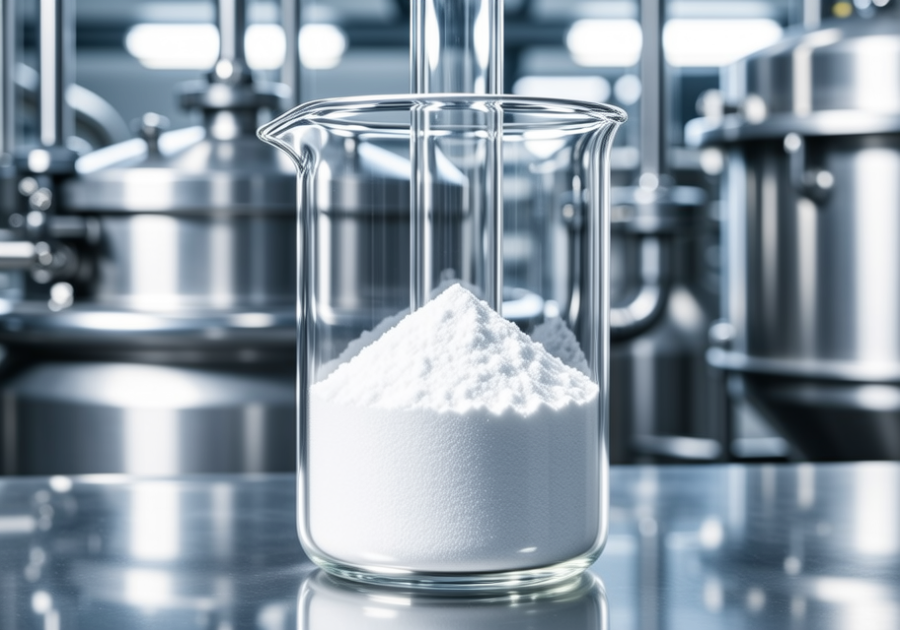
Hydrogen borate or boric acid has the chemical formula H3BO3. This acid is a monobasic Lewis acid containing one boron atom (sp2 hybridized) in the center surrounded by three hydrogen atoms, and three hydroxide groups to form an ionic compound in a trigonal planar arrangement. The acid is characterized as a weak acid as compared to other strong acids like HCl. In solid form, it exists as a crystalline powder with a white color & doesn’t have any characteristic odor even when in solution form.
Boric acid has many significant applications in the industry and finds itself useful in the pesticide industry, is employed as a preservative, and is used as a flame retardant in wood, plastic, and textile industries. It is also used in antiseptics, cosmetics, textiles, and in the nuclear research sector where it is used as a neutron absorber. In short, this acid finds many uses in the current industry.
Sodium tetraborate (Borax)
Borax with the chemical formula Na2H20B4O17 in which four boron atoms are present in the center of this complex molecule (also termed as boron-oxygen polyhedra) bonded with two sodium atoms acting as pillars for this molecular structure. All of this is surrounded by numerous oxygen atoms and ten water molecules per formula unit. It appears as a colorless crystalline solid in powdered form and can easily absorb moisture from the air.
In this form, it appears as a clumped or agglomeration of the crystals also in white color. Borax is combined with other naturally occurring minerals, such as boracite and colemanite, to form boric acid. Borax is usually dissolved in water following the addition of an aqueous solution of hydrochloric water. When the solution cools, boric acid crystallizes which can then be filtered out.
Borax finds its significance in the industry as a multipurpose household cleaner, as a laundry booster, as a fire retardant, and in many other industries like cosmetics and personal care, medicine, and in general chemical research sectors where it is frequently used to synthesize catalysts, and specialty chemicals for later industry processes.
Boric acid vs sodium tetraborate
1. The very first and obvious difference between the two is that boric acid is, well an acid characterized as a weak acid. Borax on the other hand is a salt of boric acid and sodium hydroxide and is quite alkaline when in solution.
2. Boric acid when in water forms a weak acidic solution while borax is also soluble in water and forms an alkaline solution.
3. The most common use of boric acid is its use as an insecticide, especially against household pests including ants and cockroaches. It works by halting their metabolism and digestive systems. Borax is extensively used in household cleaning products, especially in textile cleaning products (detergents and multipurpose cleaners).
4. Another difference is the amount of boron in both compounds. Boric acid has more boron in it with a 17.48% concentration as compared to the concentration of 11.34% in borax.
5. Boric acid is produced by reacting borax with a strong acid while borax is mined out of the ground as a mineral along with other elements as well.
6. Another difference is in their physical form, Borax being a mineral found in rocks is itself I rock forms and needs to be processed by crushing and turning it into powdered form. Boric acid, on the other hand, is always in powdered form right after it is filtered out.
Wrapping Up:
To conclude the boric acid vs sodium tetraborate comparison, we can state that both are chemically different in nature and find different applications in the current industry as well. Borax has a much more complex molecular structure due to the presence of oxygen and water molecules attached to it.

You May Interested In


Glow70/KLOW80 99% China Peptides Warehouse Direct Delivery Lyophilized Powder in Stock
$169/UNIT FOB


2026-10-25
Trade Alert
Delivering the latest product trends and industry news straight to your inbox.
(We'll never share your email address with a third-party.)

Related News
-
Lipoid Kosmetik Announces New U.S. Market Distribution Partnership with Omya
-
China Activates Blocking Rules in Response to U.S. Sanctions on Petrochemical Firms
-
When the Chemical Industry Is No Longer Highly Profitable: Sinochem International’s 2.4 Billion Yuan Loss Reveals the Truth About Industry Cycles
-
Brenntag Expands Distribution of Givaudan’s Active Beauty Ingredients to Malaysia and Singapore
-
BASF Technology with CFRP Lands in Nanjing: High-Performance Dispersant Production Line Officially Commissioned
-
Profit Crushed, Layoffs and Restructuring Follow: What WACKER Chemie’s 2025 Performance Reveals
-
COSMAX Acquires 51% Stake in Keminova, Establishes First European Production Base
-
Merck to Lay Off 150 Workers at US Gardasil Plant Amid Sales Weakness
-
Sun Pharma’s Organon Bid Would Redraw Indian Pharma M&A
-
AstraZeneca India Eyes ₹3,400 Crore Bengaluru Sale
Recommend Reading
-
![Iran Conflict Leaves a Long Shadow on Drug Supply]()
Iran Conflict Leaves a Long Shadow on Drug Supply
-
![McKinsey Pays to Close a Purdue Liability Chapter]()
McKinsey Pays to Close a Purdue Liability Chapter
-
![BASF and Clariant Exit Quietly! Behind Henkel’s High-Priced Acquisition, Why Did Former Allies Choose to “Let Go”?]()
BASF and Clariant Exit Quietly! Behind Henkel’s High-Priced Acquisition, Why Did Former Allies Choose to “Let Go”?
-
![Supply Chain Resilience Reshapes Chemical Competition: What Lies Behind BASF’s Stable Outlook]()
Supply Chain Resilience Reshapes Chemical Competition: What Lies Behind BASF’s Stable Outlook
-
![Geopolitical Conflict Drives Up Chemical Costs: The Industry Signal Behind DuPont’s Upgraded Outlook]()
Geopolitical Conflict Drives Up Chemical Costs: The Industry Signal Behind DuPont’s Upgraded Outlook
-
![Since March, the ethanol market price increase in China has been significant]()
Since March, the ethanol market price increase in China has been significant
-
![Costs Rise, Adipic Acid Prices Continue to Soar]()
Costs Rise, Adipic Acid Prices Continue to Soar
-
![Geopolitical Expectations Reversal Leads to Severe Oil Market Volatility, Oil Prices Plunge Over 11%]()
Geopolitical Expectations Reversal Leads to Severe Oil Market Volatility, Oil Prices Plunge Over 11%
-
![March 10th Pure Benzene Market Prices Significantly Reduced in China]()
March 10th Pure Benzene Market Prices Significantly Reduced in China
-
![This week, the mainstream price of propylene oxide in the Chinese market has exceeded the 10,000 yuan mark (3.9-3.10)]()
This week, the mainstream price of propylene oxide in the Chinese market has exceeded the 10,000 yuan mark (3.9-3.10)