LG Chem to Supply Thermally Conductive Adhesives in North America
LG Chem plans to expand its share of the global mobility market by supplying thermally conductive adhesives to North American automakers, and the company also said it intends to develop its automotive adhesives business into a multi-million dollar division.
Thermally conductive adhesives are used to bond battery cells to modules or battery packs, and are essential for thermal management and performance maintenance due to their high thermal conductivity and electrical insulation.
LG Chem has production bases in Europe and the United States, and has more than 180 patents, establishing technological barriers and providing customized solutions. The company is currently focusing on developing products that help reduce costs and weight for customers.
LG Chem acquired Uniseal, a U.S. automotive adhesive expert, in 2018 to enter the North American automotive adhesive business. Recently, Uniseal successfully developed new products for automotive bodies that do not contain harmful chemicals and have less carbon emissions.
In addition to thermally conductive adhesives for batteries, LG Chem is also working closely with domestic and foreign companies to develop various adhesive materials such as polyimide varnish and silver nanopaste for motors and inverters/converters. The company has also expanded its adhesives product line to include products that can be applied to a variety of electronic components such as camera sensors, headlamps and in-vehicle displays.
The automotive adhesives market is expected to grow from $6.7 billion in 2024 to $13 billion in 2030, driven by growing demand for electronic components for electrification and autonomous driving, as well as increasing demand for lighter, more environmentally friendly materials. Shin Hak-Cheol, CEO of LG Chem, said: "
As a leading electronic materials supplier in the display and semiconductor industries, we have accumulated technological advances such as material synthesis, performance design and manufacturing processes. Based on our expertise, we will actively develop the mobile materials business - which we believe is a future growth area - and strengthen our market position. "

You May Interested In


High Quality β-Nicotinamide adenine dinucleotide CAS 53-84-9 NADwith ready stock and best price
$3/UNIT FOB


2026-10-09
Trade Alert
Delivering the latest product trends and industry news straight to your inbox.
(We'll never share your email address with a third-party.)

Related News
-
LG Chem Enters Semiconductor Stripper Market for the First Time, Cutting Process Time by 50%
-
Sinopec and LG Chem Sign Agreement to Jointly Develop Sodium-Ion Battery Materials
-
LG Chem and Enilive Break Ground on South Korea’s First HVO and SAF Production Facility
-
LG Chem Considers Selling Water Treatment Business Amid Long-Term Downturn in Petrochemical Business
-
LG Chem and HL Mando to Develop Adhesives for Electronic Components
-
LG Chem Accelerates Commercial Production of 100% Plant-Based Acrylic Acid
-
South Korean petrochemical companies' profits plummet in 2024 as oversupply persists
-
Gevo and LG Chem Extend Bio-Propylene Agreement
-
LG Chem adds eco-friendly features to flame-retardant plastics
-
KCC partners with LG Chem to develop coatings using environmentally friendly raw materials
Recommend Reading
-
![End of an Era: KDC/One to Close 150-Year-Old Somerset Cosmetics Factory as Production Shifts to Scotland]()
End of an Era: KDC/One to Close 150-Year-Old Somerset Cosmetics Factory as Production Shifts to Scotland
-
![Sekisui Specialty Chemicals Has Announced a Global Price Increase]()
Sekisui Specialty Chemicals Has Announced a Global Price Increase
-
![The “Counter-Wind Ledger” of CHF 11.2 Billion: Sika Barely Grew in 2025—Yet Kept Taking Market Share]()
The “Counter-Wind Ledger” of CHF 11.2 Billion: Sika Barely Grew in 2025—Yet Kept Taking Market Share
-
![Chemours Sells Its Former Titanium Dioxide Site in Taiwan: Turning a “White Powder” Factory into “Wind Power Real Estate” for $360 Million—Buying Not Cash, But Breathing Room]()
Chemours Sells Its Former Titanium Dioxide Site in Taiwan: Turning a “White Powder” Factory into “Wind Power Real Estate” for $360 Million—Buying Not Cash, But Breathing Room
-
![Alipay, Baidu, and iFlytek Win Big—As the Government Spends $1.1 Billion on AI Healthcare, Is This a Lifeline or a Feeding Frenzy for Tech Giants?]()
Alipay, Baidu, and iFlytek Win Big—As the Government Spends $1.1 Billion on AI Healthcare, Is This a Lifeline or a Feeding Frenzy for Tech Giants?
-
![China's EVA Market Prices Surge Significantly]()
China's EVA Market Prices Surge Significantly
-
![Premium Global Chemical Sourcing Requests (3-7 Nov 2025)]()
Premium Global Chemical Sourcing Requests (3-7 Nov 2025)
-
![Change Rate Remains Positive, This Round of Refined Oil Retail Prices in China Is About to Increase]()
Change Rate Remains Positive, This Round of Refined Oil Retail Prices in China Is About to Increase
-
![Vendor Shipment Surge Halts Mid-October PC Price Increase]()
Vendor Shipment Surge Halts Mid-October PC Price Increase
-
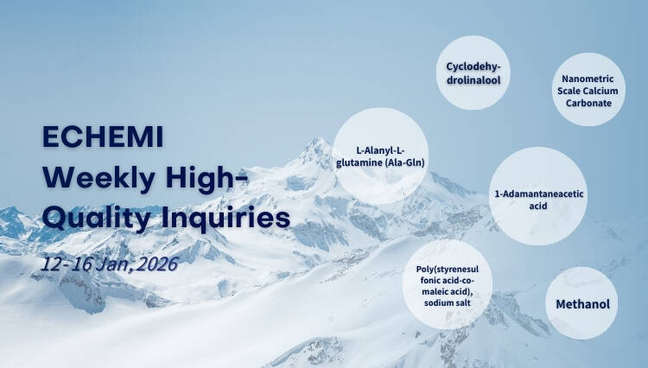
![Premium Global Chemical Sourcing Requests (12 - 16 Jan, 2026)]()
Premium Global Chemical Sourcing Requests (12 - 16 Jan, 2026)