What is Molten Sulfur Used for | Uses Cases in Industry
What is molten sulfur used for, and does it have strong industry relevance? This article walks through all of that and also lists down related information important for businesses linked with sulfur.
Introduction:
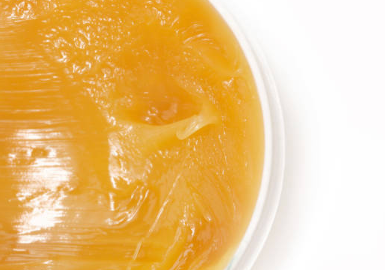
Sulfur remains one of the most common elements in our nature in solid and gaseous form, but its molten form is also there, which is very important for our industry. Sulfur, when heated above temperatures above 115 °C, converts into a yellowish liquid with a density similar to water but more thermally stable.
Molten sulfur is obtained as a by-product from petroleum refining and natural gas processing. In fact, most of the sulfur we use is obtained as a byproduct from oil and gas drilling. Here, it is steam injected into the ground, which melts the underground sulfur, allowing it to move into the well, which can be easily lifted to the surface and shipped in railroad tankers where it is kept hot to remain in a molten state.
Before we get into what is molten sulfur used for, it is also worth mentioning that this molten sulfur or liquid sulfur is easier to store when in concentrated form rather than being diluted. It is because when it dilutes, it forms porous deposition on the walls of metal containers, but concentrated sulfur produces sulfates of iron, which render the underneath iron surface impassive, thus protecting it. This molten sulfur is converted into sulfuric acid or used as it is for various industrial applications, as it has significant applications in different industries.
But what is molten sulfur used for in the current industry? Well, both in the form of sulfuric acid and molten state are used in many industries; some of their examples are below:
1. Manufacturing of Chemicals
This state of sulfur is in the production of numerous chemicals, including carbon disulfide CS₂ and hydrogen sulfide H₂S, which are both very useful in industries involved in rubber and plastics. This molten sulfur is important during the vulcanization process for these plastic manufacturing industries. You will also find molten sulfur in the production of fungicides and insecticides. It is also used to produce sulfuric acid, which is yet another extremely significant acid in our industry.
2. Fertilizer Industry:
Plants rely on sulfur as a nutrient to aid in protein synthesis, enzyme production, and their overall growth this is where the molten sulfur comes in. After being extracted from the oil and gas drilling, it is converted into sulfuric acid and is extensively used in the fertilizer industry. It is a primary ingredient in phosphate fertilizers, which are one of the most important types of fertilizers for global agriculture. By adding sulfur-based fertilizers, farmers from all over the world can easily improve soil quality and crop yields.
3. Metal Processing:
Molten sulfur is also extensively used in the metal industry, where it aids in extracting metals (roasting) like copper, lead, and zinc from ores. Here, sulfur reacts with such metals and makes it easy to isolate pure, non-ferrous metals. from the earth's crust.
4. Uses in Construction:
Molten sulfur is also used to create sulfur-modified asphalt, or SMA, by mixing molten sulfur with bitumen. This mixing increases the asphalt’s durability and also makes it resistant longer to extreme weather. This is practically important for countries where traffic is high, and they are targeting less cost of maintenance.
5. In domestic products:
It is also used in many domestic products in its molten form. For example, the manufacturing of sulfur-sodium batteries uses molten sulfur as a component in the rechargeable battery system and provides energy storage solutions.
Molten sulfur and powered sulfur are some of the most common elements all around the world, including its most common form of sulfuric acid. Echemi has hundreds of suppliers who supply B2B shipments of pure and containment-free sulfur. As a business, you get your supply from certified suppliers on a platform that is trusted by thousands of businesses all around the world.
Wrapping Up:
In this article, we learned what is molten sulfur used for and how it is produced before being used in the industry. Sulfuric acid is still one of the most common forms of sulfur, and both have strong relevance in the current industry.
Looking for chemical products? Let suppliers reach out to you!
You May Interested In


Glow70/KLOW80 99% China Peptides Warehouse Direct Delivery Lyophilized Powder in Stock
$169/UNIT FOB


2026-10-25
Trade Alert
Delivering the latest product trends and industry news straight to your inbox.
(We'll never share your email address with a third-party.)

Related News
-
EFSA Reviews Clodinafop Risk
-
ADAMA Targets Sucking Pests with Ateka
-
Thymol Gel Wins EPA Approval for Beekeepers
-
Chemical Properties and Uses of Tetraetil
-
Tert Butylate: Properties and Applications
-
Applications of Caesium Iodide
-
Imidazole: Heterocyclic Chemistry, Antifungal Drugs, and Buffer Systems
-
Hydrogen Peroxide Formula: H2O2 Concentration & Safety
-
Sodium Hydroxide (Caustic Soda): Soap Making, Cleaning, and pH Control Guide
-
Paraffin Wax vs. Beeswax: Candles, Cosmetics, and Industrial Applications
Recommend Reading
-
![Lanolin: Benefits for Skin, Cosmetic Uses, and Allergy Risks]()
Lanolin: Benefits for Skin, Cosmetic Uses, and Allergy Risks
-
![Understanding Reactions Between Silver and Chloride]()
Understanding Reactions Between Silver and Chloride
-
![Key Properties and Applications of Para-Nitrophenol]()
Key Properties and Applications of Para-Nitrophenol
-
![Sodium Alginate: Properties, Uses, and Benefits]()
Sodium Alginate: Properties, Uses, and Benefits
-
![Key Reactions and Uses of Lithium Aluminum Hydride]()
Key Reactions and Uses of Lithium Aluminum Hydride
-
![Premium Global Chemical Sourcing Requests (27-30Aug, 2026)]()
Premium Global Chemical Sourcing Requests (27-30Aug, 2026)
-
![Weak Consumption Leads to Decline in ABS Prices in Mid-May in China]()
Weak Consumption Leads to Decline in ABS Prices in Mid-May in China
-
![The negative spread has widened, with acrylic acid prices continuously falling and showing weakness domestically in China]()
The negative spread has widened, with acrylic acid prices continuously falling and showing weakness domestically in China
-
![Insufficient Downstream Demand Leads to Weak DMF Market Prices]()
Insufficient Downstream Demand Leads to Weak DMF Market Prices
-
![Business Society’s PTA Market Outlook on August 31, 2026: Volatile]()
Business Society’s PTA Market Outlook on August 31, 2026: Volatile