The World's First Thousand-Ton Ionic Liquid Regenerated Fiber Project Is POut Into Production in Henan
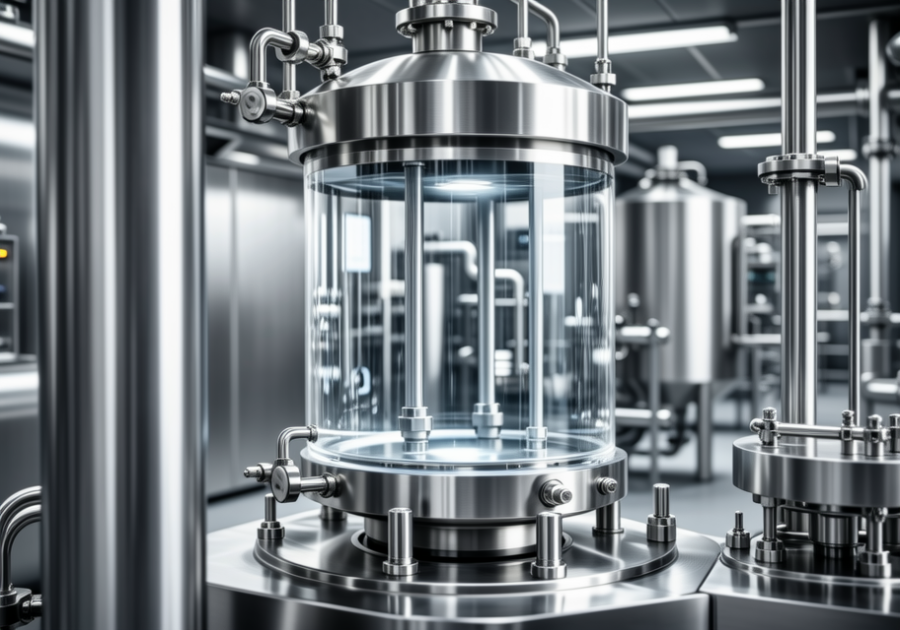
The world's first thousand-ton ionic liquid-based regenerated cellulose fiber project has officially started production in Henan Province, China. The project was developed by the Institute of Process Engineering (IPE) of the Chinese Academy of Sciences, marking the world's first large-scale production of regenerated cellulose fibers using ionic liquids. The project was located in the Henan Xinxiang Chemical Fiber Egret Bio-based New Materials Industrial Park, started on June 18, and officially put into operation in July.
This pioneering technology achieves near-zero emissions by using non-volatile and highly stable ionic liquids to replace toxic and explosive solvents such as carbon disulfide and NMMO used in traditional cellulose spinning processes. No more wastewater, waste gas and solid waste are generated, and the process safety and environmental protection performance are greatly improved.
Ionic liquids are a new type of medium composed of organic cations and organic or inorganic anions. They are similar to the ionic structure of table salt. They are liquid at or near room temperature and belong to low-temperature molten salts. Compared with traditional solvents, ionic liquids have excellent properties such as high polarity, low volatility, strong antioxidant properties, and designable structures. They have outstanding solubility for inorganic, organic compounds and polymers.
This technology uses stable and non-volatile ionic liquids as solvents to replace strong acids, strong bases and carbon disulfide to achieve green process. It also achieves a solvent recovery rate of more than 99% through a simplified solvent recovery process, improving environmental protection and economic benefits. It is estimated that compared with traditional fossil fiber production, the new process can reduce carbon dioxide emissions by about 5,000 tons per year.
This marks that the cutting-edge ionic liquid spinning technology has truly transformed from a laboratory concept to industrial application. The ionic liquid team of the Institute of Process Engineering, led by Professor Zhang Suojiang, an academician of the Chinese Academy of Sciences, has gone through more than ten years of research and breakthroughs in key technologies such as ionic liquid design and preparation, cellulose dissolution mechanism, spinning process optimization, solvent recovery and system integration, and successfully built a continuous and stable thousand-ton production line from laboratory, small-scale test, ton-level test, and hundred-ton-level demonstration. The filament products produced have reached international standards in terms of fineness, tensile strength, elongation and consistency, with no fibrillation and stable quality.
Duan Xiaoping, vice president of the China National Textile and Apparel Council, said: "This project has set a new benchmark for green industrialization, will play a key role in China's realization of the 'dual carbon' goal, and contribute solid industrial strength to the construction of ecological civilization."

You May Interested In


High Quality β-Nicotinamide adenine dinucleotide CAS 53-84-9 NADwith ready stock and best price
$3/UNIT FOB


2026-10-15
Trade Alert
Delivering the latest product trends and industry news straight to your inbox.
(We'll never share your email address with a third-party.)

Related News
-
Redwall Raises Prices by as Much as 80%, Songwon Launches Global Increases, and Chemical Companies Are Collectively Passing On Costs
-
Middle East Conflict Pushes Up Oil Prices as More Than 100 Chemical Raw Materials Rise in Concentration
-
Continental Tires Out, Franchise Power In: Continental Group Spins Off French Retail Arm to ASC in Strategic Pivot
-
Agrochemical Markets at a Crossroads: Winter Stockpiling Begins Amid Cost Pressures and Fragmented Demand
-
Jiangsu Fengshan Biochem Gears Up for Strategic Expansion in Selective Herbicide Intermediates and Active Ingredients
-
Spice Up the Coop: EFSA Reaffirms Safety of Botanical Blend for Broiler Feed—With a Warning for Handlers
-
Afidopyropen: The Silent Assassin of Sap-Sucking Pests—Promise, Pitfalls, and the Path to Sustainable Deployment
-
From Ancient Volcanoes to Modern Feed Mills: EFSA Validates Volcanic Zeolite as Safe and Effective Feed Additive
-
Probiotic Promise, Safety Snag: EFSA Gives Mixed Verdict on Multi-Strain Dog Feed Additive
-
Sika in China Under Pressure: The Structural Alarm Behind the 1,500-Job Cut
Recommend Reading
-
![From Eggshell to Elixir: EFSA Declares Egg Membrane Collagen Peptides Safe for Adult Supplements]()
From Eggshell to Elixir: EFSA Declares Egg Membrane Collagen Peptides Safe for Adult Supplements
-
![“Did They Just Buy a Money Printer for ¥288 Million?”: Yip’s Chemical’s Bold Bet on Green Tech—Is This a Genuine Transformation or Just Another Story for the Stock Market?]()
“Did They Just Buy a Money Printer for ¥288 Million?”: Yip’s Chemical’s Bold Bet on Green Tech—Is This a Genuine Transformation or Just Another Story for the Stock Market?
-
![Blue from the Rainforest: EFSA Greenlights Natural “Jagua Blue” as Safe Food Colorant]()
Blue from the Rainforest: EFSA Greenlights Natural “Jagua Blue” as Safe Food Colorant
-
![South Korea Tests Arctic Commercial Route as Asian Exporters Seek New Logistics Alternatives]()
South Korea Tests Arctic Commercial Route as Asian Exporters Seek New Logistics Alternatives
-
![Hormuz Traffic Remains 90% Below Pre-Conflict Levels as Limited Tanker Access Offers Partial Relief]()
Hormuz Traffic Remains 90% Below Pre-Conflict Levels as Limited Tanker Access Offers Partial Relief
-
![Business Society’s Market Outlook for Caustic Soda on August 24, 2026: Volatile Consolidation]()
Business Society’s Market Outlook for Caustic Soda on August 24, 2026: Volatile Consolidation
-
![June Acetic Acid Market Trends: First Decline, Then Rise]()
June Acetic Acid Market Trends: First Decline, Then Rise
-
![Premium Global Chemical Sourcing Requests (6-8July, 2026)]()
Premium Global Chemical Sourcing Requests (6-8July, 2026)
-
![In October, China's BDO market showed a weak consolidation]()
In October, China's BDO market showed a weak consolidation
-
![Business Society’s Market Outlook for Dichloromethane on August 25, 2026: Clearly Upward Trend]()
Business Society’s Market Outlook for Dichloromethane on August 25, 2026: Clearly Upward Trend