“Did They Just Buy a Money Printer for ¥288 Million?”: Yip’s Chemical’s Bold Bet on Green Tech—Is This a Genuine Transformation or Just Another Story for the Stock Market?
On December 12, 2025, Yip’s Chemical Holdings Limited (HKEX: 00408) stunned the market with an announcement: it would acquire a 60% stake in Beijing Xinuo Haibo New Materials Co., Ltd. (“Xinuo Haibo”) for RMB 288 million through its wholly owned subsidiary, Yip’s Qingyuan Management (Shenzhen) Co., Ltd. At first glance, this appears to be just another routine industrial acquisition. But a closer look at the financials reveals something startling—Xinuo Haibo reported revenues of HK$203 million and HK$266 million in 2023 and 2024, respectively, with attributable net profits of HK$55 million and HK$60 million. Its net profit margin has consistently hovered between 22% and 27%—a figure that dwarfs the average 5–8% net margins typical of the coatings industry. Even leading players like SKSHU or Oriental Yuhong rarely breach the 10% mark. In other words, Xinuo Haibo isn’t just another new materials firm—it’s a highly efficient “green money printer.”
Yip’s Chemical, a veteran Hong Kong–based chemical group known for solvents, resins, and decorative paints, has spent the past decade mired in sluggish growth and shrinking margins. Now, suddenly shelling out nearly RMB 300 million to acquire a little-known yet astonishingly profitable environmental tech company—does this signal a hard-won strategic pivot, or is it merely a polished narrative crafted under pressure from capital markets? Beneath this seemingly low-key deal lies a turbulent undercurrent, reflecting the collective anxiety and transformation dilemma gripping China’s entire chemical sector in the age of “dual carbon” commitments.
From “Selling Paint” to “Selling Emission Solutions”: How Does Xinuo Haibo Print Money?
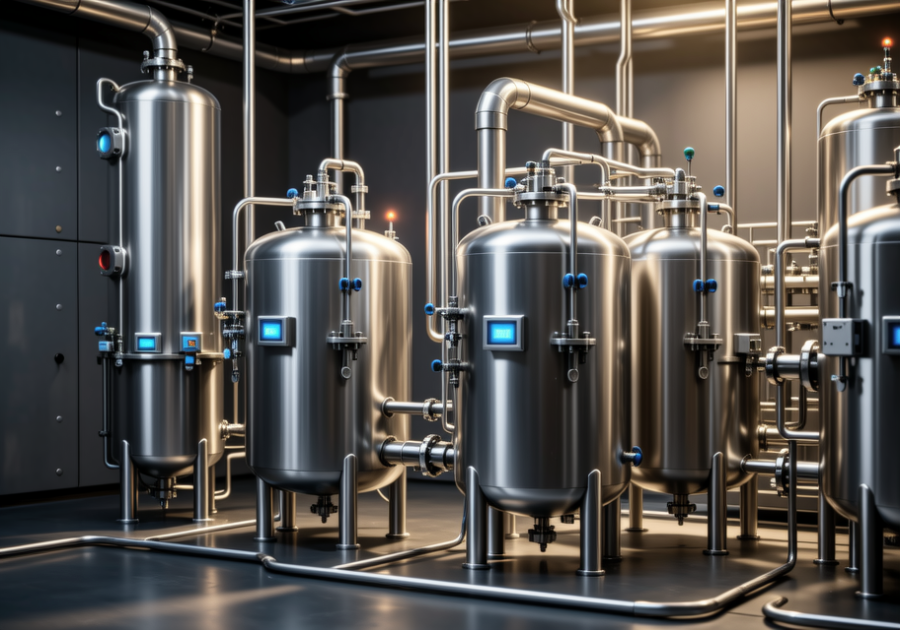
Xinuo Haibo’s business doesn’t sound glamorous—it specializes in volatile organic compound (VOC) emission control, offering integrated recovery and treatment systems for petrochemical, coal-to-chemical, and pharmaceutical industries. Yet this is precisely why it commands such extraordinary profitability. Under China’s tightening “dual carbon” targets and increasingly stringent enforcement of the Air Pollution Prevention and Control Law, VOC compliance has shifted from a discretionary expense to a regulatory lifeline. Non-compliance now risks production halts—or even license revocation. As a result, environmental compliance is no longer a cost center but a non-negotiable insurance policy.
More importantly, Xinuo Haibo doesn’t just sell hardware; it delivers end-to-end solutions encompassing engineering design, proprietary equipment, intelligent control systems, and ongoing operations & maintenance. Its core technology—a hybrid system combining high-efficiency condensation with advanced adsorption—achieves VOC recovery rates exceeding 95%, far surpassing the industry average of 70–80%. The recovered solvents (e.g., benzene, toluene, xylene) can be directly reused in clients’ production processes, turning environmental spending into tangible cost savings. This dual incentive—regulatory safety plus economic return—dramatically boosts customer willingness to pay and long-term stickiness.
Additionally, Xinuo Haibo holds over 10 invention patents and 20 software copyrights. Its smart monitoring platform streams real-time emission data directly to environmental regulators, helping clients stay ahead of compliance risks. Shielded by both policy tailwinds and technological moats, its project gross margins routinely exceed 50%, naturally inflating net profitability. In stark contrast, traditional paint makers battle volatile raw material costs and endless price wars, watching their margins erode layer by layer. Against this backdrop, Yip’s Chemical’s pivot looks less like diversification and more like escaping quicksand for solid gold.
Yip’s Chemical’s Midlife Crisis: Stalled Core Business, Urgent Need to Pivot
Yip’s Chemical was once a household name in China’s chemical industry, with iconic brands like Camel Paint and Bauhinia Paint. But in recent years, its growth engine has sputtered. Financial reports show that between 2022 and 2024, the company’s overall revenue grew by less than 3% annually, with its coatings segment even posting negative growth. Net margins have languished at 4–6%, well below sector averages. Worse still, its traditional solvent-based products are under direct regulatory siege—many regions now ban or restrict high-VOC coatings, while its transition to water-based alternatives lags due to insufficient technical expertise.
In this context, the Xinuo Haibo acquisition is anything but random. This is a classic case of using a high-margin business to hedge against a low-margin core. Based on the 60% stake, Xinuo Haibo is expected to contribute approximately HK$360 million (roughly RMB 330 million) in attributable net profit to Yip’s in 2024—nearly one-third of Yip’s total net earnings for the year. More strategically, Xinuo Haibo’s operations naturally synergize with Yip’s existing resin and solvent businesses: it can offer downstream clients an integrated “coatings + emission control” package, while recovered solvents could feed back into Yip’s own solvent production, creating a closed-loop system.
The table below compares key financial and operational metrics between Yip’s traditional segments and Xinuo Haibo:
| Metric | Yip’s Chemical (Coatings/Solvents) | Xinuo Haibo (Environmental Tech) |
|---|---|---|
| Revenue Growth (2023–2024) | < 3% (some segments negative) | +31% (HK$203M → HK$266M) |
| Net Profit Margin | 4% – 6% | 22% – 27% |
| Customer Stickiness | Low (price-sensitive, easy to switch) | High (system-locked, high switching cost) |
| Regulatory Risk | High (targeted by VOC restrictions) | Low (policy beneficiary) |
| Technology Barrier | Medium-Low (formula homogenization) | High (patents + software + engineering know-how) |
This comparison lays bare Yip’s strategic calculus: rather than bleed in a red ocean, it’s chartering a vessel toward a blue ocean fueled by policy support and premium margins.
Beware the “Story Premium”: Did Yip’s Overpay?
Yet amid the excitement, caution is warranted. The initial consideration of RMB 288 million for 60% implies a 100% equity valuation of roughly RMB 480 million. Based on Xinuo Haibo’s 2024 net profit of HK$60 million (≈RMB 55 million), this translates to a static P/E ratio of 8.7x. If contingent payments (up to HK$106 million) are included, total consideration could reach RMB 422 million, pushing the P/E close to 12x. For a company with only HK$266 million in annual revenue, this is a rich valuation.
Moreover, can Xinuo Haibo sustain its high growth? It reportedly relies heavily on its top five clients, who account for over 50% of revenue. Losing even one major client—or facing a gap between large project cycles—could cause sharp earnings volatility. Environmental engineering firms also suffer from “project-based” revenue patterns: a big contract one year may be followed by a dry spell the next. Profit stability is far lower than in consumer-facing paint businesses.
Yip’s clearly anticipated these risks and included an earn-out clause: if Xinuo Haibo misses its profit targets, sellers must refund up to HK$370 million. Still, RMB 288 million in cash has already changed hands—meaning significant risk has already been transferred to the listed entity. If Xinuo Haibo’s growth slows, this acquisition could morph from a “transformation catalyst” into a goodwill time bomb.
Environmental Compliance Isn’t a Trend—It’s the Oxygen Mask for Chemical Firms
Yip’s acquisition of Xinuo Haibo may appear to be a financial maneuver, but it’s actually a survival declaration by an entire industry under carbon constraints. When “lucid waters and lush mountains are invaluable assets” evolves from slogan to enforcement reality, environmental capability ceases to be an outsourced cost—it becomes the core determinant of corporate viability. The future giants of chemicals won’t be judged by tonnage, but by carbon intensity per unit of output and resource circularity efficiency.
For Yip’s, this deal is both opportunity and test. If it can genuinely integrate technology, customers, and supply chains to build a dual-engine model of “green materials + green manufacturing,” it may rise from the ashes of a sunset industry. But if it treats this merely as a short-term accounting embellishment, it will have done nothing more than paste fresh wallpaper on a crumbling facade—destined to peel away with time.
That RMB 288 million didn’t just buy a company—it bought a ticket to the future. The real question is: will this ship actually sail out of the red ocean?

You May Interested In


High Quality β-Nicotinamide adenine dinucleotide CAS 53-84-9 NADwith ready stock and best price
$3/UNIT FOB


2026-10-19
Trade Alert
Delivering the latest product trends and industry news straight to your inbox.
(We'll never share your email address with a third-party.)

Related News
-
TSMC, Samsung, and SK Hynix Scramble for Electronic-Grade Hydrofluoric Acid as High-End Supply Tightens; Some Suppliers Raise Prices by 30% This Year
-
“Amputation or Strategic Retreat?”: Shell’s Six-Year Chemical Losses and the Quiet Unwinding of an Empire
-
Tinci Materials Calls Off 2.65 Billion Yuan Project as Electrolyte Giant Shifts Strategy
-
“The 40-Year Ethylene Giant Collapses”: ExxonMobil’s Premature Shutdown Is Not Just Scotland’s Tragedy—It’s the Twilight Elegy of European Industrial Civilization
-
Eastern Shenghong Projects First-Half Profit of 5 Billion Yuan – A Collective Turnaround for the Four Major Private Refiners? Is the Chemical Sector Rebounding?
-
U.S.-Iran Détente Triggers Oil Price Plunge, Energy and Chemical Sectors Tumble
-
Sulfur Price Hits 7,633 CNY/Ton, Up Nearly Sixfold in a Year and a Half; Domestic Refining Giants Halt New Orders Due to Tight Supply
-
Indian Immunologicals Pushes Back on “Fake Vaccine” Claims Amid Global Supply Chain Scrutiny
-
Obesity Drugs Become Pharma’s Most Powerful Growth Engine
-
Substandard Drug Findings Expose Deep Structural Gaps in Medicine Quality Control
Recommend Reading
-
![Trump Tariff]()
Trump Tariff "Boomerang": $2.5 Billion Polysilicon Factory Faces Shutdown Crisis
-
![Can Lotte Chemical's Four Growth Pillars Support Its New Valuation After Spinning Off Basic Chemicals?]()
Can Lotte Chemical's Four Growth Pillars Support Its New Valuation After Spinning Off Basic Chemicals?
-
![Lianolong Bets Big on Electronic Adhesives with $50M Strategic Stake in Sidofu]()
Lianolong Bets Big on Electronic Adhesives with $50M Strategic Stake in Sidofu
-
![Global Trade Data for Epoxy Resin in 2025 Released: Asia Accounted for $640 Million in Imports, Vietnam Emerges as Top Buyer]()
Global Trade Data for Epoxy Resin in 2025 Released: Asia Accounted for $640 Million in Imports, Vietnam Emerges as Top Buyer
-
![Sichuan Unveils Revised List of 14 Qualified Chemical Parks in Major Industrial Realignment]()
Sichuan Unveils Revised List of 14 Qualified Chemical Parks in Major Industrial Realignment
-
![Business Society October 14, 2026 Styrene Trend Analysis: Volatile and Bearish]()
Business Society October 14, 2026 Styrene Trend Analysis: Volatile and Bearish
-
![Business Society October 14, 2026 Phthalic Anhydride Trend Analysis: Strongly Bullish]()
Business Society October 14, 2026 Phthalic Anhydride Trend Analysis: Strongly Bullish
-
![Business Society October 14, 2026 Isooctanol Trend Analysis: Clear Uptrend]()
Business Society October 14, 2026 Isooctanol Trend Analysis: Clear Uptrend
-
![Business Society October 14, 2026 Epoxy Chloropropane Trend Analysis: Volatility]()
Business Society October 14, 2026 Epoxy Chloropropane Trend Analysis: Volatility
-
![Business Society October 14, 2026 Propylene Oxide Trend Analysis: Volatility (Bullish Bias)]()
Business Society October 14, 2026 Propylene Oxide Trend Analysis: Volatility (Bullish Bias)