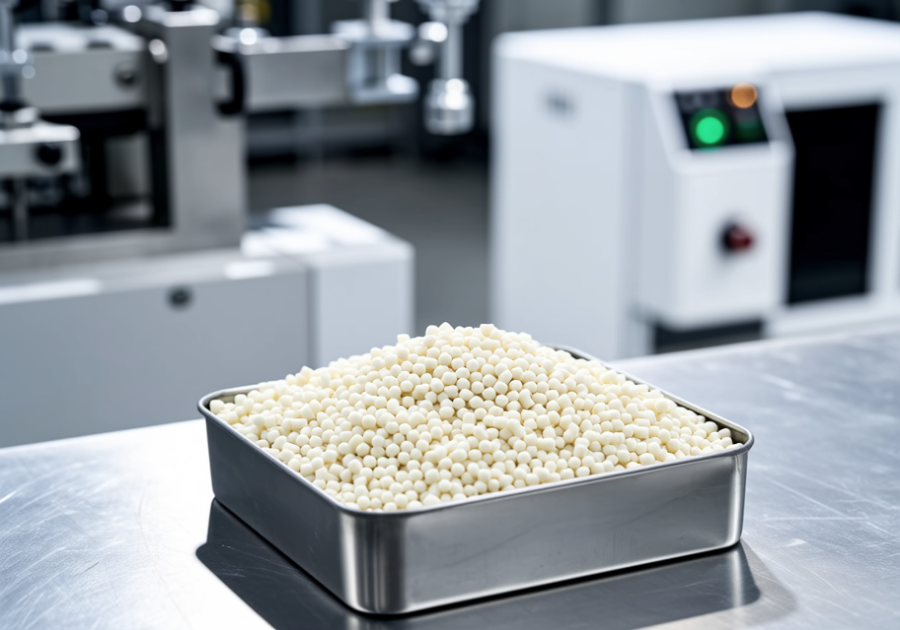
Cost Support, Supply Tightening, PTA Prices Fluctuating and Rising
April 28 News
Commodity market analysis system, since mid-April, the PTA market in China has been fluctuating upwards. As of April 28, the average spot price of PTA in the East China region was 6,807 CNY/ton, an increase of 7.43% from April 13.
Affected by the heightened geopolitical tensions in the Middle East, international crude oil prices have remained stable. The rise in crude oil prices has provided a boost to price formation. On April 27, the settlement price for the June contract of U.S. WTI crude oil futures was reported at $96.37 per barrel, while the settlement price for the June contract of Brent crude oil futures was reported at $108.23 per barrel.
Meanwhile, the scale of PTA maintenance has significantly expanded, with plant maintenance efforts steadily being implemented. As a result, the operating rate has rapidly declined to around 65%, hitting a new low for the same period in history. Specifically, Ineos’s 1.1 million-ton facility began maintenance on April 19; Sanfangxiang’s 3.2 million-ton facility started maintenance on April 22; Hengli’s 2.5 million-ton facility underwent maintenance starting April 9, while another 2.2 million-ton unit began maintenance on April 20; Sichuan Energy Investment’s 1 million-ton facility started maintenance on April 15 and will continue for 60 days; and Dushan Energy’s 3 million-ton facility began maintenance on April 14. With the increase in maintenance schedules, PTA inventory has reached an inflection point and is now entering a destocking phase. The rapid decline in PTA operating rates, coupled with tightening supply-demand dynamics, is providing support for prices. Additionally, a major Chinese producer—based in Dalian—recently faced U.S. sanctions, which could further reduce PTA production capacity.
Most downstream polyester manufacturers continue their current shipping patterns. Although pre-holiday stocking demand at the terminal end remains reasonably strong, overall market sentiment remains cautious, and trading activity is predominantly characterized by a wait-and-see attitude. The operating rates of terminal weaving and dyeing mills continue to decline, and major filament producers are further reducing production to maintain prices, with the reduction ratio rising to 30%. This production cut has been implemented starting April 20 and will continue through the end of the second quarter.
Analysts believe that the recent PTA prices have remained strong due to the resonance of costs and fundamentals. Additionally, from the perspective of spot trading, the 10-day moving average is above the 20-day moving average, and the difference between them continues to expand positively. The further divergence between the 10-day and 20-day moving averages indicates an accelerating rise in PTA prices.
However, from a positional standpoint, the overall situation remains relatively high. Going forward, it will still be necessary to closely monitor geopolitical developments, the operational status of the Strait of Hormuz, and any changes to facilities.

You May Interested In


Glow70/KLOW80 99% China Peptides Warehouse Direct Delivery Lyophilized Powder in Stock
$169/UNIT FOB


2026-10-14
Trade Alert
Delivering the latest product trends and industry news straight to your inbox.
(We'll never share your email address with a third-party.)

Related News
-
Polyethylene Strengthens, May See High-Level Fluctuations in the Future
-
Business Society October 13, 2026 Maleic Anhydride Trend Analysis: Rising
-
Business Society October 14, 2026 Toluene Trend Analysis: Volatility
-
Business Society October 13, 2026 Hydrofluoric Acid Trend Analysis: Volatility (Strong Consolidation, Slightly Bullish)
-
Business Society October 13, 2026 Epoxy Chloropropane Trend Analysis: Volatility
-
Business Society October 14, 2026 Diesel Trend Analysis: Slightly Stronger with Volatility
-
Business Society October 13, 2026 DOP Trend Analysis: Strongly Bullish
-
Business Society October 12, 2026 Epoxy Chloropropane Trend Analysis: Volatility (Strong Consolidation, Bullish Bias)
-
Business Society October 13, 2026 Isooctanol Trend Analysis: Uptrend Confirmed
-
Business Society October 12, 2026 DMF Trend Analysis: Slightly Strong
Recommend Reading
-
![Remote Cost Fluctuations September ABS Prices Show Increases]()
Remote Cost Fluctuations September ABS Prices Show Increases
-
![Business Society PVC Trend Analysis for September 30, 2026: Slightly Bullish with Volatility]()
Business Society PVC Trend Analysis for September 30, 2026: Slightly Bullish with Volatility
-
![Cost Volatility & Supply Tightening: PP Prices Surge and Consolidate in September]()
Cost Volatility & Supply Tightening: PP Prices Surge and Consolidate in September
-
![Costs Rise, Consumption Stagnates: PC Prices in September Fell After an Increase]()
Costs Rise, Consumption Stagnates: PC Prices in September Fell After an Increase
-
![Soda Ash Market Trends Remain Stable]()
Soda Ash Market Trends Remain Stable
-
![Syngenta Bee Pesticide Protest Shows the Pressure Building Around Crop Protection Giants]()
Syngenta Bee Pesticide Protest Shows the Pressure Building Around Crop Protection Giants
-
![Glyphosate Faces New UK Pressure as EU Trade Alignment Returns to the Debate]()
Glyphosate Faces New UK Pressure as EU Trade Alignment Returns to the Debate
-
![FDA’s Review of BHT and ADA Signals a New Era for Food Additive Compliance]()
FDA’s Review of BHT and ADA Signals a New Era for Food Additive Compliance
-
![Premium Global Chemical Sourcing Requests (21-24May, 2026)]()
Premium Global Chemical Sourcing Requests (21-24May, 2026)
-
![Premium Global Chemical Sourcing Requests (3 - 11 Mar, 2026)]()
Premium Global Chemical Sourcing Requests (3 - 11 Mar, 2026)