Waste tyres turned into 'black gold'

With the rapid development of China's economy and society, the demand of highway passenger and freight transport industry and the amount of household cars have risen sharply, followed by a substantial increase in the number of used tires.
Data show that the production of waste tyres in China has exceeded 13 million tons in 2017, and increased by 6% to 8% annually. But the status quo of waste tire treatment is worrying. At present, the industry mostly adopts the practice of renovation, production of recycled rubber or rubber powder, which is mainly used for waste passenger car tyres, but there is no way for passenger tyres. A large number of waste passenger tyres flow into the "indigenous oil refining" workshop, causing serious secondary pollution to the environment.
To realize the harmless and resource-based disposal of waste tyres is not only the need to protect the environment and make rational use of resources, but also the goal of social management. However, this process needs higher technical support.
In July 2018, the Ministry of Science and Technology included the project of "High-efficiency Cracking and Comprehensive Utilization of By-products of Waste Passenger Wheel Tires" in the key national R&D plan of "Solid Waste Resource Utilization" in 2018. Shuangxing Group Co., Ltd. combines with 9 universities such as Southeast University, China Petroleum University and Qingdao University of Science and Technology. With the wisdom of more than 100 professors and experts, it has overcome 17 key common technical problems in the field of global waste tire recycling. It has developed green pyrolysis and carbon black recycling technology and intelligent equipment to fill the global gap, and has realized waste tire treatment. "Zero pollution, zero residue, zero discharge, full utilization".
"The technology of Double Star Company is innovative." Chen Biohua, a professor at Beijing University of Technology, said that at present, most of the domestic waste tire treatment enterprises still stay in the land cracking process, only extracting oil, individual can extract carbon black, but there are technical shortcomings. The cracking technology of Shuangxing Company is continuous and modular, and can realize 100% utilization of waste tires.
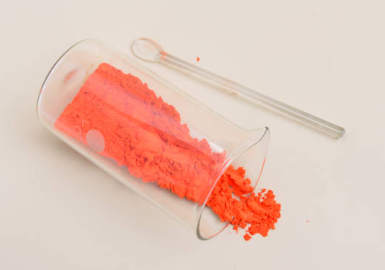
In the intelligent chemical plant of Shuangxing Company, a waste tire can recover about 45% primary oil, 35% carbon black and 12% steel wire by cracking, and the remaining 8% can be turned into flammable gas, thus "eating, drying and pressing" the waste tire and really turning "black pollution" into "black gold". At the same time, the factory uses Dual Star Company's independent research and development, domestic leading dust and odor removal equipment, harmless treatment of harmful substances, completely solved the problem of secondary pollution of waste rubber. According to reports, the intelligent chemical plant can dispose of 100,000 tons of waste rubber every year. Experts point out that standardizing and improving the recycling system is the key precondition for the development of recycling economy of waste tyres. The whole process supervision and traceability management should be carried out to ensure the standardized recycling, circulation and treatment of waste tyres. At the same time, the recycled product standards based on technical specifications should be improved to promote the sustainable development of recycling economy of waste tires.

You May Interested In


High Quality β-Nicotinamide adenine dinucleotide CAS 53-84-9 NADwith ready stock and best price
$3E+1/UNIT FOB


2026-10-22
Trade Alert
Delivering the latest product trends and industry news straight to your inbox.
(We'll never share your email address with a third-party.)

Related News
-
Domo Chemicals’ German Subsidiary Insolvencies: Energy Costs, Weak Demand and Chinese Nylon Competition
-
Carbon Fiber’s Price Surge Signals a New Era of Strategic Value—and Supply Tension
-
Sherwin-Williams Surpasses $100 Billion in Market Cap: Is This the ‘Apple Moment’ for Paint, or America’s Industrial ‘One Hundred Years of Solitude’?
-
The Carbon Tollbooth Is Open: EU’s CBAM Ushers in a New Era of Climate-Linked Trade
-
Hormuz Closes, Paint Feels It First: How a Barrel of Oil Rewrites the Cost of Every Barrel of Coatings
-
“Anti-Overcapacity” Backfires: China’s Chemical Industry Trapped in a Hell of Its Own Making—and Global Pushback
-
Indorama Corporation Acquires 100% Stake in Anyang Zhongying Fertilizer
-
Saint-Gobain Expands Its Construction Chemicals Operations in Indonesia
-
China’s Chemical Time Bomb Just Got a Legal Fuse: The New Law That Could Save Thousands of Lives
-
"No available slots" returns as global shipping rates skyrocket amid multiple factors
Recommend Reading
-
![Middle East Crude Exports Rebound Sharply in September as Saudi Arabia Returns to Market at 5.4 Million bpd]()
Middle East Crude Exports Rebound Sharply in September as Saudi Arabia Returns to Market at 5.4 Million bpd
-
![Chevron Opens Oilfield Chemical Technology to Rivals]()
Chevron Opens Oilfield Chemical Technology to Rivals
-
![Amazon Turns Lilly’s Weight-Loss Pill Into a Retail Logistics Play]()
Amazon Turns Lilly’s Weight-Loss Pill Into a Retail Logistics Play
-
![Selling the Family Silver for a New Suit? Why Bohai Chemical’s Transformation Drama Got Canceled After Just Two Acts]()
Selling the Family Silver for a New Suit? Why Bohai Chemical’s Transformation Drama Got Canceled After Just Two Acts
-
![Middle East Conflict Exposes Fragility of Global Fertilizer Supply Chains]()
Middle East Conflict Exposes Fragility of Global Fertilizer Supply Chains
-
![Applications and Safety of Sodium Dichromate]()
Applications and Safety of Sodium Dichromate
-
![Both Supply and Demand Weak, Butadiene Market Downward]()
Both Supply and Demand Weak, Butadiene Market Downward
-
![Favorable Factors Boost Shandong Cyclohexanone Market Prices by Over 30% in March]()
Favorable Factors Boost Shandong Cyclohexanone Market Prices by Over 30% in March
-
![This Week's Maleic Anhydride Market Continues to Decline in China]()
This Week's Maleic Anhydride Market Continues to Decline in China
-
![Cost Pulls Up March PC Market Performance]()
Cost Pulls Up March PC Market Performance