Ningxia Launches the Struggle of Agricultural and Rural Pollution Control
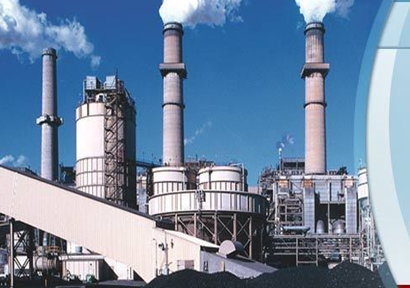
In order to comprehensively promote the control of agricultural and rural pollution and speed up the solution of outstanding environmental problems in agricultural and rural areas, recently, the agricultural and rural and environmental ecological departments of Ningxia Hui Autonomous Region issued a new policy to combat agricultural and rural pollution and promote the construction of rural ecological civilization. The agricultural and rural departments of Ningxia Autonomous Region indicated that Ningxia should further promote the improvement of rural human settlements and reduction of agricultural inputs, cleaner production, recycling of waste materials and ecologization of industrial models, deepen the reform of institutional mechanisms, play a good role of government and market, fully mobilize the enthusiasm and initiative of farmers, and make up for the shortcomings of agricultural and rural ecological environment protection. We will further enhance the sense of acquisition and happiness of farmers and lay a solid foundation for building a well-off society in an all-round way. In terms of specific measures, Ningxia, in accordance with the territorial spatial planning, strictly regulates and controls the red line of ecological protection, coordinates rural production, life and ecological space, optimizes the layout, scale and structure of planting and breeding production, strengthens environmental supervision, promotes the green development of agriculture, and reduces non-point source pollution from the source. We should give priority to solving the most direct and realistic environmental problems that farmers are most concerned about, focusing on the protection of drinking water sources in rural areas, the treatment of domestic waste and sewage, the prevention and control of pollution in aquaculture and planting industries. We will comprehensively implement pollution control, recycling and poverty alleviation, and systematically promote the reduction of agricultural inputs, cleaner production, recycling of waste materials and ecologization of industrial models.
According to the requirement of "one guarantee, two control, three reduction and four promotion" ("one guarantee" means ensuring rural drinking water safety; "two control" means treating rural domestic refuse and sewage; "three reduction" means reducing fertilizer, pesticide use and total agricultural water use; "four promotion" means improving water quality of agricultural and rural exceeding standard, comprehensive utilization of agricultural wastes, environmental supervision ability and rural residence. Ningxia has accelerated the green development of the countryside, improved the rural ecological environment, basically formed the system and mechanism of agricultural and rural pollution control, strengthened the supervision of agricultural and rural environment, and increased the enthusiasm and initiative of rural residents to participate in agricultural and rural environmental protection.
Ningxia plans to achieve 90% of the village domestic refuse treatment in the Yellow River Irrigation Area by 2020. The quality of the village human settlements environment has been improved in an all-round way. On the basis of giving priority to the basic living conditions of farmers, the southern Liupanshan Mountainous Area will realize the basic requirements of clean and tidy human settlements environment. By the end of 2020, cities and counties (districts) will have completed the investigation, assessment and protection zoning of drinking water sources supplying 10,000 people or more than 1,000 tons per day. In order to achieve this goal, the people's governments of cities and counties (districts) shall organize relevant units to monitor and evaluate the safety of drinking water sources, water supply units and the quality of tap effluent of users within their respective administrative areas. The whole process control from source to faucet should be implemented, and the "three simultaneous" system of water source protection, engineering construction and water quality monitoring and testing should be implemented. Drinking water sources supplying 10,000 people or more than 1,000 tons per day are monitored quarterly. In accordance with relevant national standards, monitoring projects such as water source, water supply and tap effluent should be determined and implemented in accordance with local water quality background. People's governments of cities and counties (districts) should focus on drinking water source protection zones with rural water supply population of 10,000 people or more than 1,000 tons per day. They should conduct a thorough investigation of chemical, paper-making, smelting and pharmaceutical risk sources that may affect the environmental safety of drinking water sources in rural areas and risk sources such as domestic sewage, garbage, livestock and poultry farming, and establish an inventory.
Cities and counties (districts) shall, in accordance with the principles of "moderate concentration, joint management, Regional Sharing and economic application", draw up special plans or implementation plans for rural domestic waste management on the basis of town-village system planning, adopt the main mode of "household classification, village collection, rural transshipment (or treatment), County treatment", and complete garbage disposal sites, transfer stations, collection points and refuse disposal. Waste bins and various types of closed transshipment vehicles, the establishment of environmental sanitation cleaning, garbage transshipment and treatment, operation and maintenance organization team and collection and disposal system, the organization of rural domestic garbage classification and reduction pilot projects, the implementation of garbage in-situ classification and resource utilization. In addition, according to the principle of combining agriculture with animal husbandry, balancing cultivation and breeding, cities and counties (districts) should scientifically plan their layout, optimize and adjust the breeds, scale and total amount of livestock and poultry breeding, promote the establishment of standardized demonstration of livestock and poultry breeding, increase the proportion of moderate scale livestock breeding, and promote the green sustainable development of livestock and poultry industry. To guide the production of dairy cattle, beef cattle and pigs to transfer to areas with large environmental capacity. Promote clean aquaculture techniques such as water saving and material saving, and practical techniques such as dry and clean manure, microbial fermentation, etc. to achieve source reduction. Strictly standardize the production and use of veterinary drugs and feed additives, and severely crack down on illegal and illegal use of veterinary antibiotics by production enterprises.

You May Interested In


High Quality β-Nicotinamide adenine dinucleotide CAS 53-84-9 NADwith ready stock and best price
$3E+1/UNIT FOB


2026-10-22
Trade Alert
Delivering the latest product trends and industry news straight to your inbox.
(We'll never share your email address with a third-party.)

Related News
-
Japan's Plan to Discharge Fukushima Nuclear Water into the Pacific Ocean Sparks Controversy and Health Concerns
-
Strategic Development of Vitalization of Rural Areas with High Quality
-
This year, the first battle of 'insect rations for food' was successful
-
Sichuan speeds up the revision of the plan for heavily polluted weather
-
11 people were sentenced to criminal detention fines for polluting
-
The Agricultural and Rural Economy was running smoothly in May
-
150,000 villages nationwide have completed the reform of joint stock cooperation
-
Can Lotte Chemical's Four Growth Pillars Support Its New Valuation After Spinning Off Basic Chemicals?
-
Global Trade Data for Epoxy Resin in 2025 Released: Asia Accounted for $640 Million in Imports, Vietnam Emerges as Top Buyer
-
China, U.S. and Australia Escalate Antidumping Scrutiny: Chemical Exports Face Rising Compliance Pressure
Recommend Reading
-
![EU Chemical Antidumping Complaints Hit a Record High: Trade Remedies Reshape Export Competition]()
EU Chemical Antidumping Complaints Hit a Record High: Trade Remedies Reshape Export Competition
-
![New York’s Additive Ban Signals a Tougher Era for Food Formulation]()
New York’s Additive Ban Signals a Tougher Era for Food Formulation
-
![German Chemical Sentiment Hits a Three-Year Low: Supply Disruption Amplifies Pressure on European Manufacturing]()
German Chemical Sentiment Hits a Three-Year Low: Supply Disruption Amplifies Pressure on European Manufacturing
-
![Asia’s Plastics Chain Faces a Shock: Tight Naphtha Supply Drives Up Polymer Costs]()
Asia’s Plastics Chain Faces a Shock: Tight Naphtha Supply Drives Up Polymer Costs
-
![Crude Tanker Freight From the Americas to Asia Tops $80 Million per Voyage Amid Global Shipping Crunch]()
Crude Tanker Freight From the Americas to Asia Tops $80 Million per Voyage Amid Global Shipping Crunch
-
![Supply Decreases and Demand Increases, DOP Prices Surge Significantly in January]()
Supply Decreases and Demand Increases, DOP Prices Surge Significantly in January
-
![This Week's Pure Benzene Market Prices Show Slight Fluctuations (2.2-2.6)]()
This Week's Pure Benzene Market Prices Show Slight Fluctuations (2.2-2.6)
-
![High Costs and Supply Contraction Keep Dichloromethane Prices Relatively Strong]()
High Costs and Supply Contraction Keep Dichloromethane Prices Relatively Strong
-
![This week, the TDI market in China saw a slight increase (2.2-2.6)]()
This week, the TDI market in China saw a slight increase (2.2-2.6)
-
![Costs Rise, Phosphate Market Shows Strong Performance (3.1-3.9)]()
Costs Rise, Phosphate Market Shows Strong Performance (3.1-3.9)