Shandong's New 7 Types of Chemical Projects Need Carbon Reduction Substitution
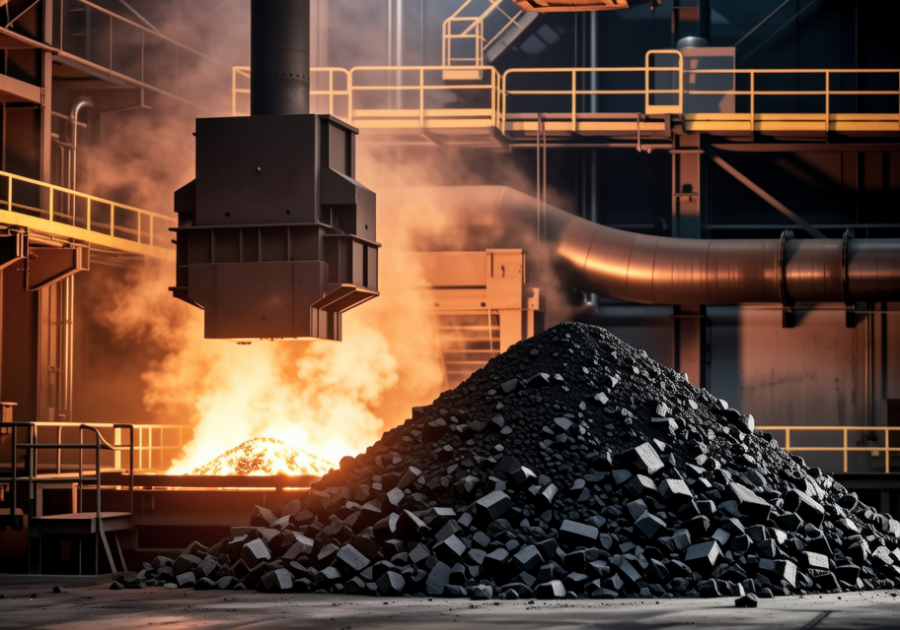
Last week, the Department of Ecology and Environment of Shandong Province issued the "Alternative Measures for Carbon Emission Reduction of High Energy Consumption and High Emission Construction Projects in Shandong Province (Trial)" and publicly solicited opinions. According to the "Measures", when new projects in the upstream primary processing and high energy-consuming and high-emission links of seven industries including refining, coking, methanol, chlor-alkali, calcium carbide, acetic acid, and nitrogen fertilizer, new projects must be implemented, carbon emission reduction substitutions must be implemented, otherwise the projects cannot be put into production.
The “Measures” clarify that the carbon emissions of construction projects include the carbon emissions of fuel combustion, industrial production processes, net purchased electricity and heat, and are specifically calculated in accordance with the "Technical Guidelines for Pilot Environmental Impact Assessment of Carbon Emissions from Construction Projects in Key Industries (Trial)". The new carbon emissions of the proposed project need to be replaced by other sources to reduce carbon emissions. Specific ways include: the carbon emissions reduced by the company’s shutdown and conversion; the elimination of outdated production capacity, the reduction of excess production capacity, or the reduction of carbon emissions reduced by energy-saving technological transformation; Carbon emissions: The amount of carbon emissions that can be monitored, counted, and reviewed by other means.
The “Measures” also clarified that the substitution of carbon emission reductions shall be included in the management of environmental impact assessment. According to the authority of approval, the ecological and environmental departments at the municipal level or above shall review and confirm the carbon emission reductions. The content of the review includes whether the calculation of carbon emissions from construction projects and alternative sources is scientific , Accuracy, whether the alternative source is real and feasible, whether the relevant certification materials are complete and effective, etc. According to the relevant industry classification, the reduction substitution coefficient for the refining and chemical industry is 1.5, and the reduction substitution coefficient for the coking, methanol, chlor-alkali, calcium carbide, acetic acid, and nitrogen fertilizer industries is 1.2.
In fact, since the beginning of this year, Shandong Province has repeatedly explored the "two highs" projects and tightened the examination and approval barriers. For example, a chemical fertilizer company in the province intends to use new technology to upgrade the coal gasification platform and supporting public works, which has been filed with the local development and reform department, but the energy assessment and environmental assessment have not been passed; many chemical projects completed and put into operation in the province this year have not been applied Performance indicators require enterprises to tap their potential to solve them; there are not a few projects under construction that have been suspended during several investigations. In accordance with the relevant requirements of the province, these companies must find alternative sources on their own to reduce energy, coal and carbon emission targets.
However, the "Measures" also "leave a living room" for special technological transformation projects: except for technological transformation projects that do not increase production capacity, such as renovation and expansion and technological transformation, environmental protection and energy-saving transformation, safety facility transformation, product quality improvement, and so on.
Many industry experts said that the development of enterprises requires element indicators, but the increasingly stringent "two highs" restriction and energy consumption "dual control" policies will force enterprises to continuously optimize raw materials, products and energy use structure, and promote energy saving and reduction. Comprehensive utilization of emissions and resources, and take the road of ecological priority and green development.
Xie Haisu, secretary-general of the Shandong Chemical Fertilizer and Coal Chemical Industry Association, suggested that enterprises should coordinate the relationship between development and emission reduction, stock and increase, comply with policy requirements, accelerate transformation and upgrading, eliminate outdated production capacity, reduce energy resource consumption and carbon emissions, and increase Input-output efficiency.
Gao Jinghong, deputy general manager of Shandong Hualu Hengsheng Chemical Co., Ltd., said that in the future, green products with low resource and energy consumption and low carbon emission levels will be developed to reduce carbon emissions from the source; carbon reduction, zero-carbon, and negative-carbon technologies will also be strengthened. Research to reduce comprehensive energy consumption through recycling and flexible co-production, and reduce the average carbon emissions of the overall industrial chain.

You May Interested In


Glow70/KLOW80 99% China Peptides Warehouse Direct Delivery Lyophilized Powder in Stock
$169/UNIT FOB


2026-10-16
Trade Alert
Delivering the latest product trends and industry news straight to your inbox.
(We'll never share your email address with a third-party.)

Related News
-
AkzoNobel Launches 24-Hour Challenge to Reduce the Carbon Footprint of the Vehicle Repair Industry
-
Investment of about 3.6 billion yuan, annual output of 200,000 tons of waterborne paint project settled in Huizhou
-
Manufacturing prices of chemical raw materials and products fell 9.9 per cent year on year in April and 1.1 per cent month on month
-
Demand growth, the scale will reach $26.5 billion, many chemical companies have entered!
-
European Chemical Majors Are Stepping Up Investment Plans in China
-
Wanhua Chemical's Chemical Project with an Annual Output of Hundreds of Thousands of Tons is About to be Put into Construction!
-
The Investment Exceeds 60 Billion! The Largest Single-scale Refining and Chemical Integration Project in China has been Put Into Operation!
-
Chemical cost support, PET bottle flake prices shaking up!
-
Invest 20 Billion! The 600,000-ton Chemical Project Continues to Advance
-
With an investment of 31.6 billion yuan, Wanhua started work on another major project
Recommend Reading
-
![US Tariff Pressure on Canada Raises Risks for North American Chemical Supply Chains]()
US Tariff Pressure on Canada Raises Risks for North American Chemical Supply Chains
-
![MENA Pharmaceutical Regulatory Updates 2026: Key Compliance Changes for Global Pharma Companies]()
MENA Pharmaceutical Regulatory Updates 2026: Key Compliance Changes for Global Pharma Companies
-
![U.S. Finds Methionine Dumping Could Recur, With Japan Margin Up to 76.50%]()
U.S. Finds Methionine Dumping Could Recur, With Japan Margin Up to 76.50%
-
![U.S. Finds Chinese Potassium Phosphate Dumping Could Recur at Margins Up to 95.40%]()
U.S. Finds Chinese Potassium Phosphate Dumping Could Recur at Margins Up to 95.40%
-
![U.S. Finds Methionine Dumping Could Recur, With Japan Margin Up to 76.50%]()
U.S. Finds Methionine Dumping Could Recur, With Japan Margin Up to 76.50%
-
![MTBE Market Prices Continue to Decline]()
MTBE Market Prices Continue to Decline
-
![Crude oil prices fall, retail prices of refined oil products in China continue to decrease]()
Crude oil prices fall, retail prices of refined oil products in China continue to decrease
-
![Potassium Carbonate: Properties, Uses, and Applications]()
Potassium Carbonate: Properties, Uses, and Applications
-
![MTBE Market Trends Show Signs of Slowing Down]()
MTBE Market Trends Show Signs of Slowing Down
-
![This week, the coke market in China showed a narrow and weak trend (10.17-10.24)]()
This week, the coke market in China showed a narrow and weak trend (10.17-10.24)