What Is The Chemical Structure Of Copper Sulfate And Its Uses?
Chemical structure of copper Sulfate is given below. Copper (Cu) has 29 electrons, 1s2 2s2 2p6 3s2 3p6 4s1, arranged in an atomic shell of the respective energies as shown in Figure 1. A single electron is added at the K shell to make up for the deficiency of one orbital on copper and leaves Cu with 30 electrons. The electron configuration of copper sulphate is given in Figure 2 and it is observed that copper (Cu) has two more electrons than sulphur (S), which is responsible for its oxidation state (+2). Copper sulphate therefore has a chemical formula of CuSO4·5H2O.
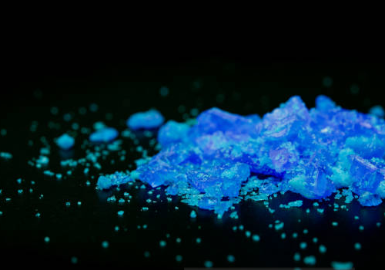
The copper sulphate CuSO4·5H2O is usually known by its common name, copper sulphate. It is a compound that contains copper and sulphur in it. This salt is highly soluble in water and has a blue crystalline appearance. Copper sulphate can be prepared from the reaction of anhydrous copper chloride with dilute H2SO4 solution. The CuCl·2H2O reacts with two molecules of H2SO4 to give an insoluble CuSO4·3H20. Known as the blue vitriol, this compound was extensively used for manufacturing of blue dye and other chemicals.
What are the uses copper Sulphate
1. Making pharmaceuticals products.
This is done by dissolving the compound in water, then adding other materials, like glass or paper impregnated with ammonia and scented with sulphur dioxide to make them a spray. The compound is used to remove fungus from fabric.
2. Making blue vitriol.
The blue vitriol is obtained by reducing the CuCl2·2H2O with zinc and sodium. Another way of obtaining it is by passing the solution of copper sulphate through a column containing zinc dust which serves as reducing agent.
3. Making blue glass
This is done by mixing the solution of copper sulphate with melted lead. The solution is cooled and the lead precipitates on cooling while the sulphur dioxide escapes. It rates a beautiful bluish colour and can be used to make glass vessels and windows.
4.Agricultural use
This is used as an aqueous solution for the fertility of soil. The compounds called arsenates, like copper sulphate, are also used to make growth regulators such as chlorsulphonate and phenylaminoacetate. It is also useful in making insecticides and fungicides.
5. Making metal surface passivation
It is used to clean metals by removing the oxides formed on them during their manufacture or after use. The chemical structure of copper Sulfate is veryimportant in this process. This product is used to clean and protect the surface of gold and silver by removing the oxides from them. This product can also be applied on copper and galvanised iron.
6. Electroplating
The compound is used as a plating electrolyte for altering the colour of metals such as zinc, aluminium, tin, nickel, alloys of these metals, brass and some other base metals. It is made up in the form of a solution that is generally prepared by mixing two parts of caustic soda (sodium hydroxide) to one part of sulphur trioxide with water. It contains ca 0.7% of copper sulphate. The process is done by immersing the metal object in the solution for few minutes. Copper will then be deposited on the surface of the metal object to give a decent coating.
7. Making insecticides and fungicides
The main ingredient used in all these products is copper, commonly known as Bordeaux mixture. This is prepared by dissolving copper sulphate in water that contains a small percentage of slaked lime (calcium hydroxide) and ferrous sulphate
8. Making cathode element in batteries
The compound can be made into a paste by mixing it with oxalic acid and then heating it in a glass container for several hours. The paste should be allowed to cool and then crushed to make cathode element for batteries
Why is anhydrous copper sulphate white and the pentahydrate blue?
The reason why anhydrous copper sulphate is white and the pentahydrate blue is because, in the case of the anhydrous copper sulphate, water molecules are surrounded by water molecules as it has a hydrated crystal structure. In the case of copper sulphate pentahydrate, water molecules are surrounded by water molecules and copper ions giving it a bit of colour.
Copper Sulphate Preparation
Copper (II) sulphate pentahydrate is prepared by dissolving copper metal in aqua regia and then neutralizing the solution with sodium hydroxide. This can be purified further by converting it to the oxide form, which is insoluble in water and can then be purified by recrystallising the compound. A crystalline form of copper sulphate can also be prepared using this but this has a greenish colour. This can again be purified by recrystallisation from nitric acid solution followed by precipitation from an alkali solution.This explain fully the Chemical structure of copper Sulfate.
Looking for chemical products? Let suppliers reach out to you!
How Are The Chemical Properties Of HNO3?
You May Interested In


Glow70/KLOW80 99% China Peptides Warehouse Direct Delivery Lyophilized Powder in Stock
$169/UNIT FOB


2026-10-22
Trade Alert
Delivering the latest product trends and industry news straight to your inbox.
(We'll never share your email address with a third-party.)

Related News
-
EFSA Reviews Clodinafop Risk
-
Potassium Carbonate: Properties, Uses, and Applications
-
Dimethyl Carbonate: Properties and Industrial Applications
-
ADAMA Targets Sucking Pests with Ateka
-
Hydrobromic Acid: Properties, Uses, and Safety
-
Cocamidopropyl Betaine: Uses, Benefits, and Safety
-
Uses and Benefits of Sodium Selenite
-
Applications and Safety of Sodium Dichromate
-
What is the Formula for Ammonia? (NH3 Structure & Properties)
-
France’s Vineyards Find a New Shield: Eden’s Mevalone Enters the Frontline of a Changing Fungicide Era
Recommend Reading
-
![India Unleashes a Triple-Action Defender: Parijat Introduces NILANIX SC into the Rice Battlefront]()
India Unleashes a Triple-Action Defender: Parijat Introduces NILANIX SC into the Rice Battlefront
-
![Nature’s Blueprint, Science’s Edge: Corteva Unveils Twin Breakthroughs to Tackle the $70 Billion Insect Threat]()
Nature’s Blueprint, Science’s Edge: Corteva Unveils Twin Breakthroughs to Tackle the $70 Billion Insect Threat
-
![Key Reactions and Uses of Allene]()
Key Reactions and Uses of Allene
-
![Uses of Sodium Acetate Trihydrate]()
Uses of Sodium Acetate Trihydrate
-
![Applications of Copper Sulfate Pentahydrate]()
Applications of Copper Sulfate Pentahydrate
-
![U.S. Announces Preliminary Dumping Margins of Up to 70.21% on Chinese Xanthan Gum]()
U.S. Announces Preliminary Dumping Margins of Up to 70.21% on Chinese Xanthan Gum
-
![Business Society October 15, 2026 Palm Oil Trend Analysis: Rising]()
Business Society October 15, 2026 Palm Oil Trend Analysis: Rising
-
![Business Society October 15, 2026 LDPE Trend Analysis: Mild Correction]()
Business Society October 15, 2026 LDPE Trend Analysis: Mild Correction
-
![Business Society October 15, 2026 Acrylonitrile Trend Analysis: Strong Consolidation]()
Business Society October 15, 2026 Acrylonitrile Trend Analysis: Strong Consolidation
-
![Business Society, October 15, 2026: ABS Market Outlook – Volatility]()
Business Society, October 15, 2026: ABS Market Outlook – Volatility