Why did trade frictions increase China's foreign trade surplus by nearly 40%?
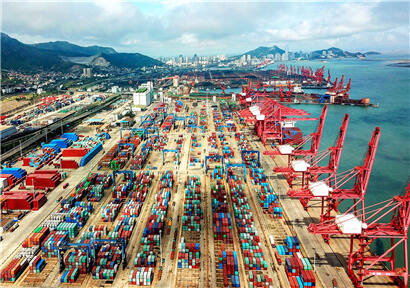
Against the background of the tense Sino-US trade relations, inertial thinking will continue to narrow China's trade surplus. However, according to customs statistics, China's cumulative trade surplus was 130.47 billion US dollars between January and May, an increase of 38% over the same period last year. Before that, from 2016 to 2018, China's foreign trade surplus has declined for three consecutive years. On June 23, Guan Tao, former director of the Balance of Payments Department of the State Administration of Foreign Exchange and senior researcher of the China Forty People's Forum on Finance, pointed out at the "Tsinghua University and the World Economic Forum" that the main reason for the expansion of China's trade surplus was not an increase in exports, but a decrease in imports. The decline in imports is due to insufficient domestic investment and demand. For example, in July last year, China lowered import tariffs on automobiles, but because of limited demand, the cheaper imports of automobiles will not increase. Guan Tao said that from the experience of the past two decades, the expansion of China's trade surplus this year is a big probability event. He said that the change of the difference between China's and the world's economic growth is negatively related to the change of China's foreign trade import and export balance. That is to say, it is normal that China's economic growth is faster than that of the world economy, but when the gap between China and the world economy is narrowed, China's foreign trade surplus will generally expand in 1998, 2008 and 2015. The principle of
is that China's exports are sensitive to external demand and imports are sensitive to domestic demand. When the expansion of external demand is faster than that of domestic demand, or when the contraction of external demand is slower than that of domestic demand, the export performance rate will be better than that of imports, which will lead to the expansion of the surplus of foreign trade imports and exports. However, Guan Tao said that because China's trade surplus is expanding not because of increased export competitiveness, but because of insufficient domestic investment and consumption requirements, China's economy as a whole is still facing downward pressure.
"At present, external demand is a small part of economic growth, so the upward supporting effect of external demand on economic growth may be less than the downward speed of domestic demand, and the whole economy may still be in a downward state." He said. For the future exchange rate of RMB to US dollar, Guan Tao said that any policy has its advantages and disadvantages. It is difficult to judge the advantages and disadvantages whether to abide by it or not. The key is to do scenario analysis and stress testing, and to anticipate what needs to be done in the worst case.
"Everyone believes you can hold on to 7, so you won't attack you, as you've seen in the past few years. Last year, the reason why the intermediate price of RMB did not break 7 was that China had credibility in keeping 7. (This year) the exchange price of RMB broke 6.9 in May, but the intermediate price did not break 6.9, because we have learned lessons from the previous two times, and we dare not act rashly. He said. Guan Tao said that the final exchange rate of RMB to US dollar would be below 7 or above, depending on the situation at the end of the year. If China and the United States can reach an agreement, there is no reason for the RMB to break 7. If it fails, or even trade frictions expand to other areas, there may be extreme pessimism in market confidence. At this time, the government will choose to stick to it, and what price it will pay for it, and what will happen if it fails to do so.

You May Interested In


High Quality β-Nicotinamide adenine dinucleotide CAS 53-84-9 NADwith ready stock and best price
$3/UNIT FOB


2026-10-17
Trade Alert
Delivering the latest product trends and industry news straight to your inbox.
(We'll never share your email address with a third-party.)

Related News
-
IFAT Munich 2024: Trade Fair for Water, Sewage, Waste and Raw Materials Management
-
Pesticide import and export situation in China in August 2022
-
How much do you know about the AEO?
-
How Much Do You Know About The AEO System of 'One Belt One Road' Countries?
-
The Total Value of China's Imports And Exports in The First 11 Months Exceeds That of Last Year, Reaching 35.39 Trillion Yuan
-
The Total Value of China's Imports And Exports in The First 11 Months Exceeds That of Last Year, Reaching 35.39 Trillion Yuan
-
The export volume of original medicines increased by 96%! Recently, China's pesticide imports and exports have both increased!
-
India imposes anti-dumping duties on TDI imports from Chinese Taipei, Europe, Japan, South Korea and the United States
-
Many countries have adjusted tariffs, and China has issued a number of import and export-related policies!
-
India's macrolide API: 90% imported from China
Recommend Reading
-
![Chung Lien Oil’s 8,000-Ton Soybean Oil BaP Scandal: NT$165 Million Fine, 401 Product Recalls, Source Still Unknown]()
Chung Lien Oil’s 8,000-Ton Soybean Oil BaP Scandal: NT$165 Million Fine, 401 Product Recalls, Source Still Unknown
-
![West Asia Tensions Squeeze Pharma Raw Materials]()
West Asia Tensions Squeeze Pharma Raw Materials
-
![Urea Prices Surge as India Faces Critical Shortages: Will China’s Export Quotas Provide Relief?]()
Urea Prices Surge as India Faces Critical Shortages: Will China’s Export Quotas Provide Relief?
-
![Evonik Releases Financial Results Statement and Expects No Recovery in Global Chemical Market Demand in 2026]()
Evonik Releases Financial Results Statement and Expects No Recovery in Global Chemical Market Demand in 2026
-
![SK Chemicals Partners with China’s Kelinle to Build Its Own Waste-Plastic Supply Network]()
SK Chemicals Partners with China’s Kelinle to Build Its Own Waste-Plastic Supply Network
-
![April Isopropyl Alcohol Market Price Rises First, Then Falls]()
April Isopropyl Alcohol Market Price Rises First, Then Falls
-
![April Acetic Acid Market Slides Sharply]()
April Acetic Acid Market Slides Sharply
-
![Multiple Negative Factors Weigh on Butadiene in April, Driving Prices Lower]()
Multiple Negative Factors Weigh on Butadiene in April, Driving Prices Lower
-
![Premium Global Chemical Sourcing Requests (16-19July, 2026)]()
Premium Global Chemical Sourcing Requests (16-19July, 2026)
-
![Cost support decreases, April DOP prices stop rising and fall]()
Cost support decreases, April DOP prices stop rising and fall