The New Regulations for Lithium Battery Transportation Will Be Implemented On April 1
According to the official news of the International Air Transport Association (IATA), IATA has revised the regulations for the separate transportation of lithium batteries. The new regulations have actually come into effect on January 1, 2022, but there will be a transition period before March 31, 2022. Make adjustments to 100% compliance with the new regulations, and the new regulations will come into effect after April 1.
This regulatory change is mainly a revision of the multi-page packaging instructions PI 965 and PI 968 of the 63rd edition of the IATA Dangerous Goods Regulations. The most significant impact of this dangerous goods regulation change is the removal of the packaging instructions for PI 965 Lithium-ion cells and batteries (including power banks) and PI 968 Lithium metal/primary cells and batteries. This change does not affect PI 966, PI 967, PI 969 or PI 970 for Section II lithium-containing battery products. Neither Lithium Ion nor Lithium Metal batteries may be shipped in accordance with Part II.
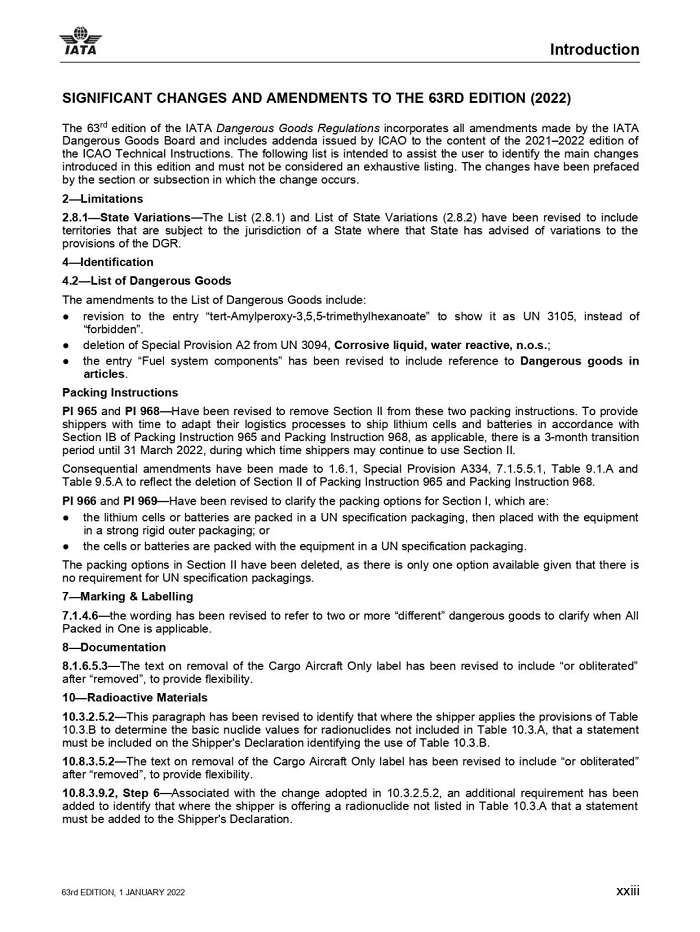
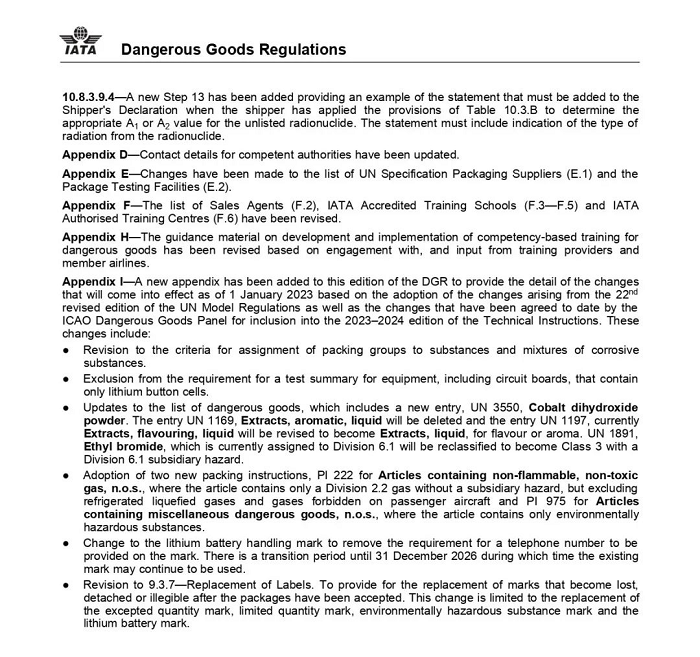
As a result, all shippers who ship lithium batteries themselves are required to complete a Dangerous Goods Declaration, additional marking and labelling, and complete Dangerous Goods Airlift training.
Shippers of lithium batteries are accustomed to annual changes in shipping rules, which appear to change more frequently than other modes of transport (rail, road, sea, and inland waterways). Reasons for these changes include growth in lithium battery shipments. Lithium batteries are currently used in everything from mobile phones to bicycles, motorcycles, drones, trucks, and a variety of scientific, medical and industrial equipment.
In addition, lithium battery accidents continue to pose a safety threat, as batteries can rapidly heat up to 400°C if not fully compliant, while also releasing toxic gases. Some airlines have invested in containment systems that can withstand lithium battery fires, but these systems are expensive and add costs to the supply chain that will inevitably end up on the shipper.
From April 1, both lithium-ion and lithium-metal batteries must be declared under terms IA or IB. It is important to note that this rule change does not apply to lithium batteries contained in equipment or packaged in air-shipped equipment.
In addition, there are no changes to the ADR (road), RID (rail) or IMDG (maritime) regulations, where Special Clause 188 does make lithium-ion batteries under 100 Wh (watt-hours) and lithium metal batteries with a total lithium metal content less than 2 g More convenient to use. Differences in rules between different modes of transport reflect different risks, but also add to the complexity faced by shippers, many of whom use multiple modes of transport.
The net effect of these changes is that many lithium battery-only packages will have to become larger, if only to allow enough room for the hazard and handling labels and other information that must appear on each package. Shippers are required to have two labels under Section IA, and two labels and one mark under Section IB, both labels and marks must meet the minimum size standards set forth in the IATA regulations.
Shippers are also required to prepare a shipper's declaration for each self-shipment shipment of lithium batteries, the packages are subject to full acceptance by ground handling agents, and a "Captain's Notice" is also entered that lists the dangerous goods that have been loaded onto the aircraft.
Shippers will face higher shipping costs as airlines, stevedores, integrators and freight forwarders have to do more to ensure compliance. Air freight rates for most airlines have climbed significantly due to the pandemic, rising fuel prices, high demand for cargo capacity, and the recent cancellation of some capacity due to the crisis in Russia and Ukraine. Sadly, more cost increases are on the horizon.
Over time, it will become more and more clear whether this latest amendment to the regulations will further improve safety or cause blockages and delays for legitimate shippers and distributors. Not changing lithium battery regulations for a few years would also be a welcome respite for all players in the supply chain.

You May Interested In


Glow70/KLOW80 99% China Peptides Warehouse Direct Delivery Lyophilized Powder in Stock
$169/UNIT FOB


2026-10-14
Trade Alert
Delivering the latest product trends and industry news straight to your inbox.
(We'll never share your email address with a third-party.)

Related News
-
$10.6 billion! Two Lithium Giants Announce Merger
-
Titanium dioxide industry to accelerate the diversification of the layout
-
The German chemical giant wants to ride China's lithium battery boom
-
Titanium dioxide enterprises have layout vanadium battery industry chain
-
CATL builds second European plant in Hungary
-
U.S. scientists develop calcium ion battery, said to replace the lithium battery is just around the corner
-
What Uses of Lithium Batteries And Why It May Become The New Global Chinese Power
-
LIFEBMS Core Technology Overview And Analysis
-
30 billion investment! The world's largest Li-ion battery cathode material base is being built in Xiantao
-
The Price of Lithium Battery Materials Has Skyrocketed! Ministry of Industry And Information Technology
Recommend Reading
-
![South Korea Expands Mandatory GMO Labeling to Highly Processed Foods]()
South Korea Expands Mandatory GMO Labeling to Highly Processed Foods
-
![Bayer and Syngenta Score Consecutive Regulatory and Legal Wins in the U.S.]()
Bayer and Syngenta Score Consecutive Regulatory and Legal Wins in the U.S.
-
![FDA approves bemotrizinol, a long-used UV filter, for U.S. sunscreens]()
FDA approves bemotrizinol, a long-used UV filter, for U.S. sunscreens
-
![Vera’s New Kidney Drug Wins FDA Approval, Carrying a $425,000 Annual Price]()
Vera’s New Kidney Drug Wins FDA Approval, Carrying a $425,000 Annual Price
-
![FDA Pushes New Approach to “No Artificial Colors” Claims]()
FDA Pushes New Approach to “No Artificial Colors” Claims
-
![Supply Reduction Leads to Increase in Ammonium Sulfate Prices in November in China]()
Supply Reduction Leads to Increase in Ammonium Sulfate Prices in November in China
-
![Styrene-butadiene rubber prices continue to decline, remaining weak and volatile in the short term]()
Styrene-butadiene rubber prices continue to decline, remaining weak and volatile in the short term
-
![November Refinery Petroleum Coke Market Trends Decline]()
November Refinery Petroleum Coke Market Trends Decline
-
![Ethyl Acetate Market Prices Adjusted and Risen]()
Ethyl Acetate Market Prices Adjusted and Risen
-
![Supply Contraction Bottoming Out—PP Expected to Remain Stable with Slight Increase in Early June]()
Supply Contraction Bottoming Out—PP Expected to Remain Stable with Slight Increase in Early June