EU may gain market share with Mercosur trade deal
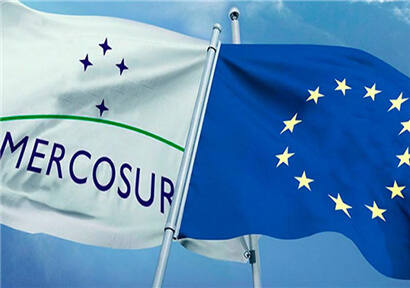
The EU could potentially gain market share from the US and the Middle East if it is able to consummate a trade deal with the Mercosur trading bloc in South America.
Mercosur includes Latin America's largest economy, Brazil, as well as Argentina, its third biggest. Other members are Uruguay and Paraguay, which are much smaller countries.
A trade deal could give EU producers an advantage versus producers from other parts of the world because Mercosur charges tariffs of up to 18% on chemical imports.
A lot still needs to happen before EU producers can start selling chemicals to Mercosur members at reduced rates.
The trade agreement reached between the two blocs still needs legal revisions, signatures and approval from the legislatures of the member countries.
This could take years.
Even if a trade deal goes into effect, the lower tariffs may not be enough to make EU chemical exports competitive against those from the US and the Middle East. The two have some of the world's cheapest chemical feedstocks, giving them a substantial cost advantage, one that could persist even amid higher tariffs.
The EU also needs the spare capacity to take advantage of the lower tariffs. Otherwise, any limits on capacity could impose a ceiling on the gains EU producers could achieve through the lower tariffs.
Still, the EU should see at least some benefits if a trade agreement goes into effect.
As the agreement stands, it should remove duties for 90% of the EU's chemical exports to the Mercosur.
The following shows the top 15 EU chemical exports to Mercosur in 2018. Figures are in dollars. They exclude motor gasoline, naphthas and other fuels and petroleum products.

For some of these products, EU imports Mercosur are quite high. To take this into account, the following shows the 15 chemicals, plastics and elastomers that account for the EU's largest trade surplus with the Mercosur.

At the least, an agreement between the EU and the Mercosur could make trade less onerous. Producers in the EU would pay lower tariffs, allowing them to earn more profit.
The agreement could make EU producers more competitive against their peers in the US, who would still have to pay Mercosur tariffs.
This trade between the Mercosur and the US is substantial. The following shows the top 15 chemicals and plastics that the US exported to the Mercosur. Figures are in dollars.

(Ammonium... stands for Ammonium dihydrogenorthophosphate)
The following shows trade surpluses of US chemical trade with the Mercosur.

If the EU can get its costs right, these US exports represent potential areas where producers could gain market share.
The EU could also gain market share from the Middle East.The following shows the top chemical and plastic exports from the Middle East to the Mercosur in 2018. Figures are in dollars.

Similarly, here are Middle Eastern products that have the largest trade surpluses.

Finally, the Mercosur bloc could earn more profits from its existing chemical and plastic trade with the EU. The following shows the top 15 chemicals and plastics that the EU imported from the Mercosur. Figures are in dollars.

In Brazil, President Jair Bolsonarolauded the agreement, calling it one of the most important trade deals of all times. Combined, the Mercosur and the EU represent 25% of global GDP and a market of 780m people.
The agricultural products most important to Brazil would see their tariffs eliminated, Bolsonaro said. All Brazilian industrial products would also see their tariffs removed.
Brazil's economics minister estimates that the agreement would boost the nation's economy by $87.5bn over 15 years.
The nation's agricultural minister estimates that it will take at least two years for the agreement to be implemented.

You May Interested In


High Quality β-Nicotinamide adenine dinucleotide CAS 53-84-9 NADwith ready stock and best price
$3/UNIT FOB


2026-10-18
Trade Alert
Delivering the latest product trends and industry news straight to your inbox.
(We'll never share your email address with a third-party.)

Related News
-
EU PIC Amendment Adds Over 30 Chemicals to Control List and Bans 3 POPs Exports
-
EU Eyes Rare Trade Tool as PET, Epoxy Resin and Glass Fibre Face Import Curbs
-
Covestro CEO: The EU Must Decide Which Industries to Protect, or Energy-Intensive Sectors Will Move Out
-
INEOS Warns Chinese Chemical “Dumping” Is Hitting Europe’s Industry
-
India Imposes Final Anti‑Dumping Duties on Ethylenediamine from China, EU, Saudi Arabia, and Taiwan, China, with Top Rate of $575/tonne
-
EU Finalizes Anti-Dumping Duties on BDO from China, with Rates up to 113.7%
-
EU mulls expanding tariff scope on Chinese chemicals, sector-wide measures in the pipeline
-
EU Clears Carlyle's Acquisition of BASF's Coatings Business, but Demands Divestment of Nouryon's Polysulfide Assets: What Are the Underlying Risks?
-
After 20 Years of Negotiations, 90% of Tariffs to Be Cut! EU and Mercosur Sign Free Trade Agreement: Trade Barriers Ease, Transatlantic Cooperation Warms Up?
-
EU: Metribuzin is about to be withdrawn from the EU market
Recommend Reading
-
![China’s TiO₂ Industry Launches Sixth Price Hike Wave as More Than 20 Producers Follow]()
China’s TiO₂ Industry Launches Sixth Price Hike Wave as More Than 20 Producers Follow
-
![Sika in China Under Pressure: The Structural Alarm Behind the 1,500-Job Cut]()
Sika in China Under Pressure: The Structural Alarm Behind the 1,500-Job Cut
-
![“Soaring Sulfuric Acid, Tightening Ore Supplies”: The High-Stakes Battle Behind the Titanium Dioxide Price Surge]()
“Soaring Sulfuric Acid, Tightening Ore Supplies”: The High-Stakes Battle Behind the Titanium Dioxide Price Surge
-
![Huide Technology Partners with U.S. Firm to Open the Door to Mass Production of Circular TPU]()
Huide Technology Partners with U.S. Firm to Open the Door to Mass Production of Circular TPU
-
![Invista Reshuffles Global Nylon 66 Map: Shutting US and UK Plants, Betting Big on China—What Exactly Are They Aiming For?]()
Invista Reshuffles Global Nylon 66 Map: Shutting US and UK Plants, Betting Big on China—What Exactly Are They Aiming For?
-
![Phosphate Market Prices Slightly Increase (10.27-10.31)]()
Phosphate Market Prices Slightly Increase (10.27-10.31)
-
![This Week's Isopropanol Market Prices Increased in China (7.6-7.10)]()
This Week's Isopropanol Market Prices Increased in China (7.6-7.10)
-
![Business Society’s MTBE Trend Analysis for September 15, 2026: Strong Consolidation]()
Business Society’s MTBE Trend Analysis for September 15, 2026: Strong Consolidation
-
![Low Levels Across the Entire Cycle + Widening Negative Deviation—Melamine Short-Term Market Weakens]()
Low Levels Across the Entire Cycle + Widening Negative Deviation—Melamine Short-Term Market Weakens
-
![Business Society October 10, 2026 PVC Trend Analysis: Slightly Bullish with Volatility]()
Business Society October 10, 2026 PVC Trend Analysis: Slightly Bullish with Volatility