Institution: GDP grew by 6.3% year-on-year in the second quarter
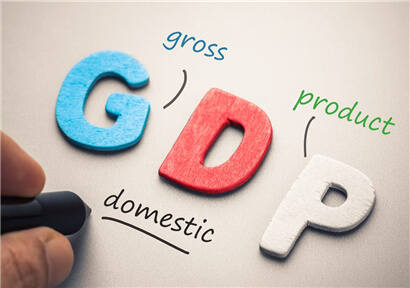
In July, macro-data such as GDP growth, currency and credit, import and export trade in the first half of the year will be released soon. Today, this newspaper focuses on the forecast of economic and financial data in the first half of the year, and carries out relevant interviews and interpretations.
Entering July, macroeconomic data for the second quarter of this year will be released one after another. According to the "Securities Daily" reporter, a number of institutions have made forecasts of economic growth. Many institutional analysts believe that GDP growth in the second quarter was about 6.3% year-on-year, which is in line with the policy target of 6.0% to 6.5% GDP growth proposed in the government work report. Xu Hongcai, deputy director of the Economic Policy Committee of the China Policy Science Research Association, told the Securities Daily that according to the PMI and non-manufacturing business activity index of China's manufacturing industry published by the National Bureau of Statistics in June, the recent decline of China's manufacturing industry has stabilized and the non-manufacturing and service industries have maintained a relatively high level. The level of gas indicates that the downward pressure of the economy has slowed down. Economic growth is expected to be 6.3% in the second quarter, 6.3% in the third quarter, 6.2% in the fourth quarter and 6.3% in the whole year on average. Overall, it meets market expectations.
China's Economic and Financial Outlook Report issued by the Bank of China forecasts GDP in the second quarter, pointing out that the external environment facing China's economy is still tightening, and from the domestic point of view, the policy and market environment are tending to improve. First, the government's work report has made specific arrangements for increasing infrastructure shortcomings, implementing larger-scale tax cuts and fees reduction, and resolving financing difficulties and high cost. These policies were centralized in the second quarter and began to show effectiveness. Second, monetary policy is tight and moderate, and market interest rate is expected to fall further, which will help reduce the financing cost of enterprises, alleviate the financing difficulties of small and medium-sized enterprises, and enhance the ability and willingness of enterprises to invest and operate. Third, driven by policies and economic laws, new industries, new formats and new products will continue to grow rapidly and new momentum will continue to increase. Overall, China's GDP grew by about 6.3% year-on-year in the second quarter. Flower Changchun, global chief economist of Guotai Junan Securities Research Institute, said that from the production situation, the growth rate of industrial added value is expected to rise slightly to 5.2% in June. Judging from the investment situation, the growth rate of capital construction investment is expected to remain stable in June, and the growth rate of fixed assets investment will rise slightly to 5.7%. In June, most of the sub-items of food prices remained stable, but the prices of fish, fruit and meat rose significantly, supporting prices remained stable, which brought some support to the society. Zero growth is expected to fall to 8.3% in June. Overall, GDP is expected to grow by 6.2% in the second quarter, and the effect of credit stimulus in the first quarter will begin to decline in the second quarter. Follow-up GDP growth mainly depends on how much momentum infrastructure can release under the policy stimulus, and when the policy to stimulate consumption will work. Huang Wentao, chief analyst of macro and bond research at CITIC Construction Investment, said that from high-frequency data and PMI index, June production data was still weak, but the downward trend or postponement. The PMI index remained the same as last month. Coal consumption for power generation remained negative year on year, but the decline narrowed. The monthly average of blast furnace start-up rate was slightly negative year on year. Considering that the growth rate of industrial added value in the second quarter fell nearly one percentage point from that in the first quarter, GDP growth in the second quarter is expected to fall back to about 6.2%. From the perspective of monetary policy trends, Zhang Jun, chief economist of Morgan Stanley Huaxin Securities, told the Securities Daily that the need for greater easing at the aggregate level in the short term is not high, such as comprehensive reduction, interest rate reduction and expansion of the size of special bonds and other policies, should be more as a policy reserve to deal with the future. A more serious situation could arise. At present, the core of the policy is still to improve the effectiveness of macroeconomic policies, accelerate the landing and implementation of stable growth policies, and introduce monetary and financial funds into the real economy through the introduction of targeted policies.

You May Interested In


High Quality β-Nicotinamide adenine dinucleotide CAS 53-84-9 NADwith ready stock and best price
$3/UNIT FOB


2026-10-18
Trade Alert
Delivering the latest product trends and industry news straight to your inbox.
(We'll never share your email address with a third-party.)

Related News
-
The Q1 GDP data announcement, what is the situation of the paint industry?
-
GDP growth of 5.5% within reach this year in China
-
30 provinces released GDP data in the first three quarter
-
GDP growth may reach the expected CPI growth rate and be controllable
-
National Bureau of Statistics: GDP in 2018 was an increase of 1897.2bn yuan
-
GDP growth of nearly 92 trillion yuan in 2018 after revision is 2.1%
-
GDP growth of 16 provinces outperformed that of the whole country
-
GDP related data of top 10 eastern provinces
-
China's GDP grew by 6.0% in the third quarter. Did your income beat GDP growth?
-
GDP grew by 174 times, and the total economy was second in the world
Recommend Reading
-
![What Can $3.4 Billion Buy? Shin-Etsu Chemical’s Answer: Upstream Control of PVC]()
What Can $3.4 Billion Buy? Shin-Etsu Chemical’s Answer: Upstream Control of PVC
-
![U.S. 10% Temporary Tariff Expires, New Section 301 Tariffs Not Yet Implemented]()
U.S. 10% Temporary Tariff Expires, New Section 301 Tariffs Not Yet Implemented
-
![Australia Approves Lab-Grown “Milk Sugar” for Babies—A Breakthrough in Infant Nutrition]()
Australia Approves Lab-Grown “Milk Sugar” for Babies—A Breakthrough in Infant Nutrition
-
![From Coffee Waste to Superfood Additive: EU Declares Pectin-Rich Arabica Extract Safe for Food Use]()
From Coffee Waste to Superfood Additive: EU Declares Pectin-Rich Arabica Extract Safe for Food Use
-
![Chung Lien Oil’s 8,000-Ton Soybean Oil BaP Scandal: NT$165 Million Fine, 401 Product Recalls, Source Still Unknown]()
Chung Lien Oil’s 8,000-Ton Soybean Oil BaP Scandal: NT$165 Million Fine, 401 Product Recalls, Source Still Unknown
-
![Premium Global Chemical Sourcing Requests (3 - 11 Mar, 2026)]()
Premium Global Chemical Sourcing Requests (3 - 11 Mar, 2026)
-
![Cost Transmission DOP “Roller Coaster” Market Conditions]()
Cost Transmission DOP “Roller Coaster” Market Conditions
-
![Costs Plunge Aniline Prices Fall from High Levels]()
Costs Plunge Aniline Prices Fall from High Levels
-
![Sodium Metabisulfite Prices Rise This Week (March 9–13)]()
Sodium Metabisulfite Prices Rise This Week (March 9–13)
-
![BDO Market Trends Continue to Rise]()
BDO Market Trends Continue to Rise