Get to Know About the Chemicals Obtained from Coal
Chemicals obtained from coal are needed for different purposes, most of them related to the production of electricity. They are generated from coal by either pyrolysis or gasification. They can be used as feedstocks for the production of various chemicals, as fuel (such as formaldehyde), or in the treatment of coal mining waste. These chemicals include;
1. Coking and Firing Agents
Coking of coal is the process of producing coal tar, a common precursor chemical. Tar consists of long chains with numerous carbon atoms (synthetic rubber or petrochemical products are made from natural rubber) linked together by oxygen and sulfur atoms. The coal is heated in the absence of air to a temperature at which the carbon atoms form long, straight chains and at that point the coal has been converted to tar. There are two types of coking; thermal and hydrocharification where heat is applied via heat exchangers or steam generators for different reasons; this type of heating is needed to permit a continuous flow production. Hydrocharification is used to prepare coal into coal gas, notably a gas which is used as a fuel but can also be separated and used as a product by itself.
2. Fuel
Coal tar has many uses. It is used for the production of formaldehyde, which turns out to be twice as potent as the commercial product, formaldehyde-diacetate, and it also serves as a precursor in the production of methanol and acetone from liquid hydrocarbons derived from petroleum refining. Coal tar can also be converted into coking oil that can be used to manufacture synthetic rubber (which could have some use in lightweight tires).
3. Gases
Gasification is a process that converts coal into a synthetic gas called syngas. It involves only partial oxidation of the coal. This gas is composed primarily of carbon monoxide and hydrogen, but small amounts of nitrogen, methane, sulfur compounds, and other products are also included in the synthesis (synthesis gases). The heat required for this conversion can be supplied by burning part of the syngas or by using external heat sources like fuel oil or natural gas.
4. Ammonia
This one of the chemicals obtained from coal. Ammonia production is a process where nitrogen and hydrogen are reacted to produce ammonia, which is a basic ingredient in the production of fertilizer. The process involves the removal of oxygen from coal and converting to nitrogen by removing hydrogen from it. The process is quite complex and requires several intermediate steps (one of which being the formation of syngas).
5. Condensed and Intermediate Products
Condensed and intermediate products include olefins, aromatics, cyclohexane, benzene, toluene, and xylenes. The process that is used to generate these chemicals is similar to the one that produces ammonia. The process involves removing oxygen from coal and then removing hydrogen from it. The main difference between this process (via the ammonia route) and the other one (via syngas route) is that this one does not produce syngas but does produce more anhydrous tar than the other production method (which produces syngas).
6. Fine Coking Agent
It is one of the chemicals obtained from coal. Fine coking agents are produced by the pyrolysis of coal. The process involves heating of coal to an extremely high temperature in the absence of oxygen. The different types of these fine coking agents include; formaldehyde, propylene, butadiene, cyclohexane, and benzene.
7. Blast Furnaces and Steel Mills
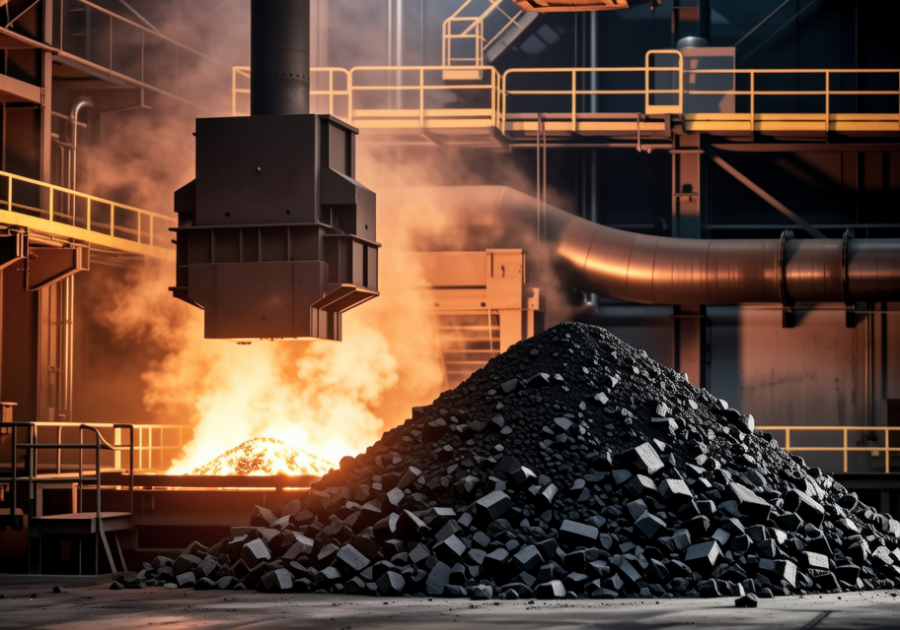
Blast furnaces and steel mills use a product called coke as an adjunct to steel production. It is a sponge cake-like product that is made from coal (typically with tar added). This product is used as a reducing agent in the smelting process that produces molten iron from iron ore (another type of ore). The coke is heated to extremely high temperatures (around 3,000 ℉) that convert it into a stone-like material with a melting point of 2,500℉. Coke also produces an extremely large quantity of slag and molten iron.
8. Tars and Creosote
The tars that are obtained from coal are used as a source of oil and gas while the creosote is used to waterproof and preserve timber. The tars produced during syngas production have high concentrations of benzene and other aromatic hydrocarbon which are present in their commercial form as liquid fuels. These tars can also be further refined into gasoline through cracking processes. Residual oil products can also be created by refining tarry residue (such as coke oven ash or blast furnace slag).
The above are some of the chemicals obtained from coal. They can be used in a number of different ways, most of them involving the production of electricity. The process is quite complex and requires high technology to convert coal into its free chemicals. The process also generates a number of byproducts that are also used in different ways.
Looking for chemical products? Let suppliers reach out to you!
You May Interested In


SS-31 Cosmetic peptides, discounted price improving cognitive impairment factory supply
$8E+1/UNIT FOB


2026-09-15
Trade Alert
Delivering the latest product trends and industry news straight to your inbox.
(We'll never share your email address with a third-party.)

Related News
-
Uses of Sodium Citrate Dihydrate in Food Industry
-
PVEF Polymer: Structure, Properties, and Industrial Applications
-
Sulfuric Acid (H2SO4): Properties, Battery Uses, and Extreme Safety Hazards
-
What is Trametenolic Acid? (Structure, Sources & Research)
-
Ammonia Chemical Formula: NH3 Structure & Properties
-
Benzyl Alcohol: Uses in Cosmetics, Preservative Efficacy, and Safety
-
Hexane in Food and Industry: Safety and Applications
-
Dodecyl Acid: Industrial Uses and Chemical Characteristics
-
SiO2: Properties, Uses, and Applications
-
Chemical Properties and Uses of Caesium Fluoride
Recommend Reading
-
![Uses and Properties of Chromium Oxide]()
Uses and Properties of Chromium Oxide
-
![Chemical Reactions and Uses of Stilbene]()
Chemical Reactions and Uses of Stilbene
-
![Uses of Dithiothreitol in Laboratories]()
Uses of Dithiothreitol in Laboratories
-
![Aluminum Sulfate: Industrial and Water Treatment Applications]()
Aluminum Sulfate: Industrial and Water Treatment Applications
-
![Applications of Diphenyl Cyanide]()
Applications of Diphenyl Cyanide
-
![November Natural Rubber Market Prices Fluctuate and Rise Slightly in China]()
November Natural Rubber Market Prices Fluctuate and Rise Slightly in China
-
![April Coking Coal Market Supply and Demand Balance]()
April Coking Coal Market Supply and Demand Balance
-
![Cost-Requirement Game: DOP Prices in August Fluctuate and Rise]()
Cost-Requirement Game: DOP Prices in August Fluctuate and Rise
-
![This Week PVC Market Stabilized (11.24-28)]()
This Week PVC Market Stabilized (11.24-28)
-
![Business Society’s Toluene Market Outlook on August 19, 2026: Volatile]()
Business Society’s Toluene Market Outlook on August 19, 2026: Volatile