International Oil Price Will Return to Supply and Demand Leadership
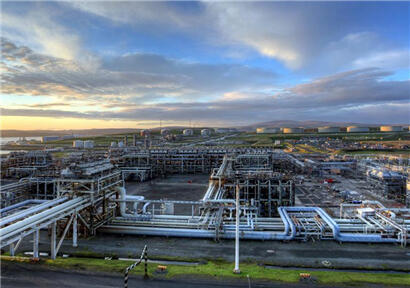
Saudi Arabia's "Black Swan" incident, so that international oil prices in a few days staged a dramatic ups and downs. As far as the uncertain situation in the Middle East is concerned, there are too many uncertainties in the short term. However, in the long run, the trend of international oil prices will return to supply-demand dominance.
On September 14, the world's largest oil company, Saudi Arabia Amy Oil Company, was attacked at its oil processing facilities in Bulgaria and Hurice oilfields. The oil market reacted immediately. On Sept. 16, Asian oil markets soared immediately after opening, with Brent crude oil in London rising by nearly 20% to $72 a barrel, the biggest daily gain since the 1991 Gulf War, and finally closing up by more than 14%. Concern about a possible supply gap in Saudi Arabia is the main supporting factor for the rise in international oil prices. So, after Saudi Arabia said that oil supply had fully restored to its previous level and production would fully recover by the end of September, international oil prices immediately turned around and fell again. WTI crude oil in the United States closed down nearly 6%, Brent crude oil fell by 6%. At one time it was over 6%.
Although there are still concerns that uncertainties will cause short-term fluctuations in international oil prices, such as the geopolitical risk premium of oil will increase once the situation in the Middle East deteriorates, in the medium and long term, international oil prices will return to supply-demand dominance and the relatively loose pattern will continue. In fact, since this year, the overall international oil price has shown a weak trend, which is obviously weaker than last year. One of the reasons behind this is the sluggish demand caused by the weakening momentum of global economic growth.
In July this year, the International Monetary Fund (IMF) lowered its global economic growth forecast for 2019 to 3.2%, which is the low global economic growth rate since 2009, while the IMF also expects that the global economic growth rate for 2020 will be only 3.5%. The latest data show that many economies, such as Germany, Britain, Italy, Brazil and Mexico, are at risk of recession, and the probability is high.
The U.S. Energy Information Agency (EIA) has lowered its forecast for global oil demand growth this year for seven consecutive months. In its latest energy outlook report, it lowered its global crude oil demand growth forecast of 110,000 barrels per day in 2019 to 89,000 barrels per day, the first time since 2011 that is below 1 million barrels per day, and lowered its global crude oil demand growth forecast of 30,000 barrels per day in 2020 to 1.4 million barrels per day, up from a year earlier. Several other agencies have also been downgrading their expectations for global oil demand growth this year and next. OPEC will cut its crude oil demand growth rate by 80,000 barrels per day to 1.02 million barrels per day in 2019 and by 60,000 barrels per day to 1.88 million barrels per day in 2020. Demand is declining, but on the supply side, EIA points out that OPEC's output increased by 50,000 barrels per day to 29.74 million barrels per day in August, while Russian, Nigerian and Iraqi production exceeded the quota by 600,000 barrels per day in August, while non-OPEC crude oil supply continued to increase. In August, non-OPEC oil supply increased by 1.6 million barrels per day annually, by 1.9 million barrels per day in 2019 and by 2.3 million barrels per day in 2020. In June, the United States briefly overtook Saudi Arabia as the largest oil exporter with more than 3 million barrels of daily exports. At the same time, oil stocks remain high. In the week ending September 6, refinery stocks in the United States increased by 2.74 million barrels, the largest increase in nearly two months. These stocks are bound to be released when necessary. After the attack on Saudi oil field facilities, the United States said it was ready to use strategic reserves at any time to prevent the supply gap in Saudi Arabia from shaking the global oil market. Russia also said that the global commercial oil reserves are sufficient to fill the short and medium-term oil gap.
Considering various factors, the international crude oil market will deduce the market under the interweaving of multi-empty factors, full of many uncertainties, short-term or affected by geopolitics, speculation and other factors, but the medium and long-term still depends on the relationship between supply and demand.

You May Interested In


Glow70/KLOW80 99% China Peptides Warehouse Direct Delivery Lyophilized Powder in Stock
$169/UNIT FOB


2026-10-14
Trade Alert
Delivering the latest product trends and industry news straight to your inbox.
(We'll never share your email address with a third-party.)

Related News
-
U.S.-Iran Détente Triggers Oil Price Plunge, Energy and Chemical Sectors Tumble
-
DKSH Expands Distribution Partnership with Kahai in North America
-
Price increase! Raw materials soared 10%, price letter to the factory in advance!
-
Price Increases Sweep Chemical Industry, Both Overseas and Domestic Markets Experience Upward Trend
-
Major Strike! Raw Material Prices Surge by 11%!
-
Dow rises!
-
EIA: The global oil supply landscape is changing
-
In April, the first round of price increases hit!
-
Chemical market slightly back
-
Nearly 200 billion dollars! The five oil giants made record profits last year
Recommend Reading
-
![U.S. Formally Imposes Antidumping and Countervailing Duty Orders on Chinese L-Lysine]()
U.S. Formally Imposes Antidumping and Countervailing Duty Orders on Chinese L-Lysine
-
![FDA Orders Removal of “Suicidality Warning”: Are Weight-Loss Blockbusters Finally Cleared—or Is Regulators Giving the Market a Reality Check?]()
FDA Orders Removal of “Suicidality Warning”: Are Weight-Loss Blockbusters Finally Cleared—or Is Regulators Giving the Market a Reality Check?
-
![U.S. Congress Passes Bill Authorizing Tariffs of Up to 100% on Major Buyers of Russian Energy]()
U.S. Congress Passes Bill Authorizing Tariffs of Up to 100% on Major Buyers of Russian Energy
-
![UK Opens Formal Review of AkzoNobel–Axalta $25 Billion Merger]()
UK Opens Formal Review of AkzoNobel–Axalta $25 Billion Merger
-
![U.S. and China Open New High-Level Trade Talks on Tariffs, Critical Minerals and Pharma Investment]()
U.S. and China Open New High-Level Trade Talks on Tariffs, Critical Minerals and Pharma Investment
-
![Business Society’s Maleic Anhydride Trend Analysis for September 17, 2026: Volatile Fluctuations]()
Business Society’s Maleic Anhydride Trend Analysis for September 17, 2026: Volatile Fluctuations
-
![MTBE Market Fluctuations in China]()
MTBE Market Fluctuations in China
-
![Business Society’s Trend Analysis for Propylene Oxide on September 17, 2026: Price Trends Are Volatile]()
Business Society’s Trend Analysis for Propylene Oxide on September 17, 2026: Price Trends Are Volatile
-
![Business Society’s September 18, 2026 Caustic Soda Trend Analysis: Relatively Strong Fluctuations]()
Business Society’s September 18, 2026 Caustic Soda Trend Analysis: Relatively Strong Fluctuations
-
![Premium Global Chemical Sourcing Requests (10-14 Jan, 2026)]()
Premium Global Chemical Sourcing Requests (10-14 Jan, 2026)