EU丨Commission adopts new rules to fastrack approval of biological pesticides
The European Commission adopted new rules designed to increase the availability of and access to biological plant protection products on Wednesday (31 August) as part of efforts to reduce reliance on chemical pesticides.
The new rules, which were already endorsed by member states back in February and will now become effective as of November 2022, are designed to facilitate the approval of micro-organisms for use as active substances in plant protection products.
This way, the EU executive hopes to arm farmers with new sustainable tools to substitute chemical plant protection products.
The news comes as part of efforts outlined in the bloc’s flagship food policy, the Farm to Fork strategy, to slash the use and risk of chemical pesticides in half by 2030 and boost the organic sector and the use of integrated pest management.
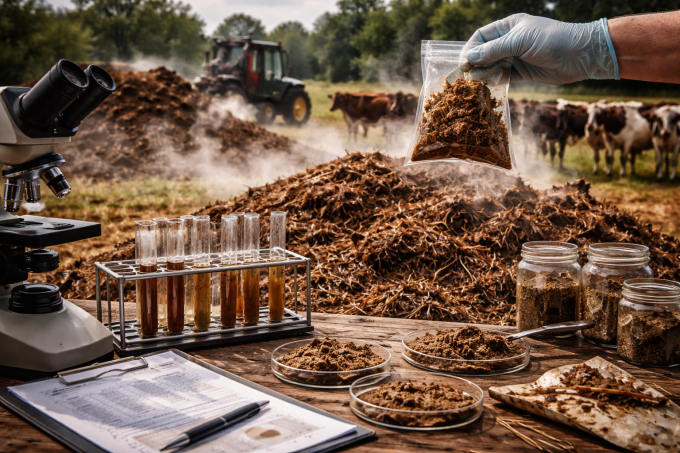
Biological pesticides are a form of biocontrol based on living organisms as the active ingredient, such as bacteria, fungi or viruses. These living organisms are naturally pathogenic to, or out-compete, pests.
While forms of biocontrol have long been used in the sector, they have rapidly gained attention more recently as a sustainable and viable environmentally friendly alternative to chemical pesticides.
As it stands, more than 60 microorganisms are approved for use in the EU.
However, stakeholders have criticised the fact that they are currently hampered by maladapted regulation, which means that, until now, they generally follow the same regulatory path as chemical-active substances.
The lack of specific regulation means that forms of biocontrol have not yet been able to live up to their full potential, currently taking around a decade to reach the market.
To address this, the new rules will place the biological and ecological properties of each microorganism at the heart of the scientific risk assessment process needed to demonstrate safety before they can be approved as active substances in plant protection products.
This is expected to result in faster approval of microorganisms and therefore faster authorisation of biological plant protection products containing them.
Welcoming the news, the Commissioner in charge of health and food safety, Stella Kyriakides, said that transitioning towards more sustainable food systems means “finding alternatives to chemical pesticides that respect our planet and our health”.
“With these new rules, we will ensure that biological alternatives can reach our farmers even faster,” she said in a statement, adding that the Commission is committed to “facilitate this process by increasing the biological and low-risk alternatives on the market”.
“The more resources we collectively invest in assessing plant protection products, the more and safer alternatives we will have to deliver on our commitment to reduce by 50% the use of chemical pesticides by 2030,” she said.
Commenting on the news, a representative from CropLifeEurope, representing Europe’s crop protection industry, told EURACTIV the move was “definitely a step in the right direction” to have more innovative biopesticides on the market.
However, they added that, in order to reach the objectives of the Farm to Fork, they believe it is also essential that EU regulation fosters timely approvals “for all solutions, be it biopesticides or pesticides, so that farmers have a full toolbox of effective products available.”
Likewise, the International Biocontrol Manufacturers Association (IBMA) welcomed the adoption of the new rules. However, they emphasised that, while these revised data requirements are a crucial part of the Farm to Fork strategy implementation, alone they cannot speed up the delivery of microbials to the farmers.
“The authorisation process needs to be implemented in a way that allows authorisation and placing on the market in Member States within 1-3 years of initial submission, as seen for biocontrol in other countries such as USA and Brazil,” they stressed.

You May Interested In


SS-31 Cosmetic peptides, discounted price improving cognitive impairment factory supply
$8E+1/UNIT FOB


2026-09-21
Trade Alert
Delivering the latest product trends and industry news straight to your inbox.
(We'll never share your email address with a third-party.)

Related News
-
EU Eyes Rare Trade Tool as PET, Epoxy Resin and Glass Fibre Face Import Curbs
-
Covestro CEO: The EU Must Decide Which Industries to Protect, or Energy-Intensive Sectors Will Move Out
-
INEOS Warns Chinese Chemical “Dumping” Is Hitting Europe’s Industry
-
India Imposes Final Anti‑Dumping Duties on Ethylenediamine from China, EU, Saudi Arabia, and Taiwan, China, with Top Rate of $575/tonne
-
EU Finalizes Anti-Dumping Duties on BDO from China, with Rates up to 113.7%
-
EU mulls expanding tariff scope on Chinese chemicals, sector-wide measures in the pipeline
-
EU Clears Carlyle's Acquisition of BASF's Coatings Business, but Demands Divestment of Nouryon's Polysulfide Assets: What Are the Underlying Risks?
-
EU: Metribuzin is about to be withdrawn from the EU market
-
The Indian biopesticide market will grow at a CAGR of 9.38%
-
The EU review removed the restriction on the use of Metconazole as a fungicide and plant growth regulator in the previous approval
Recommend Reading
-
![FDA Reopens the Raw Manure Debate]()
FDA Reopens the Raw Manure Debate
-
![FDA Sharpens the Dietary Supplement Ingredient Debate]()
FDA Sharpens the Dietary Supplement Ingredient Debate
-
![FDA and NIH Launch a New Nutrition Science Partnership]()
FDA and NIH Launch a New Nutrition Science Partnership
-
![2026 Q1 Chemical Giant Earnings: Supply Contraction, Flat Demand, Full-Scale]()
2026 Q1 Chemical Giant Earnings: Supply Contraction, Flat Demand, Full-Scale "Defense Priority"
-
![U.S. FDA Opens New Safety Review of RSV Treatments for Infants]()
U.S. FDA Opens New Safety Review of RSV Treatments for Infants
-
![Premium Global Chemical Sourcing Requests (3 - 11 Mar, 2026)]()
Premium Global Chemical Sourcing Requests (3 - 11 Mar, 2026)
-
![In September, the caustic soda price in China showed a generally weak trend]()
In September, the caustic soda price in China showed a generally weak trend
-
![Weak Decline in TDI Market in September]()
Weak Decline in TDI Market in September
-
![September Pure Benzene Market Overview (September 1–30, 2025)]()
September Pure Benzene Market Overview (September 1–30, 2025)
-
![September China's titanium dioxide market sees steady growth with some increases]()
September China's titanium dioxide market sees steady growth with some increases