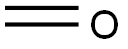
| General Description | Formaldehyde, also called formic aldehyde or methyl aldehyde, has extensive application. For instance, it is used as a tissue preservative or organic chemical reagent. Thus, formaldehyde is very common to the chemical industry. In fact, formaldehyde is an important chemical used widely by industry to manufacture building materials and numerous household products. It is also a by-product of combustion and certain other natural processes. It is present in substantial concentrations both indoors and outdoors. Formaldehyde is well known as a preservative in medical laboratories, as an embalming fluid, and as a steriliser. Its primary use is in the production of resins and as a chemical intermediate. Urea–formaldehyde (uf) and phenol–formaldehyde (pf) resins are used in foam insulations, as adhesives in the production of particle board and plywood, and in the treating of textiles. Sources of formaldehyde in the home include building materials, smoking, household products, and the use of unvented, fuel-burning appliances, like gas stoves or kerosene space heaters. Formaldehyde, by itself or in combination with other chemicals, serves a number of purposes in manufactured products.
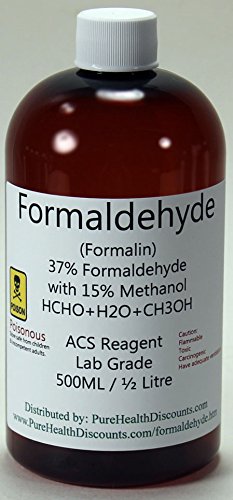
Formaldehyde itself is a colourless gas, but it is more commonly purchased and used in aqueous solution (called formalin solution), with a maximum concentration of 40%. Formalin solutions often contain some amount of methanol as well. Both formaldehyde gas and solutions have a characteristic pungent, unpleasant odour. |
| Chemical Properties | Formaldehyde is colorless gas with a very distinct, pungent odor. It is highly soluble in water and in a variety of organic solvents. It has the potential to react explosively with peroxides and nitrogen oxide.
Formalin, the aqueous form of formaldehyde, is a colorless liquid with a very distinct, pungent odor. It is incompatible and may react with strong oxidizers, alkalis,and acids. The liquid has a variable molecular weight, which is dependent on the specific aqueous formulation. |
| Uses | Formaldehyde (methyl aldehyde, methylene oxide) is a ubiquitous compound found endogenously in the body and environment. It is a colorless, flammable gas with a distinct, pungent odor and is most commonly available in aqueous solutions under the name formalin (37% formaldehyde in water). Formaldehyde has been used as a disinfectant, an embalming agent, and in industry as a precursor in the fabrication of complex compounds. Since scientific research has identified links between formaldehyde and adverse health effects, precautions and protections must be considered during use. |
| Description | Formaldehyde is a colorless, flammable gas with a distinctive pungent odor. It is the simplest aldehyde, which is a class of organic compounds with the carbonyl group bonded to at least one hydrogen atom. Formaldehyde was described by August Wilhelm von Hoff mann (1818–1892) in 1867 after the Russian Aleksandr Butlerov (1828–1886) had inadvertently synthesized it in 1857. Formaldehyde readily dissolves in water to produce a solution called formalin, which is commonly marketed as a 37% solution. |
| Chemical Properties | Formalin is made slightly alkaline (pH 8) by the addition of sodium hydroxide and then urea is added to give a urea to formaldehyde ratio of about 1: 2 molar. The resulting solution is boiled under reflux for about 15 minutes, acidified (to pH 4) with formic acid and then boiled for a further 5-20 minutes until the required degree of reaction is attained. |
| Chemical Properties | Formaldehyde is an important chemical widely used by industry to manufacture building materials and numerous household products. It is also a by-product of combustion and certain other natural processes. It is present in substantial concentrations both indoors and outdoors. Formaldehyde is well known as a preservative in medical laboratories, as an embalming fl uid, and as a sterilizer. Its primary use is in the production of resins and as a chemical intermediate. Urea formaldehyde (uf) and phenol formaldehyde (pf) resins are used in foam insulations, as adhesives in the production of particle board and plywood, and in the treating of textiles. Sources of formaldehyde in the home include building materials, smoking, household products, and the use of unvented, fuel-burning appliances, like gas stoves or kerosene space heaters. Formaldehyde, by itself or in combination with other chemicals, serves a number of purposes in manufactured products. It has been reported that the use and production of formaldehyde in 1998 was about 11.3 billion pounds and the international production crossed over 46 billion pounds in 2004. |
| Physical properties | Formaldehyde is a clear, colorless liquid with a pungent, suffocating odor. Burning taste. Experimentally determined odor threshold concentrations of 1.0 ppmv and 0.50 ppmv were reported by Leonardos et al. (1969) and Nagata and Takeuchi (1990), respectively. Also,formalin is an aqueous solution that is 37% formaldehyde by weight; inhibited solutions (added to prevent polymeri zation) usually contain 6 12% methyl alcohol. Formaldehyde is used in the manufacture of plastics and resins by reaction with phenols,urea, and melamine. It is used as a preservative,a disinfectant, and as a chemical intermediate. |
| History | Formaldehyde is a by-product of combustion of organic compounds, metabolism, and other natural processes. Formaldehyde results from wood combustion and elevated atmospheric concentrations can result from forest fires, as well as from urban pollution sources such as transportation. Formaldehyde has been identified as a significant indoor air pollutant. Building materials such as particleboard, plywood, and paneling are major sources of formaldehyde because they incorporate formaldehyde resins as bonding adhesives. Other sources of formaldehyde in the home are carpets, upholstery, drapes, tobacco smoke, and indoor combustion products. Formaldehyde may be emitted from building materials for several years after installation. In the two decades of the 1960s and 1970s, a half million homes in the United States used urea formaldehyde foam insulation, but health complaints led to its elimination as an insulator in the early 1980s. People react differently to formaldehyde exposure, but it is estimated that between 10% and 20% of the population will experience some reaction at concentrations as low as 0.2 parts per million. Formaldehyde irritates the eyes, nose, and throats, producing coughing, sneezing, runny nose, and burning eyes. More severe reactions result in insomnia, headaches, rashes, and breathing difficulties. Some states have established indoor air quality standards ranging from 0.05 to 0.5 ppm. |
| Uses | Formaldehyde is used in the manufactureof phenolic resins, cellulose esters, artificialsilk, dyes, explosives, and organic chemicals.Other uses are as a germicide, fungicide, anddisinfectant; in tanning, adhesives, waterproofingfabrics, and for tonic and chromeprinting in photography; and for treating skindiseases in animals. In vitro neutralizationof scorpion venom toxicity by formaldehydehas been reported (Venkateswarlu et al.1988).
Formaldehyde constitutes about 50% ofall aldehydes present in the air. It is oneof the toxic effluent gases emitted fromburning wood and synthetic polymeric substancessuch as polyethylene, nylon 6, andpolyurethane foams. Firefighters have a greaterrisk to its exposure. Incapacitation fromthe toxic effluent gases is reported to occurmore rapidly from the combustion of syntheticpolymers than from that of naturalcellulose materials.
Formaldehyde is directly emitted into theair from vehicles. It is released in traceamounts from pressed wood products suchas particleboard and plywood paneling, fromold “sick” buildings, and from cotton andcotton–polyester fabrics with selected crosslinkfinishes. Formation of formaldehyde hasbeen observed in some frozen gadoid fishdue to enzymic decomposition of the additivetrimethylamine oxide (Rehbein 1985).Its concentration can build up during frozenstorage of fish (Leblanc and Leblanc 1988;Reece 1985). It occurs in the upper atmosphere,cloud, and fog; it also forms inphotochemical smog processes. |
| Uses | More than half of the commercial formaldehyde produced is used to manufacture phenolic,urea, and melamine formaldehyde resins. Polyacetyl resins use another 5–10% of formaldehyde,and approximately 80% of formaldehyde goes into the resins and plastics industry.Phenolic-formaldehyde resins were the first synthetic plastics to be produced. The first plasticwas called Bakelite.
Formaldehyde has traditionally been used as a preservative in biology and medical laboratoriesand in embalming fluid. Embalming fluids typically contain 5–15% formaldehyde, a significant percentage of alcohol, and other additives to perform certain functions, for example,bleaches and coloring to preserve skin color. Formaldehyde has been used to preserve deadbodies since 1900 and has several qualities that make it the preferred preservative. Foremostamong these is its low cost, but it also has several biochemical advantages: it kills germs andmicroorganisms, destroys decomposition enzymes, retards decomposition of proteins, andhardens body tissues. |
| Uses | Formaldehyde is used as the preservative; disinfectant; antiseptic; in embalming solutions; in the manufacture of phenolic resins, artificial silk, cellulose esters, dyes, urea, thiourea, melamine res ins, organic chemicals, glass mirrors and explosives; used in improving fastness of dyes on fabrics; in tanning and preserving hides; in mordanting and waterproofing fabrics; as a germicide and fungicide for vegetables and other plants; in destroying flies and other insects; in preserving and coagulating rubber latex; prevent mildewand spelt in wheat and rot in oats; used to ren der casein, albumin, and gelatin insoluble; in chemical analysis; as a tissue fixative; as a component of particle board and plywood; in the manufacture of pentaerythritol, hexamethylenetetramine and lkbutanediol; used in ceiling and wall insulation; in res ins used to wrinkle-proof fabrics; in photography for hardening gelatin plates and papers, for toning gelatin-chloride papers and for chrome printing and developing; intermediate in drug manufacture; pesticide intermediate; in the production of urea, phenolic melamine and acetale resins; in textile products; as an astringent, disinfectant, and preservative in cosmetics, metal-working fluids, shampoos, etc.; antiperspirant in cosmetics; anticracking agent in dental plastics; in anhidrotics; chipboard production; in cleaning products, disinfectants and deodorizers, dry-cleaning materials, and glues; in mineral-wool production, paints and coatings, paper industry, phenolic resins and urea plastics; in adhesives and footwear, photographic paper and solutions, polishes, printing materials, tanning agents, wart remedies, embalming solutions, fertilizers, wood composites, and insulation. |
| Production Methods | The industrial preparation of formaldehyde has occurred since the late 1800s and involvesthe catalytic oxidation of methanol: 2CH3OH(g) + O2(g) → 2CH2O(g).the oxidationtakes place at temperatures between 400°C and 700°C in the presence of metal catalysts. Metalsinclude silver, copper, molybdenum, platinum, and alloys of these metals. Formaldehyde iscommonly used as an aqueous solution called formalin. Commercial formalin solutions varybetween 37% and 50% formaldehyde. When formalin is prepared, it must be heated anda methanol must be added to prevent polymerization; the final formalin solution containsbetween 5% and 15% alcohol. |
| Preparation | Formalin is adjusted to pH 8 and urea is added to give a urea to formaldehyde ratio of about 1 :2.5 molar. The resulting solution is boiled under reflux for 1 hour. Butanol (1.5-2.0 mole per mole of urea) is then added together with a little xylene. The latter forms, with butanol and water, a ternary azeotrope which on distillation yields a condensate separating into an upper organic layer and a lower aqueous layer. By discarding the lower layer and returning the upper layer to the reactor, water is progressively removed from the system. After a substantial proportion of the water has been removed, an acid catalyst (e.g. phosphoric acid or phthalic anhydride) is added and heating is continued. When the required degree of reaction is attained, the solution is neutralized and concentrated to the desired solids content. |
| Definition | Formalin: a colourless solution of methanal (formaldehyde) in waterwith methanol as a stabilizer; r.d.1.075–1.085. When kept at temperaturesbelow 25°C a white polymer ofmethanal separates out. It is used asa disinfectant and preservative forbiological specimens. |
| General Description | Formaldehyde solution commercially formaldehyde solution is an aqueous solution containing 37% formaldehyde and 8-10% methanol. Formaldehyde solution can be activated by adding the catalytic amount of lanthanide triflate. This activated formaldehyde solution was employed for the smooth hydroxymethylation reaction of silyl enol ethers. Formaldehyde solution reacts with silyl enol ethers to afford the corresponding hydroxymethylated adducts in high yields. |
| Air & Water Reactions | The solution gives up formaldehyde vapors readily. These vapors are flammable over a wide vapor-air concentration range. Water soluble. |
| Reactivity Profile | FORMALDEHYDE, SOLUTION, reacts violently with strong oxidizing agents (hydrogen peroxide, performic acid, perchloric acid in the presence of aniline, potassium permanganate, nitromethane). Reacts with bases (sodium hydroxide, potassium hydroxide, ammonia), and with nitrogen dioxide (explosive reaction around 180°C). Reacts with hydrochloric acid to form highly toxic bis(chloromethyl) ether. Polymerization reaction with phenol may develop sudden destructive pressure [Bretherick, 5th ed., 1995, p.168]. |
| Hazard | Moderate fire risk. Explosive limits in air 7– 73%. Toxic by inhalation, strong irritant, a carcinogen. (Solution) Avoid breathing vapor and avoid skin contact. Confirmed carcinogen. |
| Health Hazard | Formaldehyde is moderately toxic by skin contact and inhalation. Exposure to formaldehyde gas can cause irritation of the eyes and respiratory tract, coughing, dry throat, tightening of the chest, headache, a sensation of pressure in the head, and palpitations of the heart. Exposure to 0.1 to 5 ppm causes irritation of the eyes, nose, and throat; above 10 ppm severe lacrimation occurs, burning in the nose and throat is experienced, and breathing becomes difficult. Acute exposure to concentrations above 25 ppm can cause serious injury, including fatal pulmonary edema. Formaldehyde has low acute toxicity via the oral route. Ingestion can cause irritation of the mouth, throat, and stomach, nausea, vomiting, convulsions, and coma. An oral dose of 30 to 100 mL of 37% formalin can be fatal in humans. Formalin solutions can cause severe eye burns and loss of vision. Eye contact may lead to delayed effects that are not appreciably eased by eye washing.Formaldehyde is regulated by OSHA as a carcinogen (Standard 1910.1048) and is listed in IARC Group 2A ("probable human carcinogen"). This substance is classified as a "select carcinogen" under the criteria of the OSHA Laboratory Standard. Prolonged or repeated exposure to formaldehyde can cause dermatitis and sensitization of the skin and respiratory tract. Following skin contact, a symptom free period may occur in sensitized individuals. Subsequent exposures can then lead to itching, redness, and the formation of blisters |
| Fire Hazard | Toxic vapors such as carbon dioxide and carbon monoxide are generated during combustion. Explosion hazard: when aqueous formaldehyde solutions are heated above their flash points, a potential for explosion hazard exists. High formaldehyde concentration or methanol content lowers flash point. Reacts with nitrogen oxides at about 180; the reaction becomes explosive. Also reacts violently with perchloric acid-aniline, performic acid, nitromethane, magnesium carbonate, and hydrogen peroxide. When heated, irritant formaldehyde gas evolved from solution. The main products of decomposition are carbon monoxide and hydrogen. Metals such as platinum, copper, chromia, and alumina also catalyze the formation of methanol, methylformate, formic acid, carbon dioxide, and methane. Reacts with peroxide, nitrogen oxide, and performic acid causing explosions. Can react with hydrogen chloride or other inorganic chlorides to form bis-chloromethylether (BCME), a known carcinogen. Very reactive, combines readily with many substances, 40% solution is powerful reducing agent. Incompatible with amines, azo compounds, dithiocarbamates, alkali and alkaline earth metals, nitrides, nitro compounds, unsaturated aliphatics and sulfides, organic peroxides, oxidizing agents, and reducing agents. Aqueous solutions are unstable. Commercial formaldehyde-alcohol solutions are stable. Gas is stable in absence of water. Avoid oxidizing and alkaline materials. Hazardous polymerization may occur. Compound will polymerize with active organic materials such as phenol. Will polymerize violently in the presence of caustics and nitrides; (amines) exothermic reaction, (Azo compound) exothermic reaction giving off nitrogen gas, (caustics) heat generation and violent polymerization, (dithiocarbamates) formation of flammable gases and toxic fumes, formation of carbon disulfide may result, (alkali and alkaline earth metals) heat generation and formation of a flammable hydrogen gas. |
| Flammability and Explosibility | Formaldehyde gas is extremely flammable; formalin solution is a combustible liquid (NFPA rating = 2 for 37% formaldehyde (15% methanol), NFPA rating = 4 for 37% formaldehyde (methanol free)). Toxic vapors may be given off in a fire. Carbon dioxide or dry chemical extinguishers should be used to fight formaldehyde fires. |
| Chemical Reactivity | Reactivity with Water No reaction; Reactivity with Common Materials: No reactions; Stability During Transport: Stable; Neutralizing Agents for Acids and Caustics: Not pertinent; Polymerization: Not pertinent; Inhibitor of Polymerization: Not pertinent. |
| Agricultural Uses | Microbiocide, Fungicide, Bactericide; Soil sterilent: Registered for use in the U.S. Not approved for use in EU countries. Formaldehyde has found wide industrial usage as a fungicide, germicide and in disinfectants. It is used most often in an aqueous solution stabilized with methanol (formalin). It is also a pesticide intermediate. |
| Trade name | DYNOFORM®; FANNOFORM®; FORMALITH®; FORMOL®; FYDE®; HERCULES 37 M6-8®; HOCH®; IVALON®; KARSAN®; LYSOFORM®; MAGNIFLOC 156C FLOCCULANT®; MORBICID®; STERIFORM®; SUPERLYSOFORM® |
| Contact allergens | Sources and uses of formaldehyde are numerous. Exposed people are mainly health workers, cleaners, painters, met alworkers, but also photographers (color developers) and carbonless copy paper users. Formaldehyde can induce contact urticaria. Formaldehyde may be the cause of sen sitization to formaldehyde releasers: benzylhemiformal, bromonitrodioxane, bromonitropropanediol (), chloroal lylhexaminium chloride or Quaternium-15, diazolidinylu rea, dimethylol urea, dimethyloldimethylhydantoin or DMDM hydantoin, hexamethylenetetramine or methe namine, imidazolidinylurea, monomethyloldimethylhy dantoin or MDM hydantoin, N-methylolchloracetamide, paraformaldehyde and trihydroxyethylhexahydrotriazine or Grotan BK. Formaldehyde is used for the synthesis of many resins. Some of them, such as formaldehyde-urea and melamine formaldehyde resins, can be used in textiles and second arily release free formaldehyde (see Chap. 40). Other resins, such as p-tert-butylphenol formalde hyde resin or tosylamine formaldehyde resin, do not release formaldehyde. |
| Biochem/physiol Actions | Formaldehyde is the simplest aldehyde that denatures the bihelical regions of RNA and converts the polynucleotides into random coils. It is a genotoxic substance that significantly induces DNA-protein crosslinks (DPC), sister-chromatid exchanges, micronuclei formation and leads to cytotoxicity. It also induces tumors in the nasal epithelium of rats and supposed to be a human carcinogen. |
| Safety Profile | Confirmed carcinogen with experimental carcinogenic, tumorigenic, and teratogenic data. Human poison by ingestion. Experimental poison by ingestion, skin contact, inhalation, intravenous, intraperitoneal, and subcutaneous routes. Human systemic effects by inhalation: lachqmation, olfactory changes, aggression, and pulmonary changes. Experimental reproductive effects. Human mutation data reported. A human skin and eye irritant. If swallowed it causes violent vomiting and darrhea that can lead to collapse. Frequent or prolonged exposure can cause hypersensitivity leading to contact dermatitis, possibly of an eczematoid nature. An air concentration of 20 ppm is quickly irritating to eyes. A common air contaminant. Flammable liquid when exposed to heat or flame; can react vigorously with oxidizers. A moderate explosion hazard when exposed to heat or flame. The gas is a more dangerous fire hazard than the vapor. Should formaldehyde be involved in a fire, irritating gaseous formaldehyde may be evolved. When aqueous formaldehyde solutions are heated above their flash points, a potential for an explosion hazard exists. High formaldehyde concentration or methanol content lowers the flash point. Reacts with sodum hydroxide to yield formic acid and hydrogen. Reacts with NOx at about 180'; the reaction becomes explosive. Also reacts violently with perchloric acid + anhe, performic acid, nitromethane, magnesium carbonate, H2O2. Moderately dangerous because of irritating vapor that may exist in toxic concentrations locally if storage tank is ruptured. To fight fire, stop flow of gas (for pure form); alcohol foam for 37% methanol-free form. When heated to decomposition it emits acrid smoke and fumes. See also ALDEHYDES. |
| Potential Exposure | Formaldehyde has found wide indus trial usage as a fungicide, germicide; and in disinfectants and embalming fluids. It is also used in the manufacture of artificial silk and textiles, latex, phenol, urea, thiourea and melamine resins; dyes, and inks; cellulose esters and other organic molecules; mirrors, and explosives. It is also used in the paper, photographic, and furniture industries. It is an intermediate in drug manufacture and is a pesticide intermediate. |
| First aid | If this chemical gets into the eyes, remove anycontact lenses at once and irrigate immediately for at least30 min, occasionally lifting upper and lower lids. Seek medical attention immediately. If this chemical contacts the skin,remove contaminated clothing and wash immediately withsoap and water. Seek medical attention immediately. If thischemical has been inhaled, remove from exposure, begin rescue breathing (using universal precautions, including resuscitation mask) if breathing has stopped and CPR if heart actionhas stopped. Transfer promptly to a medical facility. Whenthis chemical has been swallowed, get medical attention.Give large quantities of water and induce vomiting. Do notmake an unconscious person vomit. Medical observation isrecommended for 2448 h after breathing overexposure, aspulmonary edema may be delayed. As first aid for pulmonaryedema, a doctor or authorized paramedic may consideradministering a corticosteroid spray. |
| Carcinogenicity | Formaldehyde is known to be a human carcinogen based on sufficient evidence of carcinogenicity from studies in humans and supporting data on mechanisms of carcinogenesis. Formaldehyde was first listed in the Second Annual Report on Carcinogens in 1981 as reasonably anticipated to be a human carcinogen based on sufficient evidence from studies in experimental animals. Since that time, additional cancer studies in humans have been published, and the listing status was changed to known to be a human carcinogen in the Twelfth Report on Carcinogens (2011). |
| Source | Formaldehyde naturally occurs in jimsonweed, pears, black currant, horsemint, sago cycas seeds (1,640 to 2,200 ppm), oats, beets, and wild bergamot (Duke, 1992).
Formaldehyde was formed when acetaldehyde in the presence of oxygen was subjected to continuous irradiation (λ >2200 ) at room temperature (Johnston and Heicklen, 1964).
Schauer et al. (2001) measured organic compound emission rates for volatile organic compounds, gas-phase semi-volatile organic compounds, and particle phase organic compounds from the residential (fireplace) combustion of pine, oak, and eucalyptus. The gas-phase emission rates of formaldehyde were 1,165 mg/kg of pine burned, 759 mg/kg of oak burned, and 599 mg/kg of eucalyptus burned.
Gas-phase tailpipe emission rates from California Phase II reformulated gasoline-powered automobiles with and without catalytic converters were 8.69 and 884 mg/km, respectively (Schauer et al., 2002). |
| Environmental Fate | Biological. Biodegradation products reported include formic acid and ethanol, each of which can further degrade to carbon dioxide (Verschueren, 1983).
Photolytic. Major products reported from the photooxidation of formaldehyde with nitrogen oxides are carbon monoxide, carbon dioxide and hydrogen peroxide (Altshuller, 1983). In synthetic air, photolysis of formaldehyde gave hydrochloric acid and
Irradiation of gaseous formaldehyde containing an excess of nitrogen dioxide over chlorine yielded ozone, carbon monoxide, nitrogen pentoxide, nitryl chloride, nitric acid and hydrochloric acid. Peroxynitric acid was the major photolysis product when chlo
Chemical/Physical. Oxidizes in air to formic acid (Hartley and Kidd, 1987). Trioxymethylene may precipitate under cold temperatures (Sax, 1984). Polymerizes easily (Windholz et al., 1983). Anticipated products from the reaction of formaldehyde with ozone orhydroxyl radicals in air are carbon monoxide and carbon dioxide (Cupitt, 1980). Major products reported from the photooxidation of formaldehyde with nitrogen oxides are carbon monoxide, carbon dioxide and hydrogen peroxide (Altshuller, 1983).
Reacts with hydrochloric acid in moist air forming bis(chloromethyl)ether. This compound may also form from an acidic solution containing chloride ion and formaldehyde (Frankel et al., 1974). In an aqueous solution at 25°C, nearly all the formaldehyde add |
| storage | work with formaldehyde should be conducted in a fume hood to prevent exposure by inhalation, and splash goggles and impermeable gloves should be worn at all times to prevent eye and skin contact. Formaldehyde should be used only in areas free of ignition sources. Containers of formaldehyde should be stored in secondary containers in areas separate from oxidizers and bases. |
| Shipping | UN1198 Formaldehyde solutions, flammable, Hazard Class: 3; Labels: 3-Flammable liquid, 8-Corrosive material. Cylinders must be transported in a secure upright position, in a well-ventilated truck. Protect cylinder and labels from physical damage. The owner of the compressed gas cylinder is the only entity allowed by federal law (49CFR) to transport and refill them. It is a violation of transportation regulations to refill compressed gas cylinders without the express written permission of the owner. UN2209 Formaldehyde solutions, with not<25% formal dehyde, Hazard class: 8; Labels: 8-Corrosive material. UN3077 For solids containing varying amounts of formal dehyde : UN3077 Environmentally hazardous substances, solid, n.o.s., Hazard class: 9; Labels: 9-Miscellaneous hazardous material, Technical Name Required. |
| Purification Methods | It commonly contains added MeOH. Add KOH solution (1 mole KOH: 100 moles HCHO) to ~37% by weight aqueous formaldehyde solution (formalin), or evaporate to dryness, to give paraformaldehyde polymer which, after washing with water, is dried in a vacuum desiccator over P2O5 or H2SO4. Formaldehyde is regenerated by heating the paraformaldehyde to 120o under vacuum, or by decomposing it with barium peroxide. The monomer, a colourless flammable gas, is passed through a glass-wool filter cooled to -48o in a CaCl2/ice mixture to remove particles of polymer, then dried by passage over P2O5 and either condensed in a bulb immersed in liquid nitrogen or absorbed in ice-cold conductivity water. The gas or aqueous solutions have pungent suffocating odours, are LACHRYMATORY and suspected carcinogens, handle carefully. Formalin is a disinfectant and a preservative of dead animal and plant tissues. [Beilstein 1 IV 3017.] |
| Toxicity evaluation | The carbonyl atom is the electrophilic site of formaldehyde, making it react easily with nucleophilic sites on cell membranes and in body fluids and tissues such as the amino groups in protein and DNA. Higher concentrations of formaldehyde precipitate protein. It is probable that formaldehyde toxicity occurs when intracellular levels saturate formaldehyde dehydrogenase activity, allowing the unmetabolized intact molecule to exert its effects locally. Formaldehyde is a very strong crosslinking agent even in the low concentration range. The reaction mechanism of this agent is the initial addition of formaldehyde to a primary amine on either an amino acid residue or DNA base to yield a hydroxymethyl intermediate. Then the hydroxymethyl group condenses with a second primary amine to yield a methylene bridge. |
| Incompatibilities | Pure formaldehyde may polymerize unless properly inhibited (usually with methanol). May form explosive mixture with air. Incompatible with strong acids; amines, strong oxidizers; alkaline materials; nitrogen dioxide; performic acid; phenols, urea. Reaction with hydrochloric acid forms bis-chloromethyl ether, a carcino gen. Formalin is incompatible with strong oxidizers, alkalis, acids, phenols, urea, oxides, isocyanates, caustics, anhydrides. |
| Toxics Screening Level | The acute initial threshold screening level (ITSL) for formaldehyde is being established at 30 μg/m3 (24-hr averaging time). |
| Waste Disposal | Return refillable compressed gas cylinders to supplier. Incineration in solution of combus tible solvent. Consult with environmental regulatory agen cies for guidance on acceptable disposal practices. Generators of waste containing this contaminant (≥100 kg/mo) must conform with EPA regulations governing storage, trans portation, treatment, and waste disposal. |







 Canada
 India
India
 United Arab Emirates
 Bangladesh
 Tunisia
 Egypt
Egypt
 Ghana
Ghana
 Bahrain
 Myanmar
 Kuwait
 Kenya
Kenya
 Germany