




The global plant extract market
According to MarketsandMarkets analysis, the market value of plant extracts in 2019 is about 23.7 billion US dollars, and it is expected to reach 59.4 billion US dollars by 2025, with a compound annual growth rate of 16.5% from 2019 to 2025. More and more people are aware of the side effects of synthetic spices and the health benefits of botanical drugs and herbal extracts, which greatly promotes the market of botanical extracts. In addition, with the increase in research and development activities of the plant extract market and the popularization of convenience foods, the demand for plant extracts in the food and beverage industry continues to grow.
The field of pharmaceuticals and dietary supplements is expected to become the largest application field in the plant extract market. This can be attributed to consumers' increasing awareness of the benefits of herbs over homeopathic medicines. In addition, due to the increasing number of disease events caused by stress and busy lifestyles, consumers demand regular consumption of functional foods and supplements. Some of these supplements include botanicals and herbal extracts, which are composed of natural ingredients. It is scientifically proven that they have a positive role in promoting target functions beyond basic nutrition. In addition, the governments of many countries are vigorously promoting the use of herbal extracts instead of synthetic drugs, which has also promoted the growth of this field.
As more and more consumers are aware of the health benefits of botanical medicines and herbal extracts, their application needs in skin care, health care, functional foods, nutraceuticals, and cosmetics have increased significantly. In addition, the improper use of antibiotics can lead to the development of drug resistance in certain bacterial strains, which in turn can have fatal consequences. These conditions stimulate the demand for plant-based medicines and supplements. Chinese herbal medicines are becoming more and more popular because they mainly protect the human body from multiple infections and are considered to be a better alternative to existing and emerging drug-resistant pathogens.
Since ancient times, people have used leaves and herbs to make herbs. However, natural products are becoming more and more popular due to changes in the consumption trend of using natural products instead of synthetic products. The leaves of many plants, including rosemary, aloe, basil, thyme, and clove, are rich in antioxidants and have antimicrobial properties. This has led to their widespread use in the cosmetics, medicine and personal care industries.
Because it is rich in vitamin A, vitamin K, vitamin C, magnesium, iron, potassium and calcium, basil extract is widely used in food and beverages. Similarly, peppermint extracts have a wide range of applications in personal care and medicine because they often help treat allergies, intestinal infections, and the common cold. In addition to this, many other leaves and herbal extracts are becoming increasingly popular in many vertical industries based on their respective characteristics.
Figure 2017-2025 Plant extract market trend
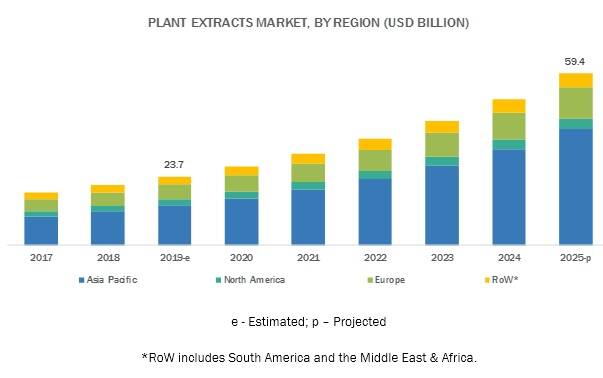
In 2018, the market share of plant extracts in the Asia-Pacific region was 56.5%. Due to the strong demand in the local and international markets, the plant extract market in the region is booming. Asian countries, such as China and India, have large tropical areas, with a variety of medicinal plants and herbal plants. This enables small and medium-sized plant extract manufacturers to efficiently process plant extracts because they are aware of the benefits of these extracts because they have a rich history of using advanced technology to produce medicinal plants. Manufacturers in Indonesia, India and Thailand are constantly investing in the market and focusing on innovation to expand the product range. This is due to the growing trade in plant extracts between Asian and international manufacturers.
The main players in the plant extract market include Givaudan (Switzerland), Senxin (United States), Dezhixin (Germany), Qiaokang Bio (China), PT. Indesso Aroma (Indonesia), Haldin Pacific Semesta (Indonesia) , Vidya Herbs Private Limited (India), Tokiwa Phytochemical Co., Ltd., Native Extracts Pty. Ltd. (Australia), Shaanxi Jiahe Plant Chemical Co., Ltd. (China), Synthite Industries Private Ltd. (India), Dele Group (India) Germany), IFF (USA), Martin Bauer GmbH & Co. KG (Germany) and Arjuna Natural Extracts Ltd. (India). These companies focus on strategies such as new product launches, expansion and investment, acquisitions, and agreements and cooperation to expand their business globally.

You May Interested In


High Quality β-Nicotinamide adenine dinucleotide CAS 53-84-9 NADwith ready stock and best price
$3E+1/UNIT FOB


2026-10-22
Trade Alert
Delivering the latest product trends and industry news straight to your inbox.
(We'll never share your email address with a third-party.)

Related News
-
China's pesticide price index in October 2022
-
Short and Breif Analysis of the Lutein
-
Short and Breif Analysis of the Lutein
-
Can the Market Continue To Go Higher As The Cost Of Planting Huang Lian Increases?
-
Review of Top 10 Hot Plant Extracts for 2021-Turmeric, Lutein, Stevia Extract, Menthol, Quercetin, Aronia, Ginkgo Biloba Extract, Ashwagandha Ayurvedic Extract, Capsaicin, Saw Palmetto Extract
-
Guangdong Petrochemical 1.2 million tons/year ethylene plant delivered at the end of June
-
Recently Wanhua Chemical had 1 large transaction with a transaction amount of 4,689,000 Yuan!
-
World's largest cotton spinner successfully develops bio-based PLA, PHBV range of fabrics!
-
Us Stocks Rally Strongly On Positive Economic Recovery As Jobless Number Hits 53-Year Low
-
5 Billion! Strong Growth! Top 1 Sample Hospital Variety
Recommend Reading
-
![LG Chem Enters Semiconductor Stripper Market for the First Time, Cutting Process Time by 50%]()
LG Chem Enters Semiconductor Stripper Market for the First Time, Cutting Process Time by 50%
-
![“Zero Tariff Is Not a Get-Out-of-Jail-Free Card”: Hainan’s Full Customs Closure—Boon or Trap for the Chemical Industry?]()
“Zero Tariff Is Not a Get-Out-of-Jail-Free Card”: Hainan’s Full Customs Closure—Boon or Trap for the Chemical Industry?
-
![TAKAI Is Being Sold as More Than an Insecticide, and That Is the Point]()
TAKAI Is Being Sold as More Than an Insecticide, and That Is the Point
-
![FDA Dye Phase-Out Push Opens a Bigger Window for Natural Color Solutions]()
FDA Dye Phase-Out Push Opens a Bigger Window for Natural Color Solutions
-
![The US Fertilizer Probe Is About More Than Pricing — It Is About Power]()
The US Fertilizer Probe Is About More Than Pricing — It Is About Power
-
![Geopolitical Conflicts Drive a Surge in Phthalic Anhydride Prices in China]()
Geopolitical Conflicts Drive a Surge in Phthalic Anhydride Prices in China
-
![Sulfate of Ammonia Market Prices Stop Falling and Rise (7.13-7.20)]()
Sulfate of Ammonia Market Prices Stop Falling and Rise (7.13-7.20)
-
![Weak Demand Pressures Adipic Acid Prices in China]()
Weak Demand Pressures Adipic Acid Prices in China
-
![Sodium Nitrate: Fertilizer, Food Curing, and Explosive History]()
Sodium Nitrate: Fertilizer, Food Curing, and Explosive History
-
![SiO2: Properties, Uses, and Applications]()
SiO2: Properties, Uses, and Applications




- Hot Searches
- ethylene glycol sds
- sodium chlloride
- ammonia water
- retatrutide glp-3 for sale
- pp polypropylene resin price asia 2025 english
- industrial carbon black pigment supplier
- polypropylene price per ton in nigeria 2026
- mdi sds
- amox/clav pot
- buying testosterone enanthate
- vinyl acetate sds
- retatrutide vendor