Germany to Halt Weed Killer Glyphosate Use
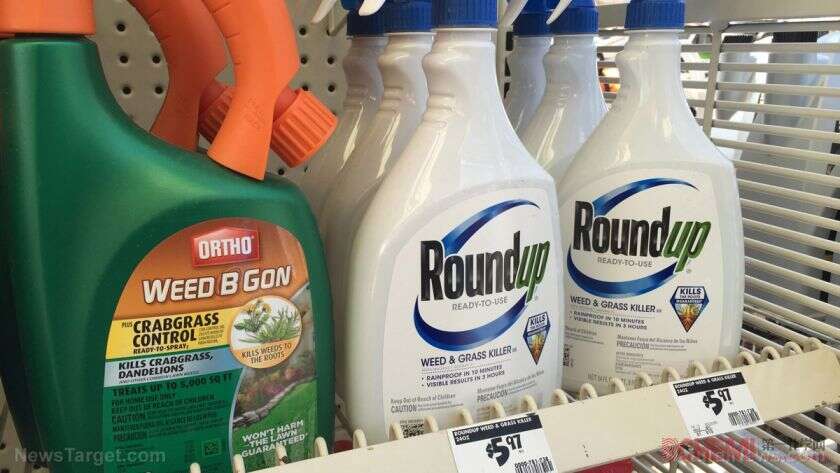
weed killer glyphosate
Given what we know about the serious harms caused by the weed killer glyphosate to human health and the environment, it’s baffling that such a toxic product is still allowed to be sold. Now Germany has found the courage to put its foot down, standing up to powerful, bullying companies like Roundup manufacturer Monsanto and banning the use of glyphosate in parks, sports facilities and home gardens while severely restricting its use in agriculture.
As the debate rages on in Europe over whether or not the ingredient causes cancer – countless credible scientific studies and the World Health Organization certainly think so – Germany isn’t taking any chances with its citizens’ health. The country’s Agriculture Minister, Julia Kloeckner, said she was finishing up the draft regulation.
While no specific deadline has been set yet, Environment Minister Svenja Schulze is aiming to stop its use by the fall of 2021. Schulze said: “We need a full exit from glyphosate during this legislative period. Glyphosate kills everything that is green, depriving insects of their food source.”
The man who previously held Kloeckner’s post, Christian Schmidt, caused a serious shakeup internationally and within the previous German coalition when he unexpectedly supported a proposal by the European Commission to allow glyphosate to be used for the next five years. This had the effect of allowing glyphosate’s use to be extended in the European Union even though the move was opposed by France and the Social Democrat Party.
Although Kloeckner characterized the new restrictions on glyphosate use in agriculture in the country as being “massive”, there is a provision to exempt areas that are prone to erosion and cannot be worked using heavy machinery.
Glyphosate is the best-selling weed killer in the world, and it is used to treat around 40 percent of the crop-growing land in Germany. On the market for more than 40 years, it has increasingly come under scrutiny for its connection to host of health problems and environmental harms. In 2015, the International Agency for Research on Cancer, which is part of the World Health Organization, labeled it a probable carcinogen.
U.S. should follow Germany’s example
One can only hope that other countries will follow Germany’s lead. The U.S. is still largely turning a blind eye to glyphosate’s dangers, thanks in no small part to the intense lobbying on Monsanto’s part to keep its products on store shelves. The stubborn EPA refuses to ban the chemical, and it was recently revealed that they have known about glyphosate’s carcinogenicity for at least 35 years and helped cover it up. EPA memos that were recently uncovered showed that the EPA knew by 1980 that the ingredient caused malignant tumors, kidney problems and hyperplasia, but they suppressed the findings at Monsanto’s behest.
Glyphosate exposure has been linked to problems like melanoma, bone cancer, liver cancer, thyroid cancer, pancreatic cancer, and non-Hodgkin lymphoma. Monsanto currently finds itself facing a slew of lawsuits on behalf of people diagnosed with cancer as a result of glyphosate exposure, and it’s unconscionable to think that an agency meant to protect us and our environment is so easily swayed into doing the exact opposite. Of course, there’s a lot of money at stake, with Roundup bringing in $994 million in net sales for Monsanto from 2013 to 2014 alone.
While the move might make German produce safer and save the lives of agricultural workers and people who live near farms, those of us who live where the chemical is still allowed will have to be proactive about growing our own food or seeking trustworthy sources of organic fruits and vegetables.

You May Interested In


High Quality β-Nicotinamide adenine dinucleotide CAS 53-84-9 NADwith ready stock and best price
$3/UNIT FOB


2026-10-04
Trade Alert
Delivering the latest product trends and industry news straight to your inbox.
(We'll never share your email address with a third-party.)

Related News
-
Germany Passes Healthcare Reform, Multinational Drugmakers Face 15.5% Mandatory Discount
-
Bayer and Syngenta Score Consecutive Regulatory and Legal Wins in the U.S.
-
Glyphosate Becomes a Trade Fight
-
VIV Health & Nutrition Asia 2026 Brings Together Innovation and Business Across the Animal Feed and Health Industry
-
Basf plans to close two of its Glufosinate ammonium production sites in Germany to deal with the global serious overcapacity!
-
The US EPA intends to register a new herbicide active ingredient, Glufosinate-P
-
Bayer forms the Alliance for Modern Agriculture to ensure continued access to Glyphosate for U.S. farmers
-
Argentina announced lower import tariffs on Atrazine, Glyphosate and 2,4-D
-
Glyphosate obtained the registration of genetically modified crops
-
Mexico delays Glyphosate ban again
Recommend Reading
-
![EFSA Approves Cellulase from GM Aspergillus Niger with Low Allergy Risk]()
EFSA Approves Cellulase from GM Aspergillus Niger with Low Allergy Risk
-
![U.S. EPA Targets Perchlorate: A New Safety Line Drawn in Drinking Water Standards]()
U.S. EPA Targets Perchlorate: A New Safety Line Drawn in Drinking Water Standards
-
![Singapore Orders Nestlé Formula Recall as Infant Safety Comes Under the Spotlight]()
Singapore Orders Nestlé Formula Recall as Infant Safety Comes Under the Spotlight
-
![Cheap Sugar, Costly Lives: WHO Pushes Governments Toward a New Era of Health Taxes]()
Cheap Sugar, Costly Lives: WHO Pushes Governments Toward a New Era of Health Taxes
-
![Pharma’s Tightrope in 2026: Safety, Competition and the Future of Obesity Treatment Innovation]()
Pharma’s Tightrope in 2026: Safety, Competition and the Future of Obesity Treatment Innovation
-
![Ammonium Sulfate Market Shows Strong Performance (1.12-1.16)]()
Ammonium Sulfate Market Shows Strong Performance (1.12-1.16)
-
![Methanol Market Trend Fluctuates and Consolidates]()
Methanol Market Trend Fluctuates and Consolidates
-
![This Week, the Coke Market in China Remains Stable]()
This Week, the Coke Market in China Remains Stable
-
![MTBE Market Trend Shows Significant Decline in China]()
MTBE Market Trend Shows Significant Decline in China
-
![MTBE Market Prices Edge Higher Within a Narrow Range]()
MTBE Market Prices Edge Higher Within a Narrow Range